Table of Contents
What to Look for in AI BDR Tools
Quick Comparison Table — 10 Best AI BDR Tools
10 Best AI BDR Tools for Scaling Outbound in 2026 (Ranked and Reviewed)
AI BDR Tools vs. Human BDRs — What the Data Actually Shows
AI BDR Tools for Lead Prioritization and Pipeline Management
How to Choose the Right AI BDR Tool for Your Team
Where an Outbound Lead Generation Agency Fits Alongside AI BDR Tools
Conclusion
Frequently Asked Questions
Modified On :
August 17, 2026
Key Takeaways
- Autonomy varies a lot across this category. Some tools run outbound end to end with no human touch. Others just generate content and leave sending and judgment to your reps.
- Pipeline math still favors AI at the top of funnel, but conversion quality drops the further down the funnel you go, especially at objection handling and trust building.
- Most vendors in this space have moved away from public pricing. If a tool doesn't publish a price, budget for a sales-led negotiation, not a self-serve checkout.
- Data quality is the real bottleneck. An AI BDR tool is only as sharp as the contact and intent data feeding it, no matter how good the writing sounds.
- The winning setup in 2026 isn't AI instead of humans. It's AI running volume at the top of the funnel while trained people handle the conversations that actually close.
A year ago, scaling outbound meant one thing: hire more BDRs. Now you can add outbound capacity without touching headcount. That shift is why AI BDR tools have become one of the most searched categories in B2B sales tech this year.
The numbers back up the urgency. Buyers respond to whoever reaches them first, and speed-to-lead studies have long shown a steep drop in contact rates once you wait past the first few minutes.
Meanwhile the AI SDR software market has ballooned into a category with dozens of vendors, most of them founded in the last two years. And reply rates on generic, non-personalized outbound keep sliding, which is exactly the problem these tools claim to fix with research and personalization at scale.
This guide ranks and reviews 10 AI BDR platforms you'll actually run into while shopping in this category in 2026. We cover what each one does, who it's built for, current pricing where it exists, and where it falls short.
We'll also give you an honest read on AI BDR tools effectiveness vs human BDR performance, because the marketing on both sides oversimplifies it.
This is for sales leaders and founders trying to decide whether to add AI to their outbound motion, and if so, how much of the job to actually hand over.

What to Look for in AI BDR Tools
Not every tool in this category does the same job. Before you compare vendors, it helps to know which axes actually matter for AI BDR tools benefits for sales process.
Autonomy level
Does the tool run outbound independently, from research to send to reply handling? Or does it generate content and insights that a human rep still has to review and send? This single question splits the entire market into two camps.
Channel coverage
Some tools are email-only. Others run email, LinkedIn, and phone together. If your buyers respond better on one channel, make sure the tool actually covers it well, not just technically.
Data quality
Does the platform bundle its own contact database, or does it plug into your existing CRM and data source? Bundled data is convenient. It's also only as good as the vendor's refresh cycle.
Lead prioritization and scoring
A tool that just blasts your entire list isn't prioritizing anything. The better platforms surface which accounts and contacts deserve attention first, based on signals like funding events, hiring activity, or website visits.
Reply handling
Some tools stop at the first touch. Others can classify a reply, hold a basic back-and-forth, and route a genuinely interested prospect to a human before the conversation gets complicated.
Pricing model fit
A $2,500/month platform makes sense against a $50,000 average deal size. It doesn't make sense if your average deal is $2,000. Match the spend to what a booked meeting is actually worth to you
🤖 AI Can Scale Outreach. Strategy Makes It Convert.
Our LinkedIn, cold email, and cold calling campaigns generate 15–30 qualified meetings every month with targeted outreach.
Quick Comparison Table — 10 Best AI BDR Tools
10 Best AI BDR Tools for Scaling Outbound in 2026 (Ranked and Reviewed)
Here's the breakdown on each platform. For every tool, we cover Best For, Key Features, Limitations, and Pricing, based on the vendor's current site and third-party pricing trackers.
1) Artisan (Ava)
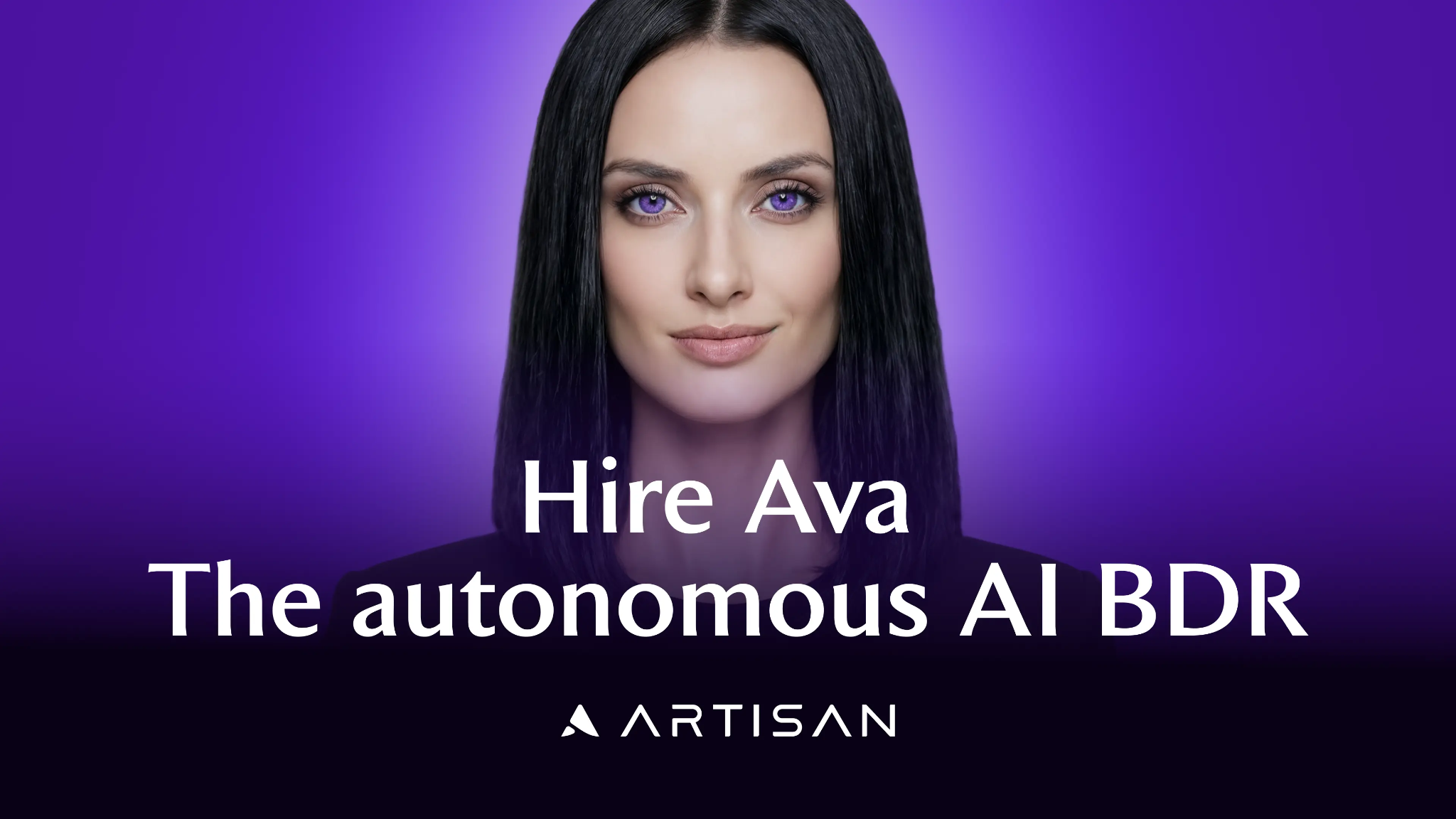
Best For: Teams wanting one AI agent to own the entire BDR workflow end to end.
Key Features:
- Handles list building, research, and email sequencing from a single interface.
- Adjustable autonomy, from review-every-message mode to full autopilot.
- Bundled B2B contact data so you don't need a separate database subscription.
- Multi-channel outreach beyond email.
Limitations: Artisan relaunched Ava 2.0 in 2026 with self-serve pricing, but the more capable Employee-tier plans still climb fast, and buyers report that full autonomy needs carefully built escalation rules or messaging can go out unsupervised in ways you didn't intend.
Pricing: Self-serve plans start around $250/month (Intern tier), with the Employee tier running higher. Larger deployments still route through custom, quote-based pricing.
2) 11x (Alice)
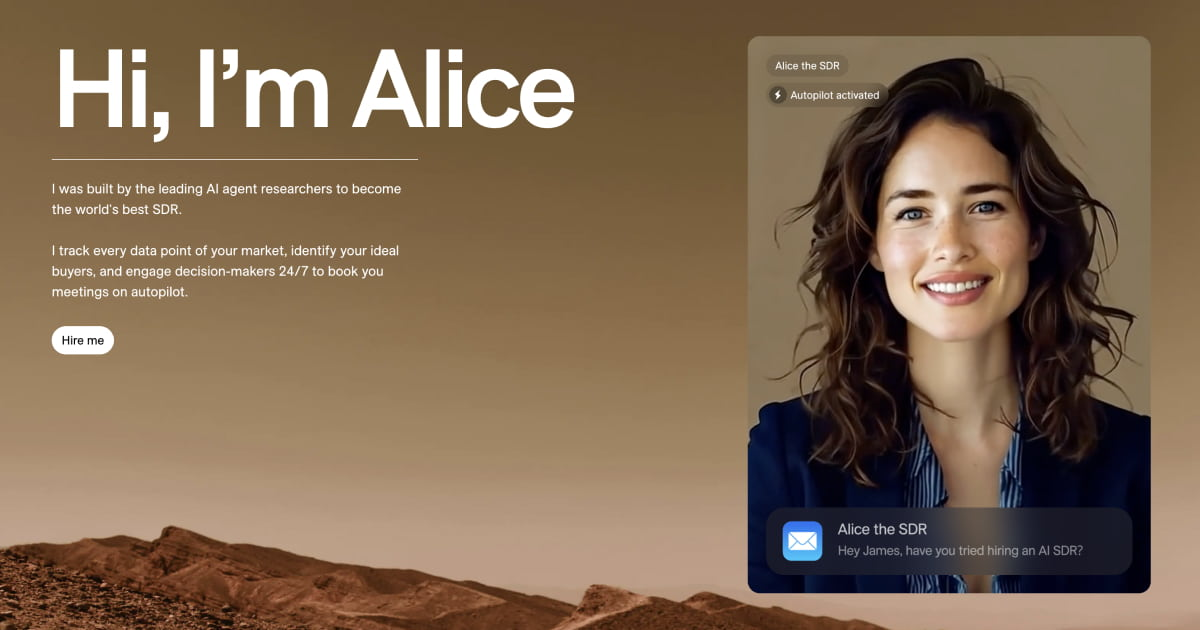
Best For: Enterprise teams wanting aggressive, fully autonomous multichannel outbound.
Key Features:
- "Digital worker" model that researches and runs sequences with minimal oversight.
- Multichannel coverage across email and beyond, with Julian as a separate AI phone agent.
- Built for scale, not light-touch assistance.
- Backed by a16z and Benchmark, with meaningful funding behind ongoing development.
Limitations: 11x recently published a Growth-tier starting price for the first time, but most real deployments still land in the $5,000-$15,000+/month range once volume and the phone agent are added. Reviewers consistently flag annual (sometimes multi-year) contracts and a real ramp-up period before Alice becomes productive.
Pricing: Growth plan starts at $3,750/month billed annually. Pro and Enterprise tiers are custom-quoted.
3) AiSDR (Ami)
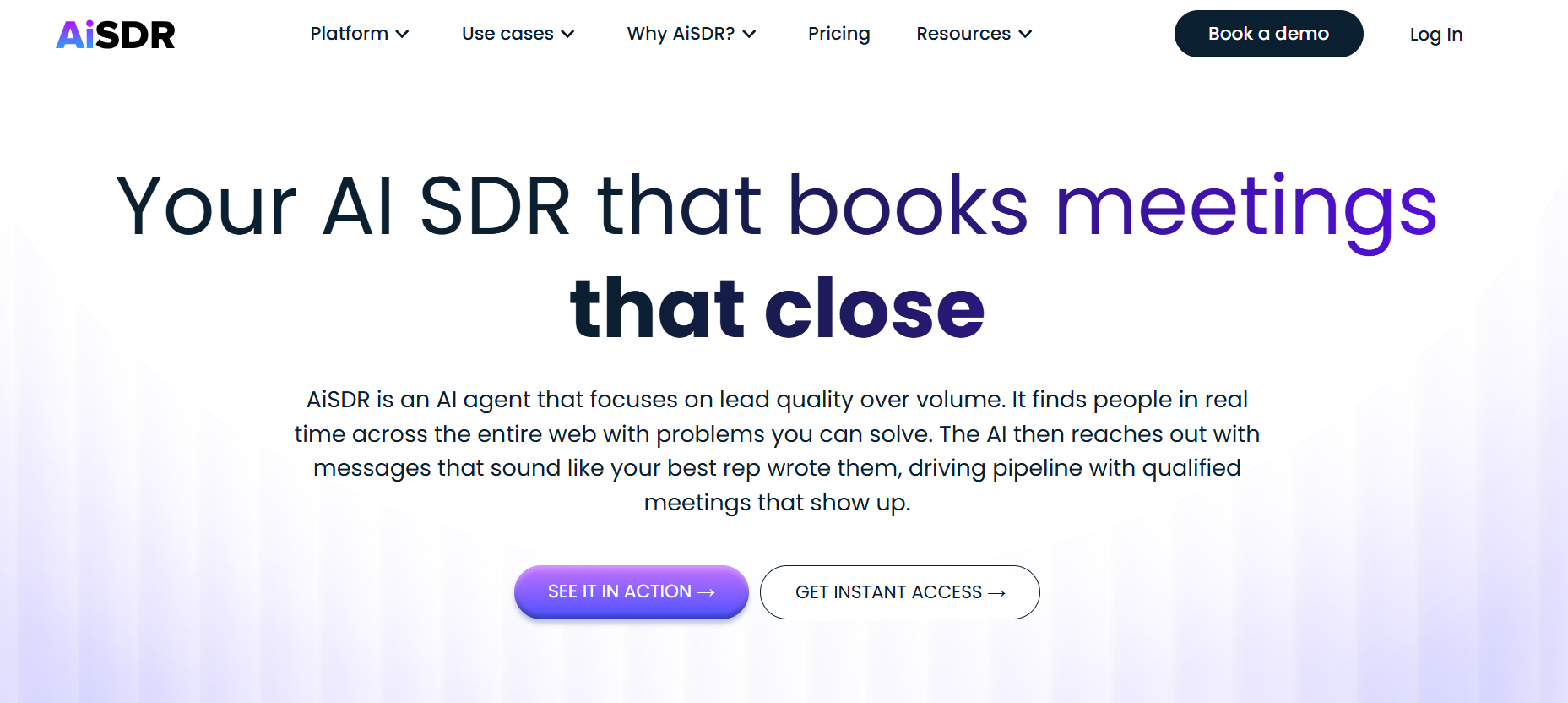
Best For: Teams wanting a quick-to-deploy AI BDR covering both outbound and inbound.
Key Features:
- Large bundled lead database plus LinkedIn profile and company research before sequencing.
- Handles replies conversationally and books meetings without a human in the loop.
- Native two-way HubSpot sync on every plan.
- Publishes real pricing, which is rare in this category.
Limitations: Explore and Scale tiers require quarterly contracts paid upfront, and there's no free trial. CRM support is limited to HubSpot and Salesforce, so teams on other CRMs are out of luck.
Pricing: Solo $250/month, Explore $900/month, Scale $2,500/month, with roughly 20% off on annual billing.
4) Regie.ai
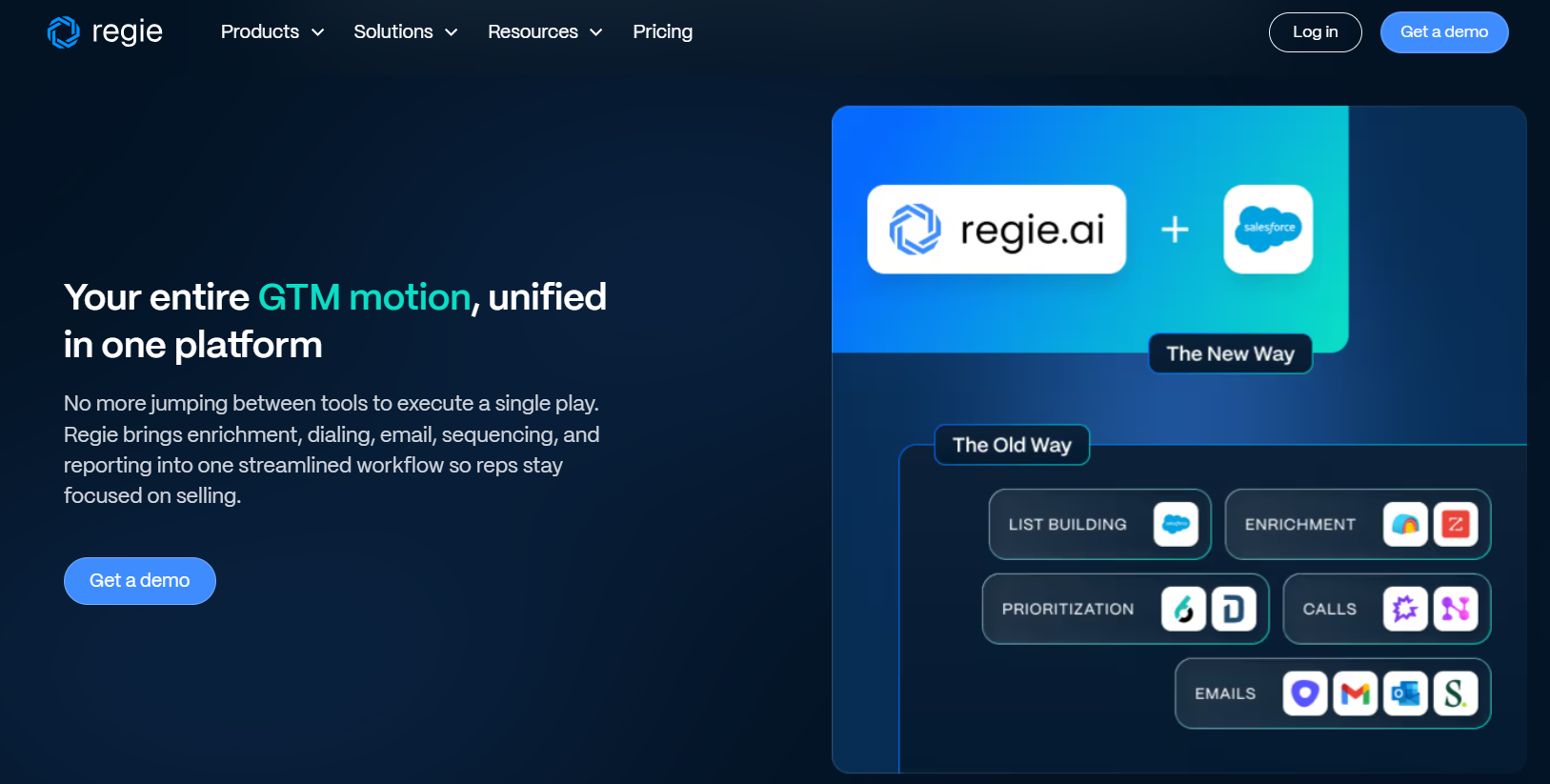
Best For: Teams wanting AI-generated content that human reps review and send, not full automation.
Key Features:
- Strong at generating personalized email and sequence copy.
- Auto-Pilot mode on the higher tier adds more autonomous sending for teams ready for it.
- Built-in 220M+ contact database and parallel dialer as add-ons.
- Fits into existing sales stacks as an assistive layer rather than a full replacement.
Limitations: Both public tiers carry annual contracts and seat minimums (10 seats on the entry tier, 5 on the higher one), so it's not built for solo reps or small teams testing the waters.
Pricing: AI SEP $180/user/month (10-seat minimum). Force Multiplier Rep $499/user/month (5-seat minimum). Enterprise RegieOne pricing is custom.
5) Qualified (Piper)
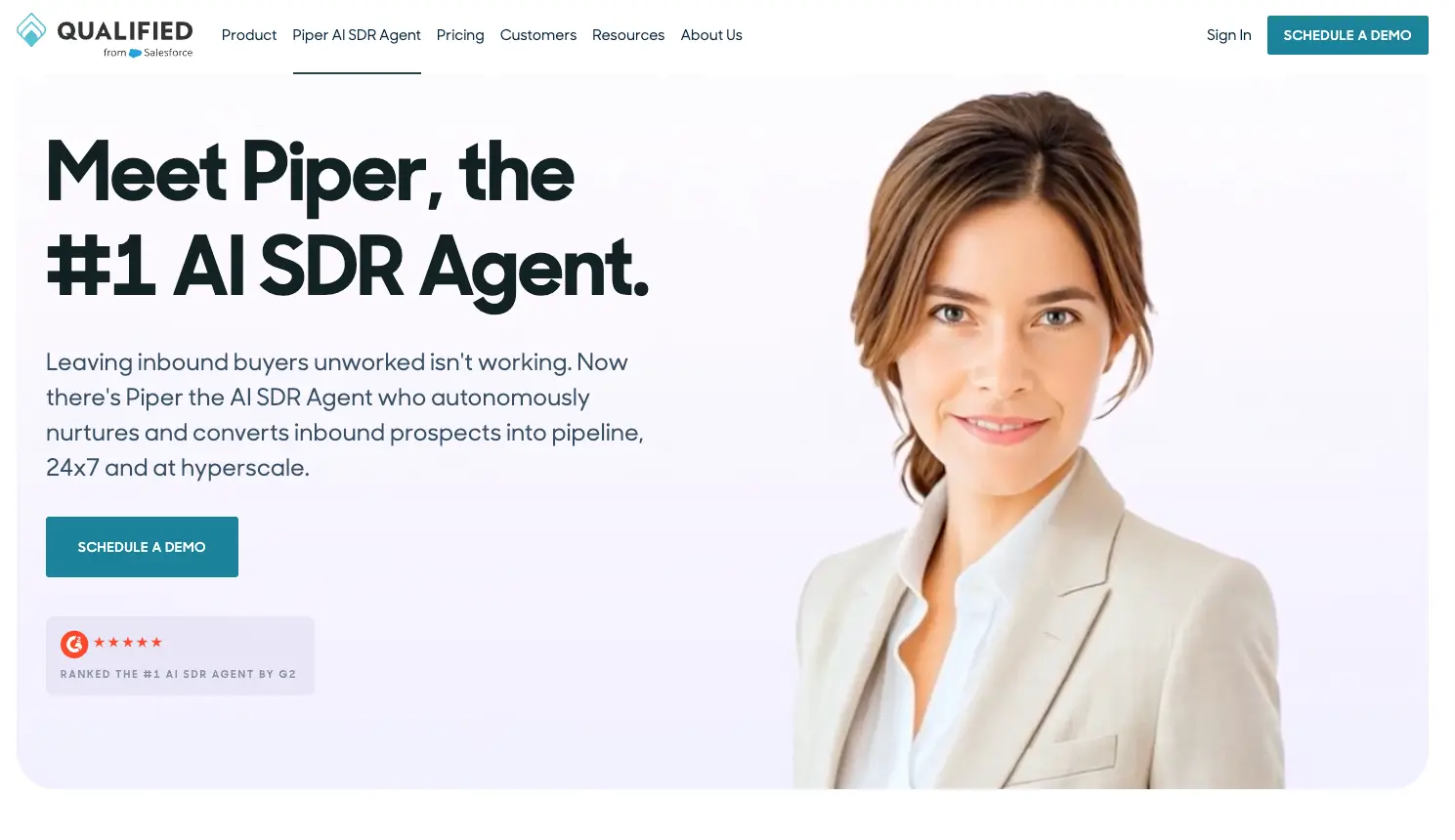
Best For: Salesforce-standardized enterprises focused on converting inbound website traffic.
Key Features:
- Specializes in inbound conversion rather than cold outbound.
- Deep native integration with Salesforce.
- Premium positioning built for enterprise buying processes.
Limitations: This is an inbound-only tool. If your primary need is outbound prospecting, Piper isn't the right fit, and the Salesforce dependency narrows the buyer pool further.
Pricing: Custom.
6) Knowlee
Best For: Revenue leaders evaluating AI specifically for pipeline generation impact, not just activity volume.
Key Features:
- Positioned around pipeline outcomes rather than generic send-more automation.
- Frequently shows up in AI BDR shortlists and category comparisons.
Limitations: Knowlee has less publicly available detail on features and pricing than more established players in this list, so plan on a demo before you'll get real numbers.
Pricing: Custom.
7) Apollo AI
Best For: Teams wanting AI-assisted sequencing bundled with an existing large contact database.
Key Features:
- AI-assisted prospecting and sequence generation built into a broader sales platform.
- Large existing B2B database (270M+ contacts) inside the same tool.
- Genuinely usable free tier for testing before you commit budget.
Limitations: Apollo runs on a credit system that governs data actions, and heavy users can hit overage costs that push the real bill well past the advertised per-seat price. It's also a broader sales intelligence platform first, so it's less autonomous than a dedicated AI BDR built specifically for outbound.
Pricing: Free tier available. Paid plans run Basic $49/user/month, Professional $79/user/month, Organization $119/user/month on annual billing (roughly 20% more month-to-month).
8) Warmly
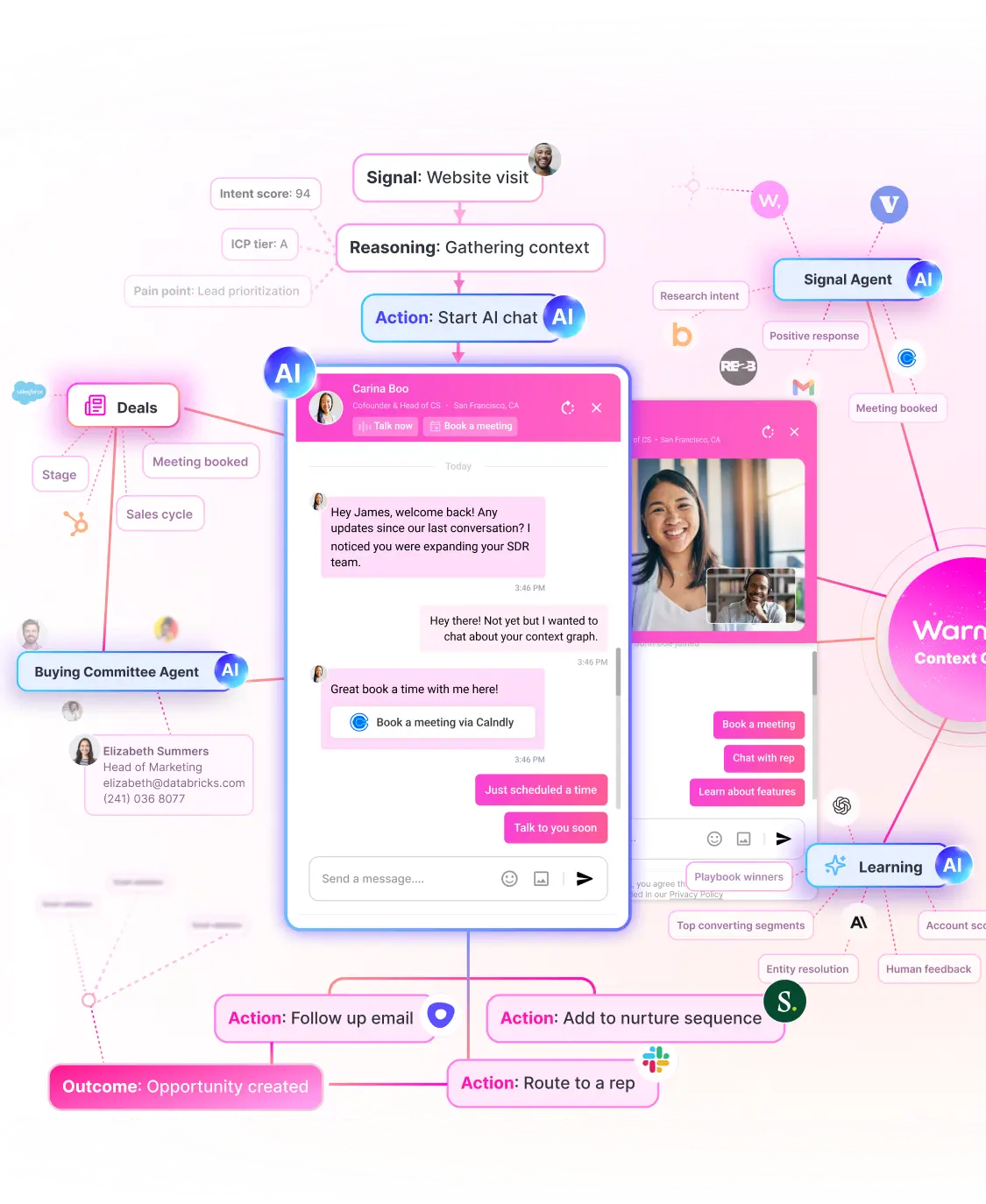
Best For: Teams wanting AI outbound triggered by real buying signals rather than static lists.
Key Features:
- Surfaces website visitor intent and engagement signals.
- Triggers AI-driven outbound based on those signals rather than blanket sends.
- Integrates signal data into a broader outbound workflow.
Limitations: Value depends heavily on your existing website traffic volume. Low-traffic sites won't generate enough signal to make this worth the spend, and it's best paired with a separate execution tool.
Pricing: Custom.
9) Autobound
Best For: Smaller teams wanting AI-personalized outreach without premium AI BDR pricing.
Key Features:
- Generates personalized email openers and full drafts from real-time signals, including news, job changes, and funding events.
- Budget-friendly entry tier relative to full autonomous platforms.
- High G2 rating for personalization quality specifically.
Limitations: Autobound doesn't include its own verified contact database, so you'll need a separate data provider on top. Pricing has also shifted across sources this year, from per-seat tiers in the double digits up to credit-based enterprise packages in the thousands, so get a current quote before assuming a number.
Pricing: Entry tiers reported from roughly $39-59/month per seat, with higher credit-based tiers running into the thousands for larger teams.
10) Relevance AI
Best For: Technical teams wanting to build custom AI BDR workflows rather than use a pre-packaged tool.
Key Features:
- Flexible AI agent builder for custom outbound workflows.
- Adaptable to specific internal processes and data sources, not locked into one fixed BDR model.
Limitations: This requires meaningfully more setup effort than a ready-made AI BDR platform. It's a strong fit for teams with technical resources to build and maintain workflows, and a poor fit for anyone wanting something that works out of the box.
Pricing: Custom
🚀 Scale Outbound. Keep It Human.
With 53,000+ meetings booked and $312M+ in pipeline generated, Cleverly helps 10,000+ businesses turn AI-powered outreach into predictable growth.
AI BDR Tools vs. Human BDRs — What the Data Actually Shows

This is the question everyone actually wants answered: does AI BDR tools effectiveness vs human BDR performance actually hold up?
Here's the honest math. A human BDR generating $500K in pipeline at roughly $85K in fully loaded cost delivers about 6:1 ROI.
An AI BDR generating similar pipeline at roughly $15K in platform cost can show 30x+ ROI on paper. That gap is real, and it's why this category has grown so fast.
But the comparison isn't clean. Here's where each side actually wins:
Where AI wins:
- Volume at a scale no human team can match.
- Personalization applied consistently across thousands of contacts.
- 24/7 speed to lead, which matters because a large share of buyers choose whichever vendor responds first.
- Consistency. AI doesn't have an off day.
Where AI struggles:
- Nuanced objection handling in real time.
- Reading tone and adjusting mid-conversation.
- The trust-building that actually drives referrals and long-term account relationships.
AI BDRs are strongest at top-of-funnel work: prospect research, first-touch emails, follow-ups, and initial reply classification.
Even when an AI's conversion rate runs meaningfully below what a skilled human rep can pull off, the volume and cost advantage often still nets out favorably at that top-of-funnel stage.
The emerging consensus among teams actually running both: augmentation over replacement. AI owns volume. Humans own complex conversations and closing.
AI BDR Tools for Lead Prioritization and Pipeline Management
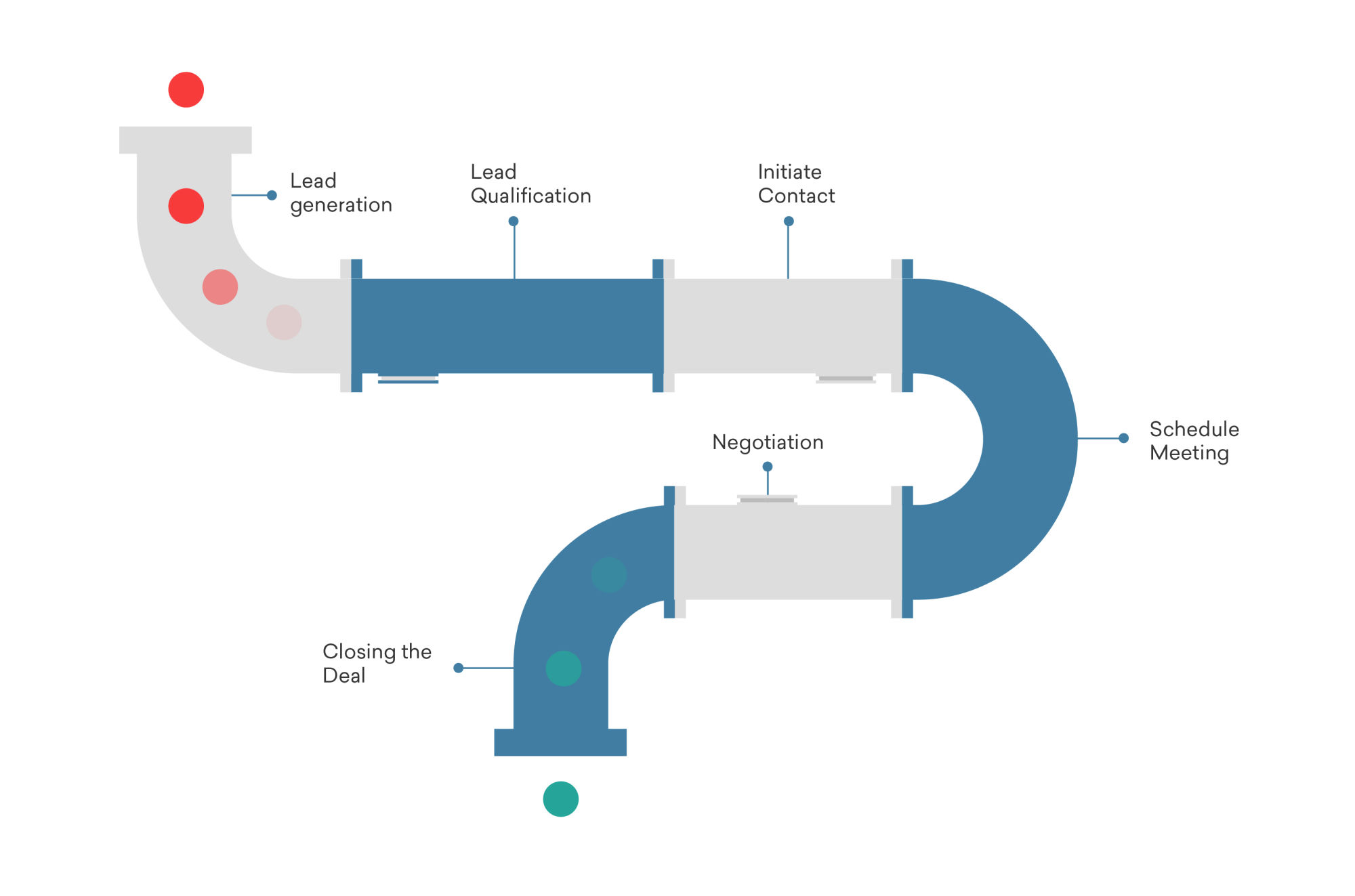
Sending outreach is only half the job. The other half is knowing who deserves attention first, which is where AI BDR tools for lead prioritization and AI BDR tools for pipeline management come in.
A handful of tools in this list, notably Warmly, Knowlee, and Apollo AI, focus specifically on surfacing which accounts and contacts to prioritize based on intent and engagement signals rather than just executing volume.
Pipeline management value shows up when AI classifies replies correctly and routes warm leads to the right next step automatically, instead of dumping every response into one inbox for a human to sort through.
One caution: prioritization only works as well as the underlying data. Garbage signals in produce misprioritized leads out, and a tool confidently pointing your team at the wrong accounts is worse than no prioritization at all. Best practice is pairing an AI BDR's prioritization output with human review before it drives major territory or account-assignment decisions.
How to Choose the Right AI BDR Tool for Your Team
With ten options on the table, here's how to actually narrow it down for AI BDR tools for your specific situation.
✅ If you're comfortable with light oversight: Full autonomy platforms like Artisan, 11x, and AiSDR fit teams ready to let AI run outreach with a human checking in periodically rather than reviewing every message.
✅ If you want humans in the send loop: Assistive, force-multiplier tools like Regie.ai and Autobound fit teams that want AI writing the copy while a person still decides what actually goes out.
✅ Know your motion: Inbound-focused platforms like Qualified and outbound-focused platforms serve genuinely different jobs. Don't conflate the two, and don't buy an inbound tool expecting it to fix a cold outbound problem.
✅ Match budget to deal value: Premium tools make more sense for high-ACV deals, where even a modest lift in conversion rate covers the platform cost many times over. A $3,000/month tool is a rounding error against a $50,000 average deal and a real budget line against a $2,000 one.
✅ Pilot before you scale: Run a defined segment through the tool before rolling AI BDR outreach out company-wide. The ramp-up period on several of these platforms is real, and you want to learn that on a small list, not your entire pipeline.
Where an Outbound Lead Generation Agency Fits Alongside AI BDR Tools
AI BDR tools are genuinely strong at volume and cost efficiency. But the data on AI BDR tools effectiveness vs human BDR performance is consistent on one point: complex conversations, objection handling, and trust-building still favor experienced humans.
That's where we come in.
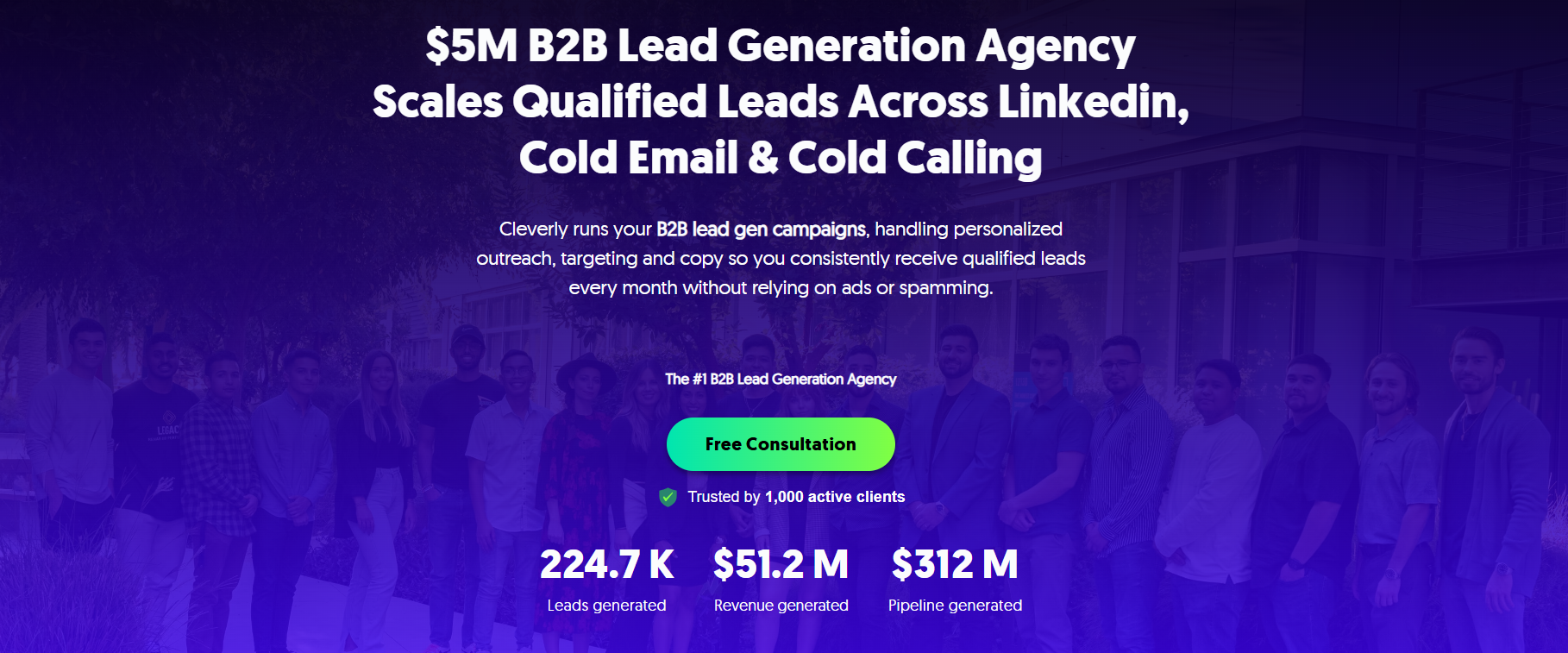
As an outbound lead generation agency, we run LinkedIn outreach, cold email, and cold calling through trained specialists, combining the personalization and judgment AI still struggles with, without the overhead of hiring and managing an in-house BDR team yourself.
Instead of choosing between cheap AI volume and an expensive in-house hire, an agency model gives you experienced human execution at a cost structure closer to software than a full-time salary.
We've run this model for 10,000+ B2B companies, generating $312M in pipeline and $51.2M in closed revenue for clients across every industry.
What's included: ICP-aligned targeting, human-crafted messaging, and multichannel execution managed end to end, so your team isn't stitching together five different AI tools and still doing the manual review work anyway. This is best for teams that want the relevance and conversation quality of skilled human BDRs without building that function in-house.
Want human-led outbound that outperforms on relevance, not just volume? Book a strategy call with Cleverly!
Conclusion
AI BDR tools have matured into a real category in 2026, ranging from fully autonomous digital workers to assistive content generators that leave sending in human hands. The strongest results this year are coming from a hybrid approach: AI handling top-of-funnel volume, humans handling the complex conversations and the close.
Which tool is right for you depends on how much autonomy you're comfortable with, how complex your deals are, and whether outbound or inbound is actually the priority.
The final takeaway worth remembering: AI BDR tools scale volume efficiently, but relevance and trust still often determine whether that volume actually turns into pipeline.
Frequently Asked Questions
Free Resource
How to Scale a Profitable Cold Call System
Get the complete guide — download it instantly now.
Free Ebook
Download the Free Guide
Enter your details to get instant access.
You're all set! 🎉
Your ebook is downloading now.
Click below if the download didn't start automatically.