Table of Contents
Quick Pick: Looking Forward to Hearing From You Alternatives by Situation
46 Ways to Say Looking Forward to Hearing From You in Email
Looking Forward to Hearing From You in Email: 3 Examples With Better Closings
Is “Looking Forward to Hearing From You” Correct? Grammar, Tone, and Alternatives to Skip
How Cleverly Writes Cold Email Closings Beyond “Looking Forward to Hearing From You”
Conclusion
Frequently Asked Questions
Modified On :
November 22, 2026
Key Takeaways
- “Looking forward to hearing from you” is correct and polite, but it asks for nothing, so it often gets nothing back.
- Pick the situation first, then the line. A closing for a CFO should not sound like one for a teammate.
- End with a specific ask. Add a date only when a real deadline exists.
- In cold emails and follow-ups, make “no” an easy answer. You get more honest replies that way.
- Use one CTA per email and give it its own line above your signature.
“Looking forward to hearing from you” is polite. It is also the email version of a shrug. It tells the reader you want a reply, then gives them nothing to reply to.
And you are sending it into a packed inbox. The Radicati Group forecasts about 392.5 billion emails will be sent and received every day in 2026. Microsoft’s 2025 Work Trend Index found the average worker receives 117 emails a day. Your closing line has to earn its spot.
The best ways to say looking forward to hearing from you do one job: they make replying easy. Below you get 46 phrases sorted by situation, a quick-pick table, three full email examples and a straight answer on whether the original phrase is even correct. It works whether you are a sales rep, founder, recruiter or job seeker.
We write cold emails for a living, and the closing line is where we see the laziest habits. If you run outbound, our cold email outreach service handles the rest of the system, so your last line does not have to carry the whole email.
Quick Pick: Looking Forward to Hearing From You Alternatives by Situation
Short on time? Find your situation and copy the line.
📩 Turn Better Emails Into More B2B Conversations
The right closing line can encourage a response. Cleverly helps B2B teams reach decision-makers with personalized cold emails and strategic follow-ups.
46 Ways to Say Looking Forward to Hearing From You in Email
We grouped these ways to say looking forward to hearing from you in email by situation. Pick the group first, then the line.
Professional and Formal Ways to Say Looking Forward to Hearing From You
Use these for senior contacts, new clients and legal or finance threads. One rule: a formal closer should hand the reader a decision, not a feeling.
- “I’d welcome your thoughts when you have a moment.” Use when you are writing to a senior contact and do not want to push.
- “Please let me know how you’d like to proceed.” Use when you have laid out options and the next move is theirs.
- “I’m happy to discuss this at your convenience.” Use when you want to offer a call without picking the time for them.
- “I’d appreciate your feedback before we move forward.” Use when you need sign-off before the next step.
- “Please advise on a timeline that suits you.” Use with new clients when scheduling is still open.
- “I await your confirmation before the next step.” Use in legal or finance threads where you truly cannot proceed without approval. It is stiff, so save it for those.
- “Thank you for your time. I’d value your response.” Use after a long or detailed message.
Casual and Friendly Ways to Say Looking Forward to Hearing From You in Email
Use these for teammates and long-running contacts. Keep it to one line and mirror how the other person writes to you.
- “Let me know what you think.” Use for quick reviews and drafts.
- “Curious to hear your take.” Use when you want an opinion, not just a thumbs up.
- “Talk soon.” Use when a next conversation is already on the calendar. It asks for nothing, which is the point.
- “Ping me when you get a chance.” Use for low-priority questions.
- “No rush on this one.” Use when you want a reply but there is no deadline.
- “Tell me if I missed anything.” Use after sending a summary or notes.
Pro tip: If your teammate writes “Thanks!” and nothing else, do not answer with three sentences. Match their energy.
Cold Email Alternatives to Looking Forward to Hearing From You
This group matters most if you do outbound. A stranger replies when answering is cheap. Make “no” an easy answer, and you will get more replies overall, including the useful “wrong person, talk to Jen.”
- “Worth a quick chat next week?” Use when you have a clear reason to talk and want a low-effort yes or no.
- “Open to a 15-minute call on Thursday?” Use when you want a specific slot. A named day beats “sometime soon.”
- “If this isn’t your area, who should I speak to?” Use when you are not sure you have the right contact.
- “If now isn’t the right time, tell me when to circle back.” Use when timing is the likely objection.
- “Want me to send a short walkthrough?” Use when a call feels like too big an ask for a first touch.
- “Is this a priority this quarter?” Use to qualify fast. It also gives them a polite way to say no.
- “Happy to share an example first. Want it?” Use when proof will help more than a pitch.
- “Would a short demo be useful, or is the timing off?” Use when you want a yes, a no or a “later” in one reply.
Pro tip: Read your cold email out loud. If the last line sounds like something a stranger could answer in five words, you are close.
Follow-Up Email Ways to Say Looking Forward to Hearing From You
A follow-up should give the reader an easy way out. Guilt does not get replies. Clarity does.
- “Just bumping this in case it slipped through.” Use for a first nudge after two or three days.
- “Is this still on your radar?” Use when the conversation went quiet after early interest.
- “Any update on your side?” Use when you are waiting on a decision or a document.
- “If I don’t hear back by Friday, I’ll assume the timing is off.” Use when you want to set a soft deadline without sounding pushy.
- “Do you need anything from me to move this forward?” Use when something may be blocking them, like a missing quote or a security form.
- “Happy to pause this if priorities changed.” Use as a softer, last-resort option after several follow-ups.
- “Is someone else the better contact?” Use as a last-resort option when you suspect you are talking to the wrong person.
Ways to Say Looking Forward to Hearing From You With a Clear Deadline or CTA
When a real next step exists, name it. Use one CTA per email, and put it on its own line above your signature so it does not get buried.
- “Can you confirm by Thursday?” Use when you need a yes or no to hold a spot or price.
- “Say yes and I’ll send the agreement today.” Use when you can move the second they agree.
- “Grab a slot on my calendar and I’ll take it from there.” Use when you want to skip the back-and-forth on scheduling.
- “Share the file by Monday and I’ll turn it around in two days.” Use for vendor, agency and freelance handoffs.
- “Approve the draft and I’ll publish it Friday.” Use when approval is the only thing standing in the way.
- “Let me know by end of day Wednesday.” Use when you need a plain deadline with no extra framing.
Job Application and Interview Ways to Say Looking Forward to Hearing From You
Keep these short. Gratitude beats urgency here. One caution: if the interviewer already said they will be in touch, do not repeat “I look forward to hearing from you.” It reads like you did not listen.
- “Thank you for your time. I’d welcome the chance to discuss the role further.” Use after a first interview.
- “I’m glad to share more information if helpful.” Use when you want to offer a portfolio or references without asking.
- “I’m excited about the opportunity and happy to answer any questions.” Use in an application email or a post-interview thank-you.
- “Thank you for considering my application. I hope to speak soon.” Use when you applied cold and have not heard anything yet.
- “Please let me know the next steps in the process.” Use when the timeline is unclear.
- “I’d be glad to arrange a time for a follow-up conversation.” Use when you are ready to book the next round.
Client, Customer, and Partner Ways to Say Looking Forward to Hearing From You
Use these for support replies, proposals and handoffs. Keep the tone warm, short and specific.
- “Please let us know if the solution works for you.” Use after sending a fix or workaround.
- “We’re here if you have questions.” Use for onboarding and handoffs.
- “Let us know if you’d like to adjust anything.” Use after delivering a draft or plan.
- “We’d value your feedback on the proposal.” Use after sending pricing or scope.
- “Thanks for your patience. We’ll update you as soon as we have news.” Use when you are waiting on something outside your control.
- “Keep me posted on how it goes.” Use with partners and clients after a launch or trial.
Looking Forward to Hearing From You in Email: 3 Examples With Better Closings
Here are three short looking forward to hearing from you email examples with stronger endings. All are original, and each runs under 90 words.
Example 1: Cold Email
Why the closing works: It asks a small question and offers a second path. Even a wrong-person reply moves you forward.
Example 2: Follow-Up
Why the closing works: It names three easy replies: yes, not now, or talk to someone else. Nobody has to feel bad about answering.
Example 3: Job Application Thank-You
Why the closing works: It leads with gratitude, offers something useful and asks about next steps without pressure.
🤝 Stop Waiting for Replies. Start Booking Meetings.
Confirmation emails set the tone for customer communication. Cleverly helps B2B teams build stronger prospect relationships through targeted, personalized outreach.
Is “Looking Forward to Hearing From You” Correct? Grammar, Tone, and Alternatives to Skip
Short answer: yes. It is correct and polite. The problem is not grammar. It is that the phrase asks for nothing.
The Three Versions
- “I look forward to hearing from you.” The standard formal version. Fine for letters and formal emails.
- “I’m looking forward to hearing from you.” A bit warmer and more conversational.
- “Looking forward to hearing from you.” The fragment version. It drops the “I” and is common in everyday email.
All three are fine. Pick the one that matches how the other person writes to you.
The Common Error
The mistake we see most is “look forward to hear.” Here, “to” is a preposition, not part of a verb. So the verb after it needs the -ing form: “look forward to hearing.” The same rule applies to “looking forward to meeting you” and “looking forward to working together.”
When It Is Still Fine
Use it in formal threads where the ask is already clear. If your email already says “Please confirm by Friday,” a closing like “I look forward to hearing from you” adds courtesy without causing confusion.
Alternatives to Skip
- Demanding closers, like “I await your immediate response.” They sound cold and a little hostile.
- Novelty lines, like “Chat soon, my friend!” to someone you have never met. They feel forced.
- Stacked closers, like “Looking forward to hearing from you. Let me know your thoughts. Thanks in advance.” Pick one.
How Cleverly Writes Cold Email Closings Beyond “Looking Forward to Hearing From You”
A good closing line only works when everything above it is already doing its job. Reply rate depends on list quality, offer, personalization and deliverability. The closing is the last small piece.
That is what we focus on as a cold email agency.
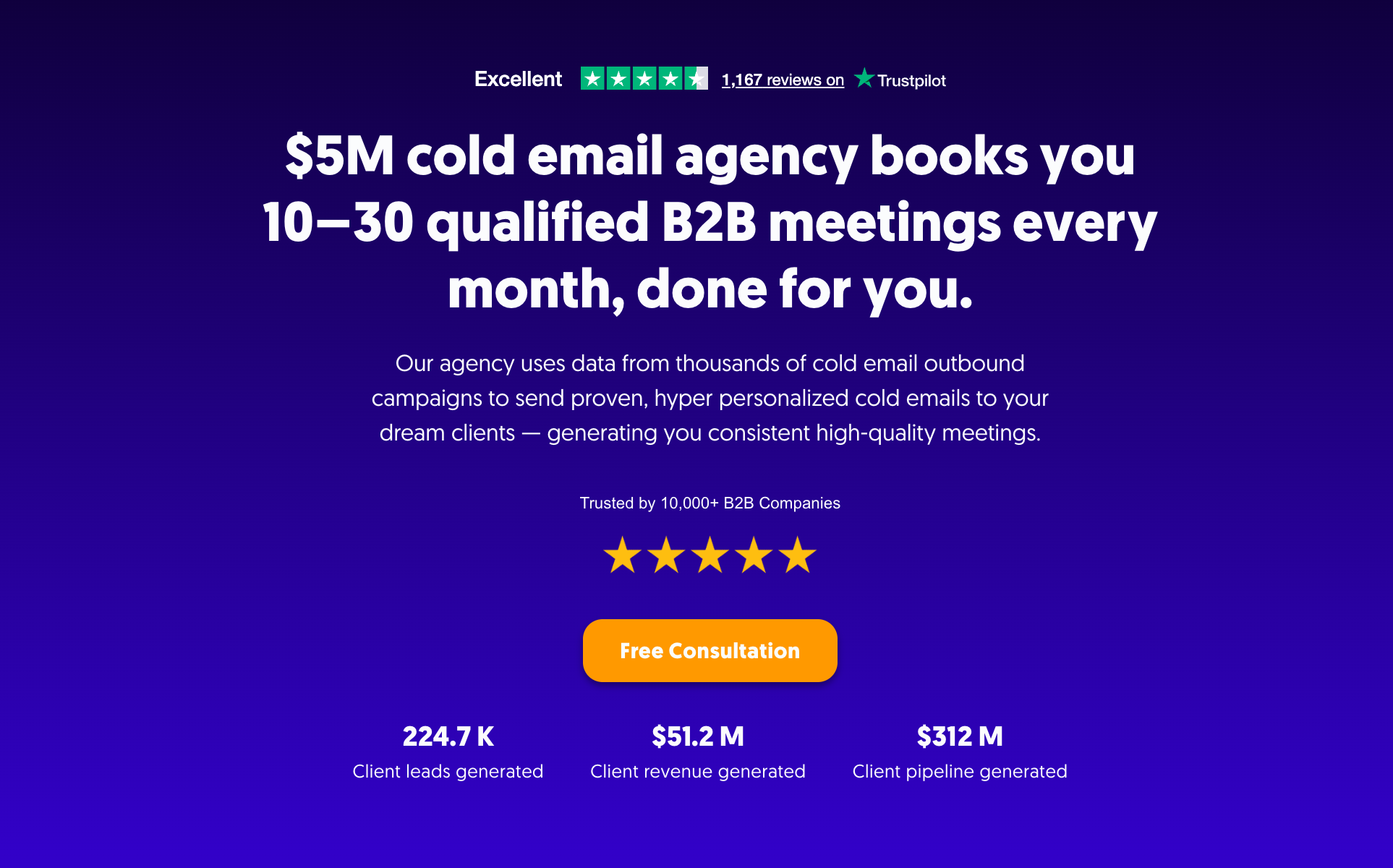
We build lists enriched by multiple data providers, write personalized emails and first lines, run A/B micro-campaigns by persona, and set up domains and inboxes with SPF, DKIM and DMARC. Then we manage deliverability and optimize for interested replies. You get weekly reporting and monthly strategy calls.
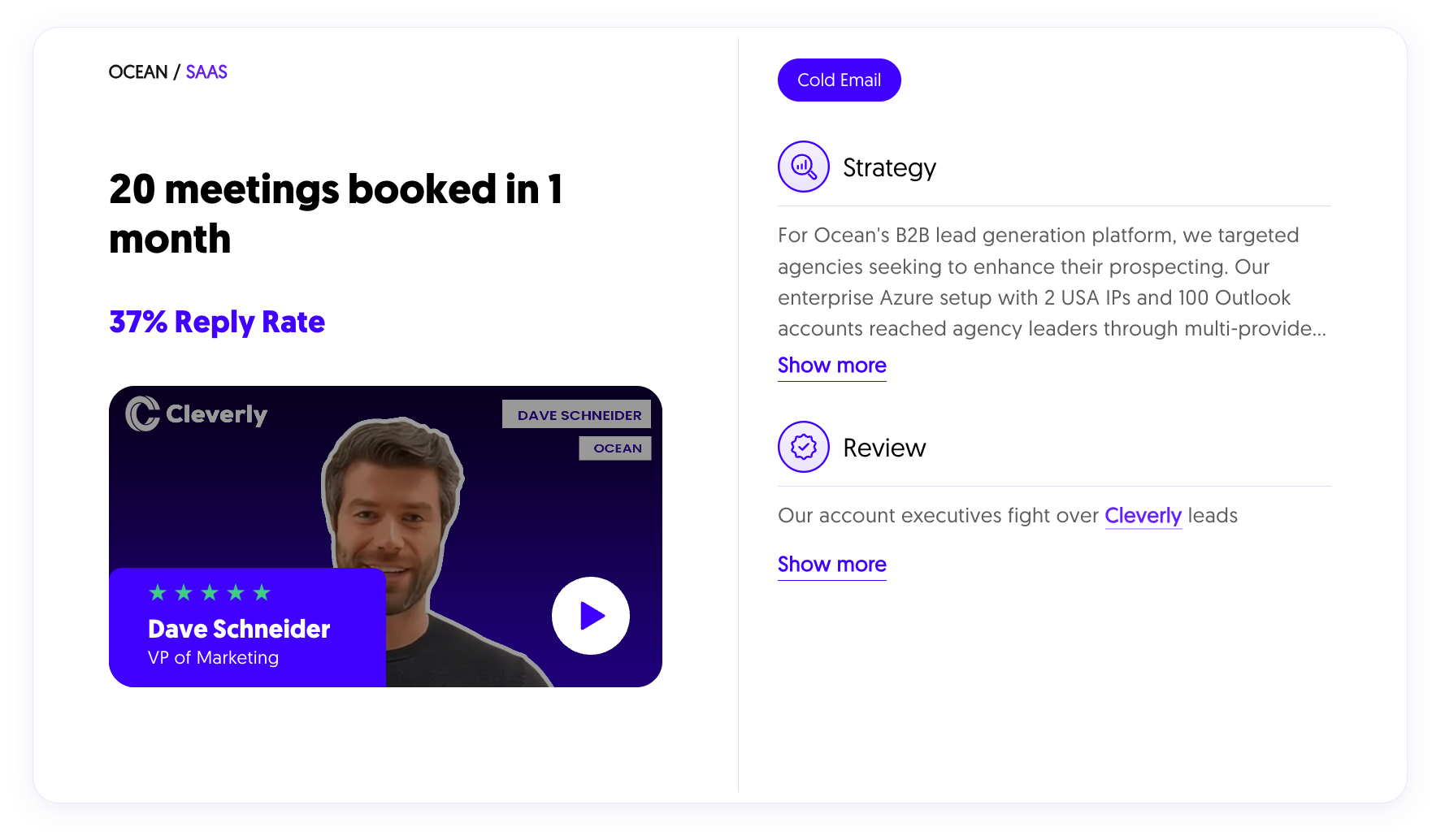
We have worked with 10,000+ B2B companies. One SaaS client, Ocean, saw a 37% reply rate and 20 meetings in a single month. Our plans are month to month with no long-term contracts. You can choose a Growth plan (flat monthly retainer) or a Scale plan (pay per lead).
Most companies come to us after trying to run cold email in-house. The tools are the easy part. Data, copy, inbox setup and constant testing are where the hours go.
Want cold email handled end to end? Book a free strategy call with Cleverly.
Conclusion
The best other ways to say looking forward to hearing from you all work the same way: pick the situation, then pick the line. Ask for something specific. Add a date when it matters.
Next time you reach the end of an email, ask yourself one question: what do I want them to do? Write that, and you will not need the filler.
Frequently Asked Questions
Free Resource
How to Scale a Profitable Cold Call System
Get the complete guide — download it instantly now.
Free Ebook
Download the Free Guide
Enter your details to get instant access.
You're all set! 🎉
Your ebook is downloading now.
Click below if the download didn't start automatically.