Table of Contents
What Is a Salutation in an Email?
Why the Right Email Salutation Matters
How to Choose the Right Email Salutation
7 Best Email Salutations (With Examples for Every Situation)
Professional Email Salutations: Formal vs. Informal vs. Semi-Formal
Email Salutations to Avoid (And What to Use Instead)
Email Salutation Examples for Different Scenarios
How Email Salutations Impact Cold Email Outreach Performance
How Cleverly Handles Cold Email Personalization at Scale
Conclusion
Frequently Asked Questions
Modified On :
October 12, 2026
Key Takeaways
- An email salutation is the opening greeting that sets tone, signals intent, and shapes a recipient's first impression before they've read a single word of your message.
- The right salutation depends on three things: your relationship with the recipient, the context of the email, and their seniority level.
- "Hi [First Name]" is the modern default for most professional emails — but knowing when to go more formal or more casual is what separates sharp communicators from sloppy ones.
- Salutations to avoid: "To Whom It May Concern," "Dear Sir or Madam," unsent template placeholders like "Hi [First Name]," and misspelled names.
- In cold email outreach, personalized salutations for emails directly influence reply rates — reply rates jump from 3% with no personalization to 7% with personalization, a 133% increase.
- When in doubt, err on the side of formality — you can always warm up, but you can't undo a bad first impression.
You spend hours crafting the perfect email body and then completely phone in the first line.
That's a problem. Your email salutation is the first thing a recipient reads. It sets the tone, signals your relationship with them, and shapes how they feel about you before they've processed a single sentence of your actual message.
Get it right and the email feels effortless to read. Get it wrong and you've already lost credibility before you've made your pitch.
This matters across every email context — cold outreach, job applications, client communication, internal updates. The stakes just scale differently. A mismatched greeting to a C-suite exec signals zero research effort. A stiff "Dear Sir or Madam" to a startup founder reads as lazy. Either way, you're starting from behind.
Emails with personalized subject lines generate 50% higher open rates — and the same principle applies to how you address someone in the body of your email. Personalization signals effort, effort signals respect, and respect opens doors.
This guide covers everything: what a salutation in an email actually is, why it matters more than most people realize, the 7 best options for every situation (with real examples), which ones to avoid entirely, and how salutation choices directly affect cold email performance.
Whether you're an SDR, a founder, a job seeker, or just someone who writes a lot of emails — this one's for you.
What Is a Salutation in an Email?
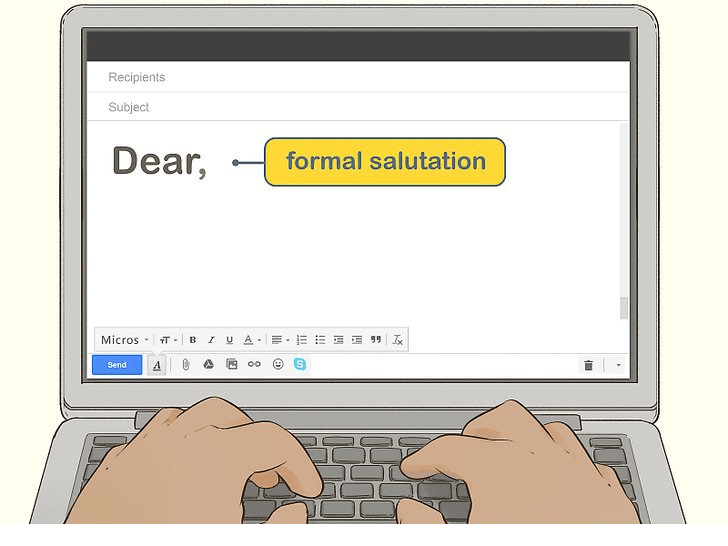
A salutation is the opening greeting line of an email — the part that directly addresses the recipient before your message begins.
It's not the same as your opening line. The salutation is the greeting ("Hi Sarah,"). The opening line is the first sentence of your email body ("I wanted to follow up on..."). They're different, and mixing them up leads to awkward emails.
There are technically two types of salutations:
- Opening salutations — how you greet the recipient at the start of an email
- Closing salutations — how you sign off at the end ("Best regards," "Thanks," "Sincerely,")
This guide focuses on opening salutations, since that's where most of the high-stakes decisions happen.
And here's the thing — a salutation is more than a formality. It communicates your relationship with the recipient, your level of professionalism, and your intent. It's your digital handshake.
The difference between "Dear Mr. Johnson," and "Hey John!" isn't just a stylistic preference. It's an entirely different signal about who you are and how seriously you've thought about who you're writing to.
📩 The First Line Matters. But So Does Everything After.
We write and run cold email campaigns that get replies. You only pay for qualified meetings we book.
Why the Right Email Salutation Matters
People form first impressions in seconds. In email, your salutation is that moment.
A mismatched tone — too casual with someone you've never met, too stiff with a colleague you work with daily — creates friction before your content even gets a chance to land. It makes readers subconsciously question whether you know your audience. That's the last thing you want.
Where it gets really practical for professional email salutations:
Personalized greetings build rapport. Generic ones feel lazy.
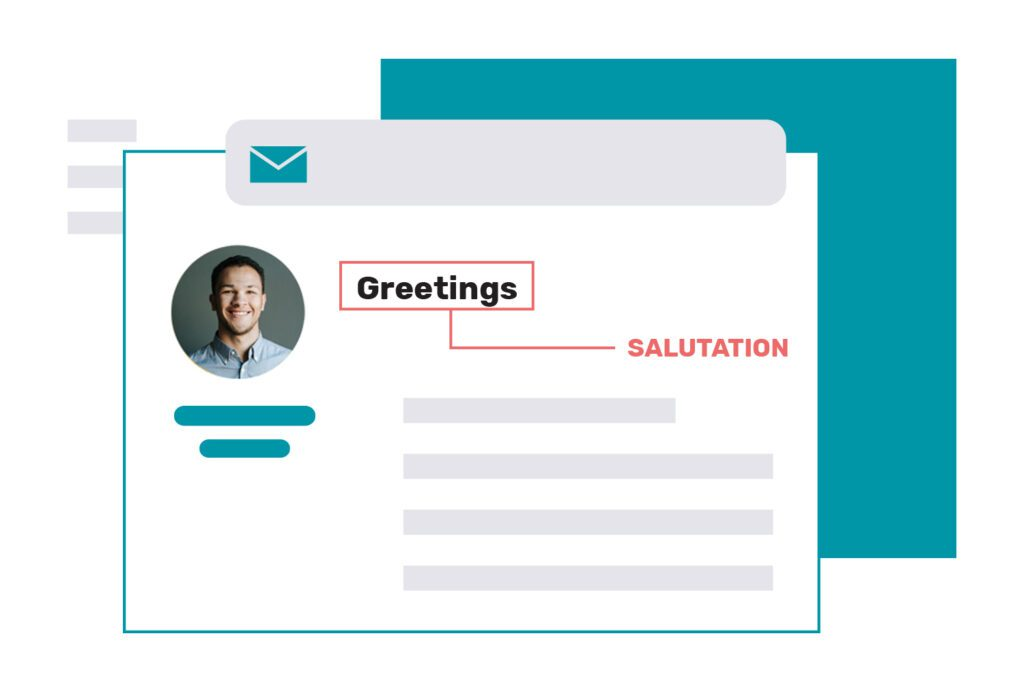
Using someone's actual name tells them you know who they are and you're writing specifically to them — not blasting a list. There is a 41% click-through rate on emails that include the recipient's first name and a 29% open rate, a meaningful lift compared to nameless alternatives.
Tone mismatch damages credibility instantly.
Addressing a CFO at a Fortune 500 company as "Hey!" signals you didn't do your homework. Addressing a 28-year-old SaaS founder as "Dear Mr. Smith" makes you sound like a legal notice. Neither works.
In cold email specifically, salutation is your first filter.
Average response rates for cold emails range from 1% to 12% — and the gap between the top and bottom performers almost always comes down to how well the email was tailored to the reader. The salutation is the very first signal of that tailoring.
Getting this right isn't a detail. It's a competitive edge.
How to Choose the Right Email Salutation
Before you type a single word of greeting, run through four quick questions:
- What's your relationship with this person? First contact or existing connection?
- What's the context? Formal business correspondence, casual internal update, or cold outreach?
- What's their role and seniority? A VP of Finance and a junior marketing coordinator aren't the same audience.
- Do you know their name? If yes, use it. Always.
A quick decision framework that works for most situations:
Cold outreach + high stakes → Formal or semi-formal ("Hello [Name]," / "Hi [Name],")
Warm connection + professional context → Semi-formal ("Hi [Name],")
Internal team or close contact → Informal ("Hey [Name]," or just "Hi [Name],")
One important note on inclusivity: avoid gendered salutations like "Dear Sir/Madam" whenever possible. They're outdated, they assume gender, and they read as impersonal.
When in doubt, use the person's full name or their role — "Dear Hiring Manager," or "Hello Marketing Team," both work far better.
How to Find the Right Name Before You Write the Greeting
A good salutation for a business email is “Hello [First Name],” or “Dear [Title + Last Name].” Both only work if the name is right.
That’s the part most guides skip. They tell you what to write. They don’t tell you how to find who you’re writing to.
The most appropriate business email salutations share one trait. They use a name that has been checked. Here’s the research process we use.
1. Start with the company website
Check the Team, Leadership, or About page first. These pages usually give you the full name, the exact title, and sometimes a short bio.
Bios are useful for more than names. They often show credentials like “Dr.” or “PhD,” which matter for the greeting you choose in the next section.
2. Look them up on LinkedIn and Sales Navigator
LinkedIn is the fastest way to confirm a name and role. Open the profile and check three things:
- Name field: Many people list a preferred name, like “Katherine (Kate) Alvarez.”
- Headline and current role: This tells you their seniority, which shapes formality.
- Credentials after the name: “MD,” “PhD,” or “CPA” can signal a title you should use.
If you’re building a list, Sales Navigator lets you filter by role and company, then pull names in bulk. It’s the same process we use before any campaign goes live. Our guide on how to generate leads on LinkedIn covers the full workflow.
3. Use an email finder, then verify the result
If you know the person’s name but not their email, an email finder can fill the gap. Tools like Hunter, Apollo, and Snov.io pull addresses from public and licensed data. Our posts on finding company email addresses and finding CEO email addresses walk through the methods.
Two rules matter here:
- Verify before you send. Instantly’s 2026 data puts a healthy cold email bounce rate under 2%, per lemlist’s benchmark summary. A verification tool keeps you under that line.
- Never guess a name from an email address. “jsmith@company.com” tells you nothing about whether it’s Jessica, Jason, or Jaspreet.
4. Call the front desk or ask a mutual contact
This one feels old school. It works.
A quick call to the main line is often enough. Try something like: “Hi, I’m sending a note to your head of marketing. Could you confirm the spelling of their name?” Most receptionists will help. If you hit resistance, our guide on getting past the gatekeeper has scripts for it.
A mutual connection is even better. A one-line message like “Quick check, is it Sara or Sarah?” saves you from a mistake and sometimes earns you a warm intro.
5. Confirm spelling and preferred name
Before you hit send, run a final check:
- Spelling: Compare the name across two sources, like LinkedIn and the company site.
- Preferred name: If their profile says “Robert (Bob),” Bob is the safer pick for a casual email. Use Robert if you’re going formal.
- Their own signature: If you’ve seen an email from them, copy exactly how they sign it.
This takes two minutes. A wrong name costs you the whole email.
If you need to do this across hundreds of prospects, that’s list-building work we handle inside our cold email outreach service, so the greeting is right before the first send.
🚀 Great Openings → More Replies → More Calls
We handle targeting, copy & sending end-to-end. More replies. More meetings. Zero busywork.
7 Best Email Salutations (With Examples for Every Situation)
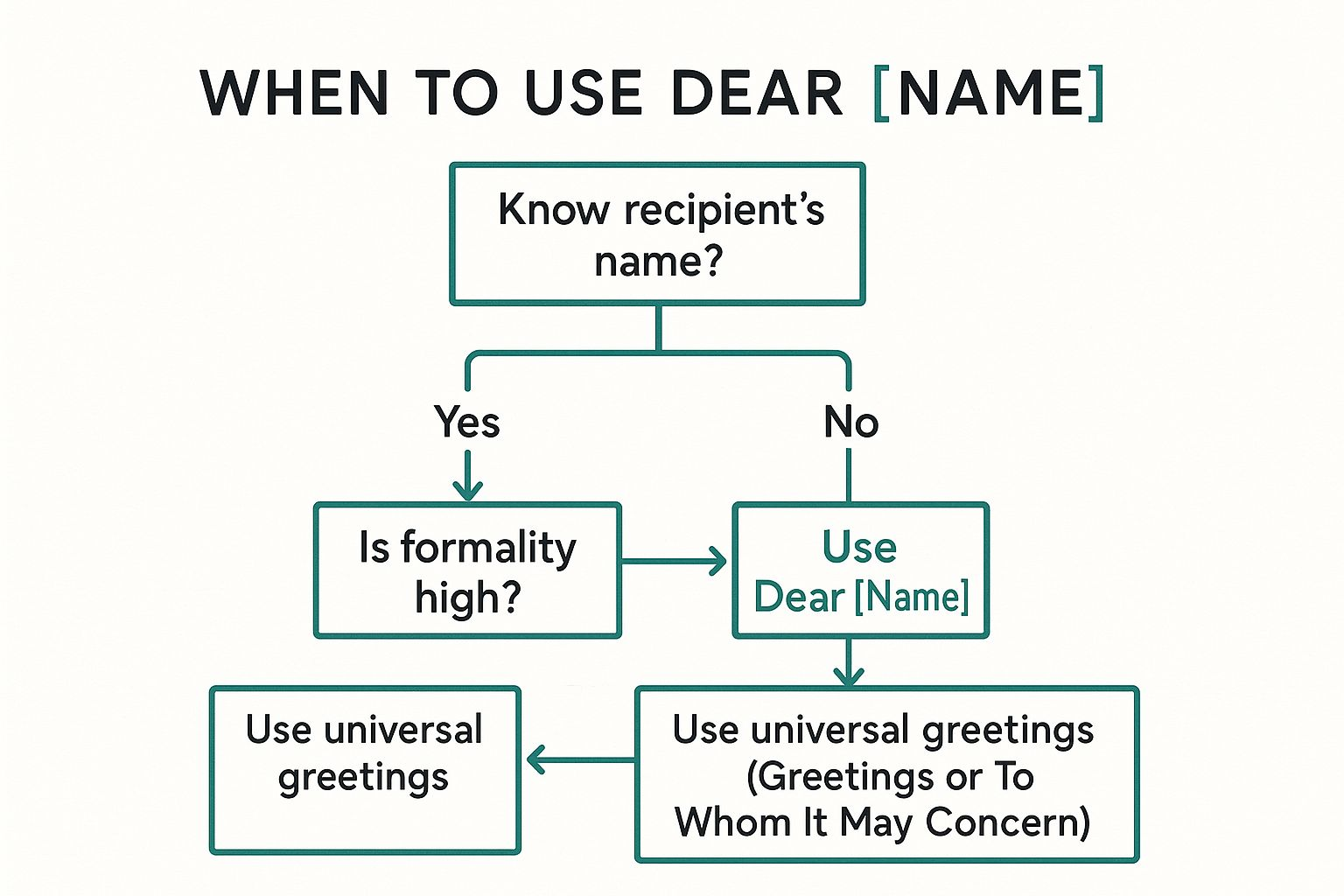
1. Dear [Name]
Best for: First-time formal contact, job applications, reaching out to senior professionals, legal or official correspondence.
Why it works: "Dear" is timeless. It's universally professional and conveys genuine respect without being stiff or stuffy. It signals that you're taking the interaction seriously.
Examples:
- "Dear Ms. Carter,"
- "Dear Dr. Evans,"
- "Dear James,"
When to avoid: Ongoing back-and-forth email chains where "Dear" starts to feel like you're writing a letter each time. It can feel rigid in a long thread.
2. Hi [Name]
Best for: Most professional emails where you know the recipient's first name — clients, prospects, new connections, and everyday business communication.
Why it works: Friendly, direct, and modern. "Hi [Name]" has become the default for professional B2B communication because it hits the sweet spot between warm and professional. It doesn't try too hard in either direction.
Examples:
- "Hi Sarah,"
- "Hi James,"
Important note: Always include the name. "Hi," alone is too generic and makes the email feel like a broadcast rather than a conversation.
3. Hello [Name]
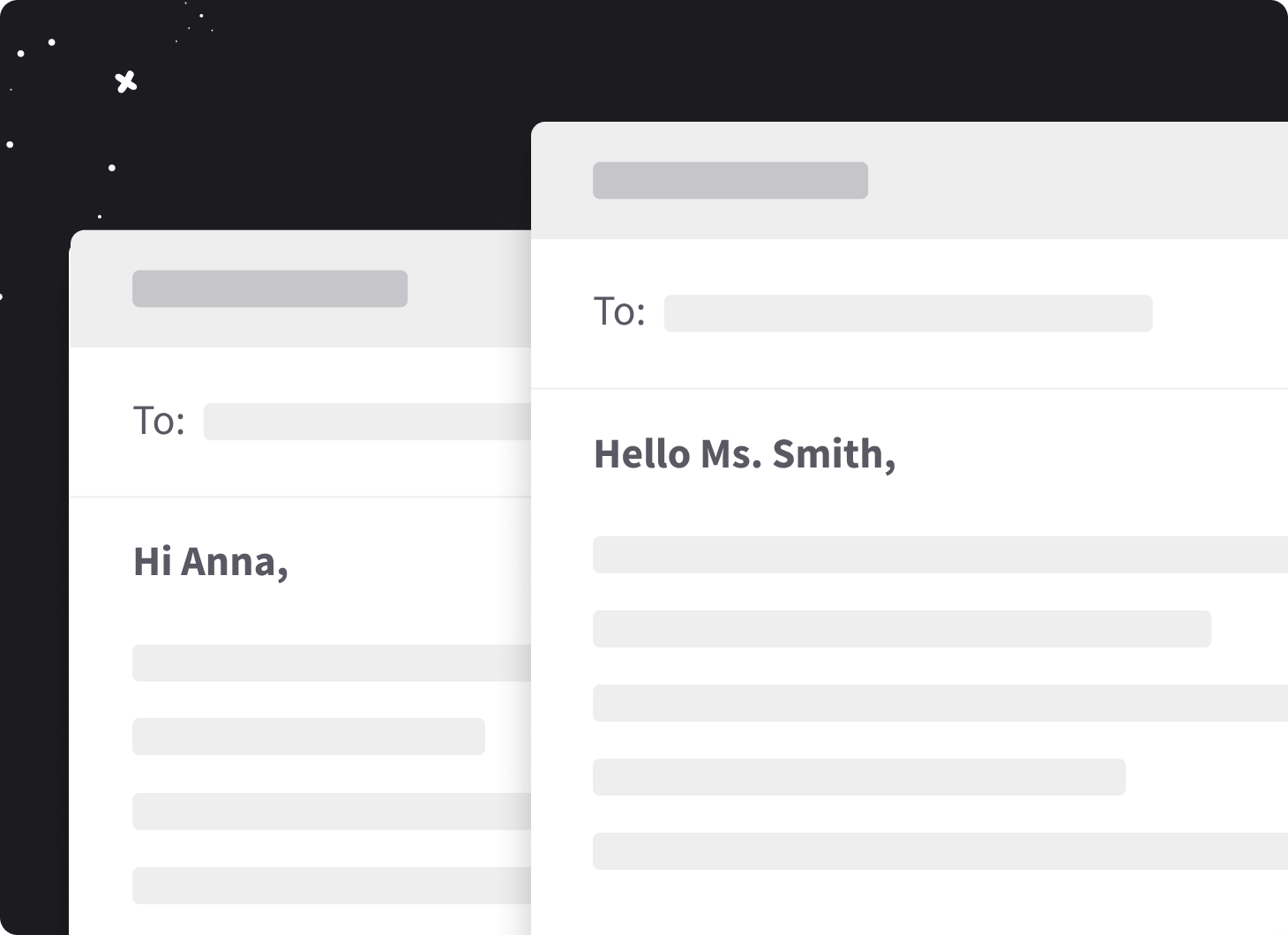
Best for: Professional emails that need a slightly more formal tone than "Hi" but don't warrant a full "Dear."
Why it works: Neutral, respectful, and flexible. "Hello" works across nearly every context — including cold outreach — because it doesn't carry the informality of "Hi" or the formality weight of "Dear." It's often the safest first-touch option.
Examples:
- "Hello Marcus,"
- "Hello Team,"
It's a great middle-ground choice for unsolicited or first-touch emails where you want to come across as professional but approachable.
4. Good Morning / Good Afternoon [Name]
Best for: Time-sensitive emails, customer-facing communication, service contexts, or situations where a warm, human touch matters.
Why it works: It adds a layer of warmth and feels deliberately personal — like you're acknowledging the person in the moment rather than just sending another email into the void.
Examples:
- "Good morning, Lisa,"
- "Good afternoon, Mr. Patel,"
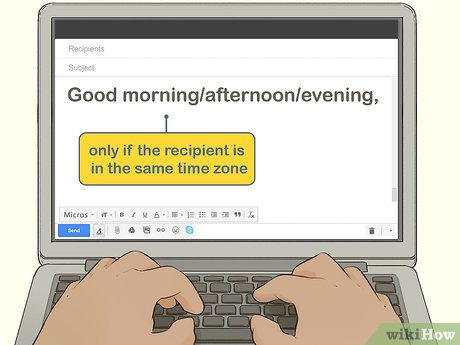
One caution: Avoid this if your recipient is in a different time zone and you can't be sure of the timing. Sending a "Good morning" email that arrives at 9 PM their time creates an awkward disconnect.
5. Greetings
Best for: Cold outreach when you don't have the recipient's name, group emails, or broad communications where a name isn't available.
Why it works: Neutral, professional, and slightly warmer than "To Whom It May Concern." It doesn't sound like spam, doesn't assume gender, and doesn't expose the fact that you're running a high-volume sequence.
Examples:
- "Greetings,"
- "Greetings from the Cleverly team,"
SDRs often use this in cold email sequences specifically because it reads as human without requiring a name lookup.
6. Hi Everyone / Hi Team
Best for: Group emails, internal team updates, or department-wide communications.
Why it works: Inclusive, friendly, and appropriate when you're addressing more than one person at once. It acknowledges the group without making anyone feel singled out.
Examples:
- "Hi everyone,"
- "Hi Marketing team,"
This is also the better alternative to "Hey guys" — which carries an unintentional gender bias that's easy to avoid.
7. To Whom It May Concern
Best for: Formal letters to departments or organizations when no specific contact is known and research has come up empty.
Why it works: Professional and neutral for situations where a name is genuinely unavailable — like writing to a department inbox at a large organization.
Example:
- "To Whom It May Concern,"
When to avoid: Whenever you can find a name — use it. This salutation reads as impersonal and dated in most modern email contexts. If you're sending a job application and don't know the hiring manager's name, spend five minutes on LinkedIn before defaulting to this. The effort signals respect; this salutation signals the opposite.
Professional Email Salutations: Formal vs. Informal vs. Semi-Formal
Understanding the three levels of professional email salutations — and when each applies — is what separates competent communicators from great ones.
A quick rule:
When you're in doubt, go one level more formal than you think you need. Formality signals respect. You can always warm up as the relationship develops. But starting too casual with someone you've never met is a harder hole to dig out of.
Your company's brand voice also plays a role here. A startup culture that communicates internally with "hey" all day is going to feel odd if their sales team sends rigid "Dear Mr./Ms." emails to prospects. Match the salutation level to both the context and the brand.
How to Use Titles and Honorifics in Email Greetings
Picking the right title is where professional salutations get tricky. Skip it and you can sound too casual. Overdo it and you sound like a legal notice. Here’s how to handle it.
When to use Mr., Ms., Dr., or Prof.
Use a title when the situation is formal or the person has earned one. These are the common cases:
- Mr. / Ms.: First contact with a senior executive, a job application, or formal correspondence.
- Dr.: Anyone with a doctorate or medical degree. This includes PhDs. If they use it, you use it.
- Prof.: University professors and academic contacts.
Use “Ms.” for women unless you know they prefer “Mrs.” or “Miss.” Don’t assume marital status.
Some cultures expect titles more than others. In Germany, Japan, and parts of the Middle East, dropping a title in a first email can read as disrespectful. If you’re writing across borders, lean formal.
What to do when gender is unknown
Don’t guess. A wrong guess is worse than no title at all. Use the full name instead:
- “Dear Jordan Rivera,”
- “Hello Alex Chen,”
It’s neutral, respectful, and completely standard. It also keeps you out of the “Dear Sir or Madam” trap we flagged earlier. If you know the person uses “Mx.,” use it. If you don’t, the full name is the safe call.
Follow the recipient’s own sign-off
This is the simplest rule in the section. Look at how they sign.
- They sign “Dr. Elena Park”? Greet them as “Dear Dr. Park.”
- They sign “Elena”? You can use “Hi Elena.”
- They sign “Best, E.”? Match their level of formality and stay one step more polite than they are.
Their signature tells you what they want to be called. Use it.
Switching from title to first name
You don’t have to stay formal forever. Move to first names when:
- They invite it. “Please call me Mark” is a clear green light.
- They sign with a first name. If their reply ends with “Mark,” you can use “Hi Mark.”
- The thread has run a few exchanges and the tone has clearly warmed up.
Let them make the first move when the gap in seniority is large. If you’re writing to a C-level executive, wait for them to switch first. It’s a small courtesy that people notice.
Email Salutations to Avoid (And What to Use Instead)
Some salutations in email choices are so common they've become invisible — but they're quietly undermining your credibility. Here's what to cut:
❌ "To Whom It May Concern" — impersonal and outdated. Replace it with the recipient's name, their role, or their team name.
❌ "Dear Sir or Madam" — gendered and lazy. Use a full name or a neutral alternative like "Dear Hiring Manager."
❌ "Hey!" — too casual for any professional context where you're trying to be taken seriously.
❌ "[Name]," or "[Name]!" alone — skipping a greeting word entirely feels abrupt and can come across as borderline rude.
❌ Misspelled names — immediately undermines your credibility before the first sentence. Double-check every time.
❌ Unsent template placeholders — "Hi [First Name]," going out in a live campaign is one of the most damaging mistakes in cold outreach. It signals automation without personalization — the worst of both worlds.
❌ "I hope this email finds you well" — not technically a salutation issue, but it's the opener that immediately follows the greeting and it adds zero value. Cut it every time.
Salutations for Replies, Follow-Ups, and Multiple Recipients
Most people learn salutations for first emails. But much of your inbox is replies, follow-ups, and group threads. These are different salutation options, and each has its own rules.
This matters for outreach, too. Data shows 58% of replies come from the first email, which means the other 42% come from follow-ups. Your follow-up greeting counts.
When to drop the greeting in ongoing threads
You don’t need a full salutation in every reply. Here’s a simple rule.
- First reply in a thread: Keep the greeting.
- Fast back-and-forth (same day, same topic): You can drop it, or use just their name: “Sarah, got it. Sending the file now.”
- Thread goes quiet for a few days: Bring the greeting back.
- A new person joins or the topic changes: Greet again.
Dropping the greeting too early with someone senior can feel abrupt. When in doubt, keep it.
Greetings for replies
When someone reaches out first, acknowledge it. A good reply greeting thanks them in the same breath.
- “Hi Sarah, thanks for reaching out.”
- “Thanks for getting back to me, James.”
- “Hello Priya, thank you for the quick reply.”
Keep it short. One line of thanks, then get to the point.
Greeting two or three named recipients
Use every name. It shows you know who’s on the email.
- Two people: “Hi Sarah and James,”
- Three people: “Hi Sarah, James, and Priya,”
On order, list the most senior person first when hierarchy matters. Otherwise, follow the order in the To line.
Once you hit four or more people, names get clumsy. Switch to a group greeting.
Unknown or large groups
When you can’t name everyone, a group greeting is the right call.
- “Hi team,” for your own team or a department.
- “Hello everyone,” for mixed or larger groups.
- “Hi all,” for quick internal threads.
- “Hi there,” when you don’t have a name at all.
“Hi there” is a last resort. Don’t use it in cold outreach if a quick search can give you a name. We covered “Hi Everyone / Hi Team” in the 7 Best list above. Use “Hey guys” nowhere.
Email Salutation Examples for Different Scenarios
Here's how email salutation examples translate across the real situations you'll encounter most often:
1. Cold outreach email: "Hi [First Name]," or "Hello [First Name]," — warm, direct, and personalized.
2. Job application: "Dear Hiring Manager," or "Dear Ms. [Last Name]," — formal and targeted.
3. Following up with a prospect: "Hi [First Name]," — keep it warm and familiar since you've already made contact.
4. Emailing a senior executive for the first time: "Dear Mr./Ms. [Last Name]," — default to formal until the relationship develops.
5. Group or team announcement: "Hi team," or "Hi everyone," — inclusive and appropriate.
6. Customer service or complaint response: "Hello [Name]," or "Dear [Name]," — professional and attentive.
7. Re-engagement or nurture email: "Hi [First Name]," followed by a warm, low-pressure opener — the goal is to restart the conversation, not alarm them.
Matching Your Salutation With the Right Email Closing
Your greeting and your closing are a pair. If they don’t match, the email feels off even when the middle is good.
We’ve seen this a lot. “Hey Mark,” at the top and “Yours sincerely,” at the bottom. Nobody writes like that in real life. Getting your email salutations and professional salutations to line up with your sign-off keeps the tone steady from start to finish.
Opening-to-closing pairing table
Closings by formality level
- Formal: Sincerely, Respectfully, Yours sincerely
- Semi-formal: Best regards, Kind regards, Thank you, Best
- Informal: Thanks, Cheers, Talk soon
Same rule as the greeting. When in doubt, go one level more formal.
Closings to avoid
❌ “Thanks in advance” reads as presumptuous. You’re assuming they’ll say yes.
❌ “Cheers” to a first-time prospect can feel too casual, depending on their seniority and region.
❌ “Regards” alone can come across as cold and a little dismissive.
❌ “Thx” or “Rgds” looks rushed and careless.
❌ “Sincerely” after “Hey [Name],” is a tone clash.
❌ “Yours faithfully” is British and belongs with “Dear Sir or Madam,” which you should be avoiding anyway.
Keep your tone consistent from start to finish
Before you send, read the first and last lines together. Ask one question: do they sound like the same person?
If the greeting is warm and the closing is stiff, fix one of them. If your opening is formal but the middle is full of slang, fix the middle.
Consistency tells the reader you wrote the whole email on purpose. That’s what makes a message feel written for them.
Want a stronger finish after the closing? Try a postscript. It’s one of the easiest ways to lift replies. Our cold email copywriting frameworks cover how to tie the whole message together.
How Email Salutations Impact Cold Email Outreach Performance
Here's where salutation in email stops being a grammar conversation and starts being a revenue conversation.
In cold email, your salutation is the very first filter. Recipients decide within seconds whether an email is worth their time. A generic opener signals a generic pitch. A personalized greeting signals research, relevance, and respect — which are the three things that actually get replies.
Personalized subject lines deliver a 46% open rate versus just 35% without — a 31% boost in visibility — and reply rates jump from 3% with no personalization to 7% with personalization, a 133% increase.
That lift starts at the salutation. Using someone's correct first name, getting their title right, and matching the formality level to their role — these aren't just niceties. They're proof points that you actually know who you're writing to.
Where most in-house teams stumble is scale. Personalizing correctly across a list of 500 prospects — verifying names, titles, and correct spellings, matching tone to seniority — takes infrastructure and process most lean teams don't have.
It's not just about the greeting; it's about building a personalization system that runs consistently without human error.
The teams that treat salutation as a detail worth getting right are usually the same ones running tighter ICP targeting, cleaner lists, and better messaging frameworks overall. Verified email lists achieve roughly 2x the reply rate of unverified lists and 5-6x the reply rate of purchased lists — and verified data starts with verified names.
Getting the greeting right is step one. Getting the entire cold email system right is what actually books meetings.
How Cleverly Handles Cold Email Personalization at Scale
We already understand the value of a personalized salutation. The harder problem is executing it correctly across hundreds of prospects without missing a beat.
At Cleverly, personalization isn't a nice-to-have — it's baked into how we build every campaign. Before a single email goes out through our cold email outreach service, we've already verified the prospect's name, confirmed their title, and matched the tone of the outreach to their seniority and industry. No placeholders, no misspellings, no generic "Hi there" to someone who deserves better.
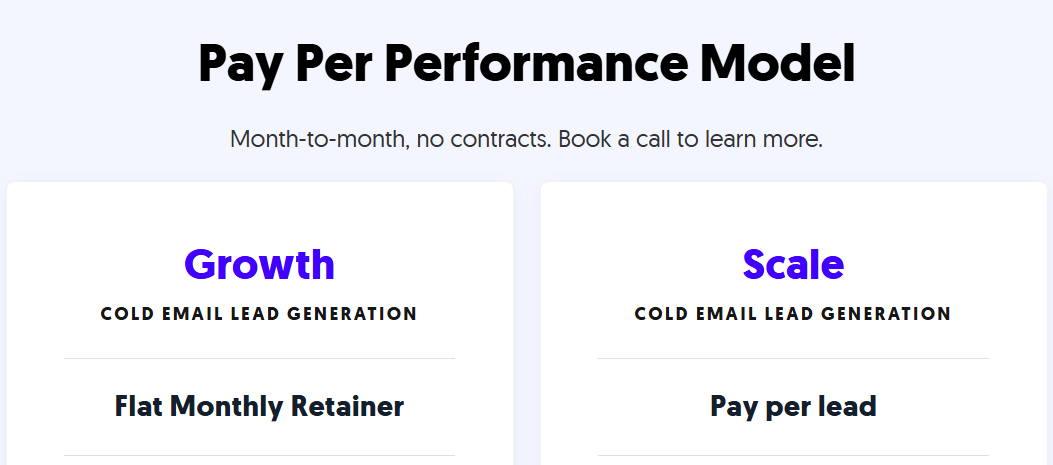
Our done-for-you cold email system covers the full stack: ICP targeting, multi-source verified list building, personalized copy at scale, domain and inbox infrastructure, and ongoing optimization based on reply data. You're not just getting a salutation right — you're getting every element of the email working together.
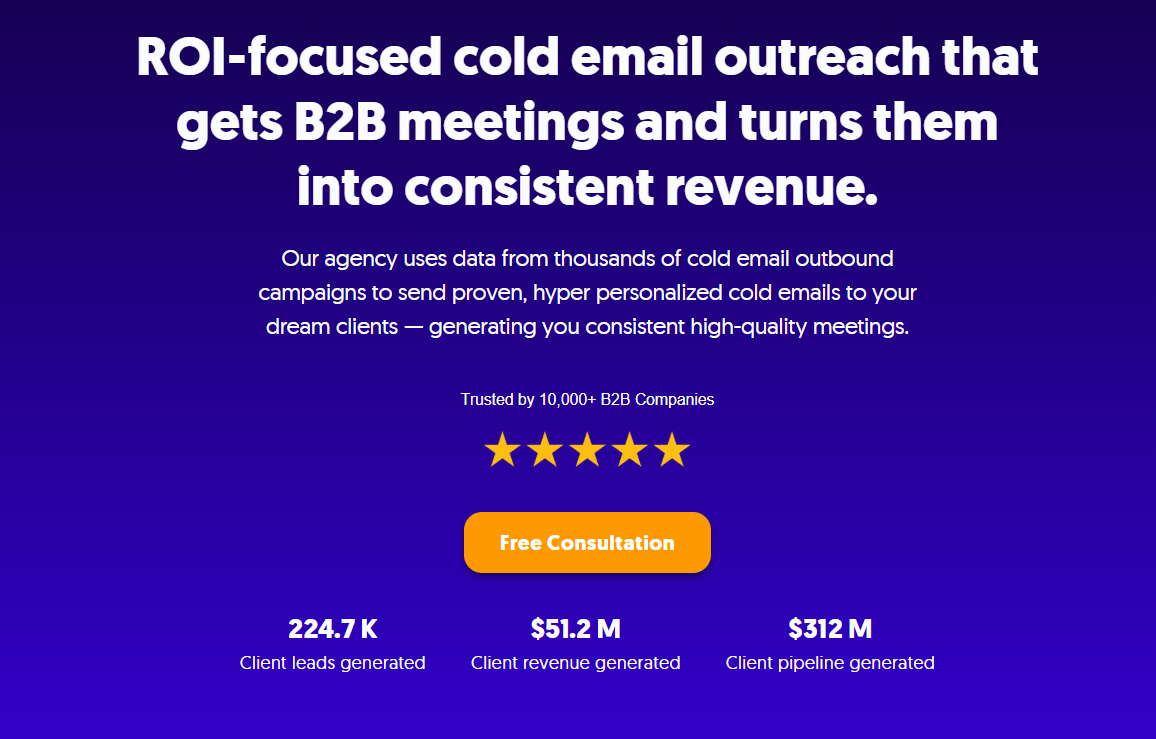
That's how we've helped 10,000+ B2B clients generate $312M in pipeline and $51.2M in closed revenue across thousands of outbound campaigns. The details — including the first line of every email — compound into results.
Want cold emails that actually get replies from the right people?
🔥 Book a free strategy call with Cleverly
Conclusion
A salutation is a small decision with a disproportionate impact on how your email lands. It sets tone, signals respect, and shapes first impressions — all before a single sentence of your actual message gets read.
Choosing the right one comes down to three things: knowing who you're writing to, understanding the context, and matching your formality level to both. When in doubt, go one level more formal — you can always warm up over time. For cold outreach especially, getting the salutation right is just the beginning. The full email system — targeting, copy, infrastructure, and follow-up — is what turns a good first line into a booked meeting.
Frequently Asked Questions
Free Resource
How to Scale a Profitable Cold Call System
Get the complete guide — download it instantly now.
Free Ebook
Download the Free Guide
Enter your details to get instant access.
You're all set! 🎉
Your ebook is downloading now.
Click below if the download didn't start automatically.