Table of Contents
What Are LinkedIn Impressions?
What Is Members Reached on LinkedIn?
LinkedIn Impressions vs Members Reached: The Actual Difference
Why the Gap Between the Two Numbers Actually Matters
How LinkedIn Actually Calculates These Numbers
How to Improve Both Numbers
Common Misconceptions About These Two Metrics
How Cleverly Approaches LinkedIn Reach Differently
Conclusion
Frequently Asked Questions
Modified On :
July 3, 2026
Key Takeaways
- Impressions count every time your post loads in a feed, even if the same person sees it five times. Members reached counts unique people, no matter how many times they viewed it.
- A big gap between the two numbers means your content is recirculating inside your existing network. A small gap means it's reaching new people but without repeat exposure.
- Neither metric alone tells you if your content worked. You need engagement rate alongside both to know if reach actually turned into interest.
- LinkedIn doesn't publish its exact counting methodology, so treat both numbers as directional signals, not precise measurements.
- If your goal is pipeline, not vanity metrics, members reached inside your actual ICP matters far more than total impression volume.
Your LinkedIn post hits 8,000 impressions and 1,200 members reached. Is that good? Most people can't answer that question because they've never actually understood what separates the two numbers sitting right next to each other in their analytics tab.
LinkedIn's algorithm went through a major shift heading into 2026, and the platform-wide data shows impressions declined 63-66% since 2023 while engagement per post actually increased. That means the old playbook of chasing raw view counts is dead.
At the same time, roughly 75% of B2B buyers now use social media to inform purchasing decisions, with about half specifically relying on LinkedIn. Your reach on this platform is directly tied to pipeline, whether you're posting personally or running outbound campaigns.
This guide breaks down exactly what LinkedIn impressions vs members reached means, how each is calculated, why the gap between them tells a story, and how to actually use both numbers to make smarter decisions instead of just staring at a dashboard.
What Are LinkedIn Impressions?
LinkedIn impressions are the total number of times your content appeared in someone's feed. That's it. It doesn't matter if the person scrolled past in half a second or read the whole thing. It doesn't matter if it's the same person seeing your post three separate times. Every load counts as one more impression.
So if one person scrolls past your post, closes the app, opens it again an hour later, and sees the same post resurfaced, that's two impressions from a single human being.
What drives impressions up:
- Posting frequency
- Strong initial engagement that triggers wider algorithmic distribution
- Reshares that put your content in front of new feeds
- Content that keeps resurfacing over hours or days
Impressions measure distribution, not audience size. A post can rack up huge impression numbers while only ever reaching a tiny, tight circle of the same people over and over.
📈 More Impressions Don't Always Mean More Pipeline
Our LinkedIn campaigns are optimized for qualified conversations and meetings—not vanity metrics.
What Is Members Reached on LinkedIn?
Members reached is your unique audience count. LinkedIn counts each individual member or company page exactly once, no matter how many times they saw your post. This number is always equal to or lower than impressions. It can never be higher.
Think of it this way: impressions tell you how loud you were. Members reached tells you how many different people actually heard it.
What drives members reached up:
- Growing your actual follower base
- Content that gets shared into networks outside your own
- The algorithm pushing your post to second and third degree connections
- Comment threads that pull in people outside your immediate circle
If you're running any kind of outbound or content-led growth motion, members reached is the number that maps most directly to "how many new people did we put our name in front of."
LinkedIn Impressions vs Members Reached: The Actual Difference
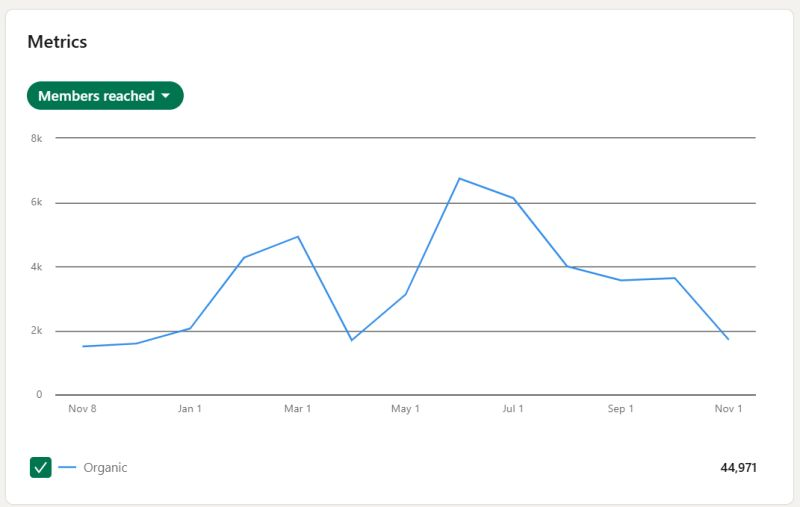
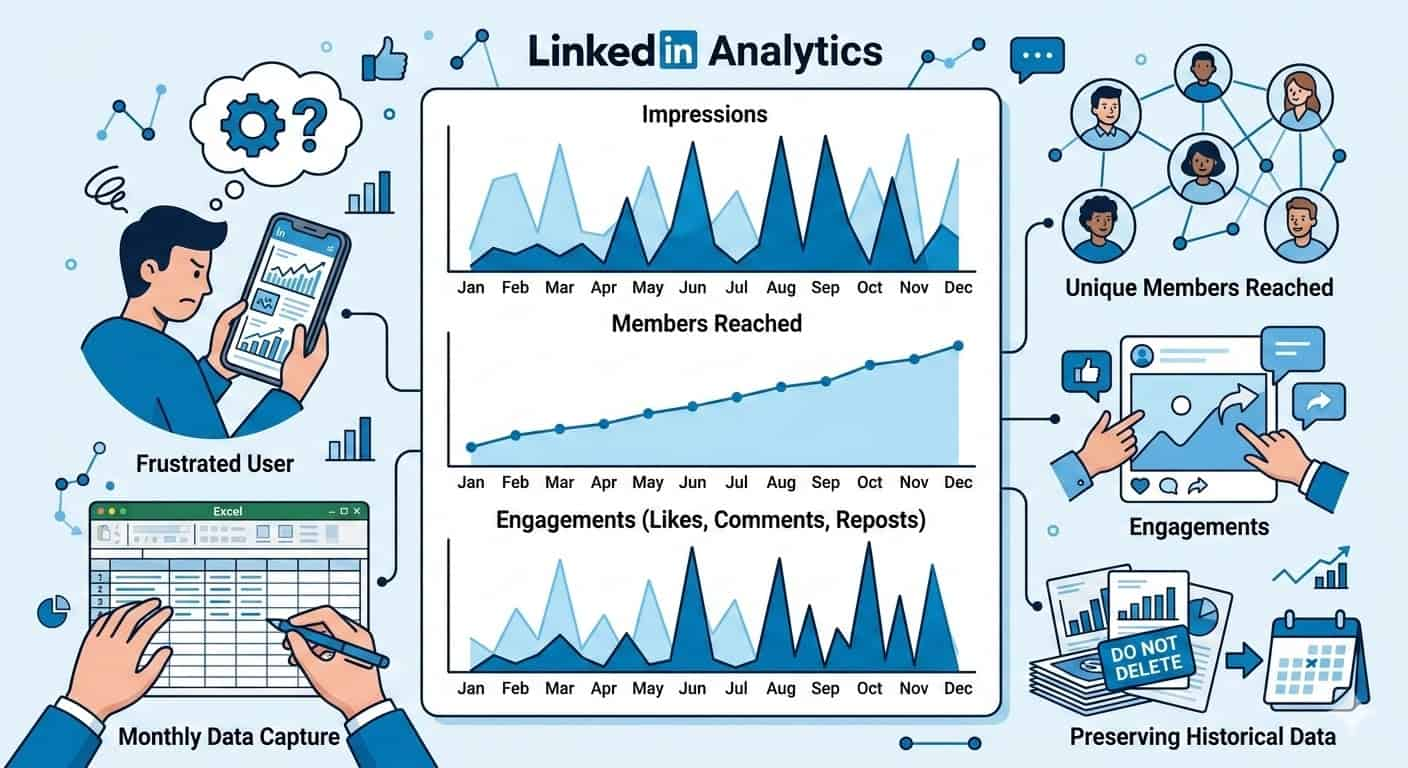
Simplest way to think about it - impressions are total views including repeats, members reached is unique viewers only.
Example: one person opens LinkedIn five separate times and sees your post each time. That's 5 impressions and 1 member reached from that single person.
The ratio between the two is more useful than either number in isolation:
- High impressions, low members reached → your content is bouncing around inside a small, familiar audience.
- Members reached close to impressions → you're reaching a lot of different people, but mostly just once each.
Neither pattern is automatically good or bad. It depends entirely on what you're trying to accomplish with that specific post.
🚀 Turn LinkedIn Activity Into 15–30 Meetings Per Month
Starting at $397/month, our done-for-you LinkedIn lead generation service helps B2B teams generate predictable pipeline.
Why the Gap Between the Two Numbers Actually Matters
A wide gap tells you your content is resonating with people who already know you, but it's not breaking out. A narrow gap tells you the opposite: you're reaching fresh eyes, but nobody's coming back for a second look.
Here's how to diagnose what you're seeing:
Impressions way higher than members reached → Your existing network is engaging repeatedly, but the algorithm isn't pushing you past that circle. Try commenting on other people's posts in your target audience, or tag people who'd naturally want to weigh in.
Members reached climbing faster than your follower count → Something's working. The algorithm decided your content was relevant enough to show to people who don't follow you yet. That's the signal you want to replicate.
Both numbers flat → The post didn't gain any traction at all. This usually comes down to a weak hook, bad timing, or a topic that didn't match what your audience actually cares about.
Use this as a health check, not a scorecard. One flat post doesn't mean your strategy is broken. A consistent pattern across ten posts does.
How LinkedIn Actually Calculates These Numbers
Impressions get logged every single time your post renders on someone's screen. Organic and paid impressions are tracked as separate line items inside your analytics.
Members reached increments once per unique account. If the same person scrolls back to your post later, that doesn't add a second count.
One important caveat: LinkedIn has never published the exact mechanics of how it counts either metric. You won't find a technical spec anywhere. Treat both numbers as directional, useful for spotting trends over time, not as forensic-grade precision.
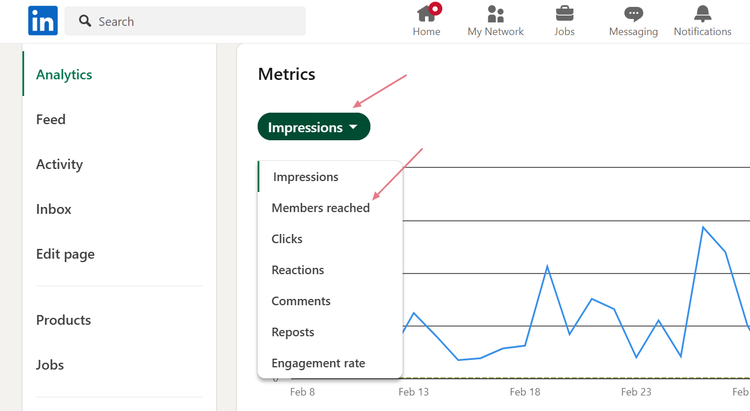
You'll find both under "View analytics" on any individual post, right alongside reactions, comments, and shares.
When to Focus on Impressions vs Members Reached
Prioritize impressions when:
- You're running a brand awareness push and want repeated exposure to the same audience.
- You're reinforcing a specific message with people who already know your brand.
- You're measuring total distribution across a multi-post campaign.
Prioritize members reached when:
- You're trying to grow beyond your current network.
- You're running anything tied to lead generation or demand gen.
- You want to know how many actual decision-makers saw a specific post.
- You're checking whether your content is breaking out of your existing bubble.
Use both together when:
- You're evaluating overall content performance (impressions show volume, members reached shows breadth).
- You're reporting up to leadership, since one number alone tells half the story.
- You're diagnosing why a campaign underperformed.
How to Improve Both Numbers
A few things actually move the needle here, based on what's working under LinkedIn's current algorithm:
✅ Post consistently, not constantly. Two to four posts a week is the current sweet spot for most creators and brands. Moving from one post per week to two or four adds roughly 1,234 impressions per post on average.
✅ Nail the first two lines. This is what decides whether someone clicks "see more" or scrolls past. Weak hooks kill both impressions and reach before the algorithm even gets a chance to distribute your post further.
✅ Get early engagement in the first hour. Comments and reactions in that initial window signal quality to the algorithm, which then pushes your content to second and third degree connections. This is where members reached actually grows.
✅ Prioritize comments over likes. Comment threads, especially ones where people actually reply to each other, carry significantly more algorithmic weight than passive likes or reactions.
✅ Use documents and carousels where relevant. Native formats like PDF carousels are currently outperforming standard text and link posts by a wide margin on engagement.
✅ Repurpose what already worked. If a post performed well three months ago, reformat it. You're not being lazy, you're compounding an asset that already proved it resonates.
Common Misconceptions About These Two Metrics
❌ "More impressions means more reach." Not true. Impressions can be inflated entirely by the same small group of people seeing your post repeatedly.
❌ "Members reached equals engagement." Also not true. Someone can be counted as reached without ever liking, commenting, or clicking anything.
❌ "High impressions mean the content performed well." Not necessarily. High impressions paired with low members reached and low engagement usually means you're preaching to the same choir on repeat.
❌ "LinkedIn counts every impression that exists." It only counts an impression when the post actually renders on someone's screen. If they never scroll far enough to see it, it doesn't count.
❌ "Members reached only includes your followers." False. It includes anyone the algorithm distributed your content to, follower or not.
How Cleverly Approaches LinkedIn Reach Differently
Understanding impressions versus members reached isn't just an analytics exercise for us. It's something that directly shapes how we build and run outbound campaigns for clients every single day.
We've run LinkedIn lead generation for 10,000+ B2B companies, and one pattern shows up constantly: teams obsess over impression counts and completely ignore whether they're reaching the right unique people. Reach without relevance is wasted effort.
That's why our approach centers on members reached within a tightly defined ICP, not total visibility across a broad, unfiltered audience.
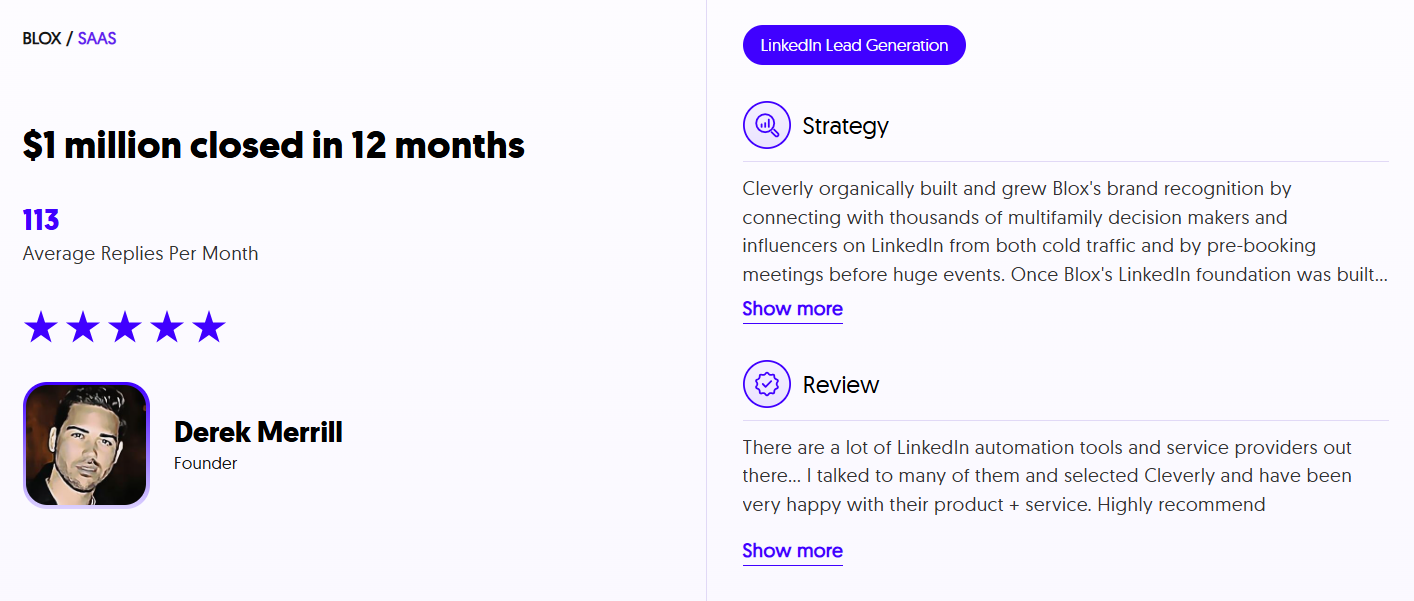
We combine ICP-aligned connection requests, personalized outreach sequences, and content-supported touchpoints that turn algorithmic reach into actual conversations. Companies that come to us are usually tired of watching impression numbers climb with zero pipeline to show for it.
We've helped generate $312M in pipeline revenue for clients precisely because we treat reach as a means to a conversation, not a vanity metric to report on.
If you want your LinkedIn presence to book meetings instead of just racking up views, book a strategy call with Cleverly and we'll show you exactly how we'd approach your specific ICP.
Conclusion
Impressions and members measure two completely different things: how loud your content is, and how many distinct people actually heard it. The number that matters more depends entirely on what you're trying to accomplish with a given post or campaign.
Stop treating either metric as a standalone scoreboard. Look at the ratio between them, pair it with your engagement rate, and use that combination to figure out whether your content is actually reaching the right people or just circling the same small crowd.
In 2026, with organic reach down across the board, the accounts winning aren't the ones chasing bigger numbers. They're the ones reaching the right people, consistently, with something worth their attention.
Frequently Asked Questions
Free Resource
How to Scale a Profitable Cold Call System
Get the complete guide — download it instantly now.
Free Ebook
Download the Free Guide
Enter your details to get instant access.
You're all set! 🎉
Your ebook is downloading now.
Click below if the download didn't start automatically.