

Table of Contents
The Lead Generation ROI Formula
How to Calculate Lead Generation ROI Step by Step
Key Metrics You Need Before Calculating ROI
LinkedIn Lead Generation ROI: Costs and Benchmarks
Cold Email ROI: Costs and Benchmarks
Cold Calling ROI: Costs and Benchmarks
Comparing ROI Across LinkedIn, Email, and Cold Calling
Common Mistakes When Calculating Lead Generation ROI
How Cleverly Helps You Maximize ROI Across LinkedIn, Email, and Cold Calling
Conclusion
Frequently Asked Questions
Modified On :
August 3, 2026
Key Takeaways
- ROI only means something when you calculate it per channel, not in one blended number. LinkedIn, cold email, and cold calling have completely different cost structures, and lumping them together hides which one is actually working.
- Chasing a low cost per lead is a trap. A channel with a higher CPL but a much better close rate can still deliver better lead generation ROI than a "cheap" channel that never converts.
- Cost per qualified meeting is a more honest number than cost per lead. It strips out the noise of raw lead counts and shows you what you're actually paying for a real sales conversation.
- Pick one attribution model (first-touch or multi-touch) and stick with it. Flip-flopping between models is one of the fastest ways to make your channel comparisons meaningless.
- ROI isn't a one-time report. Costs, reply rates, and close rates shift every quarter, so the teams who win treat ROI tracking as an ongoing habit, not a spreadsheet you build once and forget.
Most B2B teams run LinkedIn, cold email, and cold calling at the same time, and most of them still can't tell you which one is actually paying for itself. That's not a knowledge gap. It's a math gap.
Here's what the numbers look like right now. B2B cost per lead ranges anywhere from $420 to $3,080 depending on your industry, and that range has only widened as ad auctions get more competitive.
Cost per qualified lead averages around $198 across industries, but that number swings wildly depending on which channel actually generated the lead. And when you compare warm inbound leads to cold outbound ones, inbound closes at roughly 14.6% versus 1.7% for cold outreach. Same funnel, wildly different math.
Without a consistent ROI formula, budget decisions end up based on gut feel or vanity metrics like total leads generated, not actual revenue.
This guide walks through the ROI formula, the cost metrics you need before you can calculate it (CPL, CPQL, CAC, cost per meeting), current benchmarks for LinkedIn, email, and cold calling, and how to compare all three channels apples-to-apples.
If you're a marketing or sales leader trying to justify (or reallocate) lead gen spend, this is the framework to use.
The Lead Generation ROI Formula
The core formula is simple: ROI (%) = [(Revenue − Cost) / Cost] x 100
Say you spent $10,000 on cold email last quarter and it generated $40,000 in closed revenue. Your ROI is:
[($40,000 − $10,000) / $10,000] x 100 = 300% ROI
That means you earned $3 for every $1 you spent. Simple, and useful, as long as you're calculating it correctly.
ROI vs. ROAS: know the difference
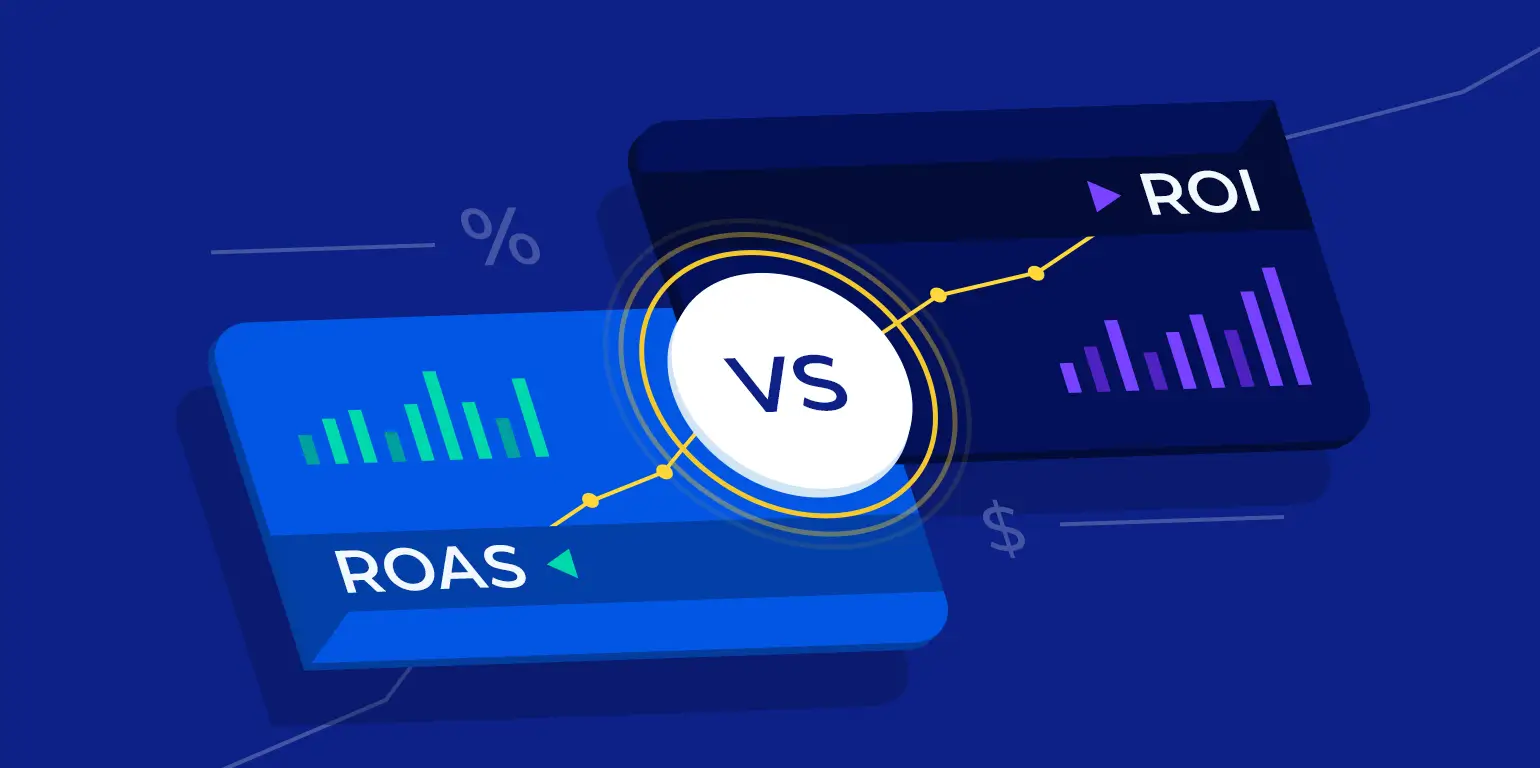
A lot of teams accidentally calculate ROAS (return on ad spend) and call it ROI. ROAS just divides revenue by spend:
ROAS = Revenue / Cost
Using the same example, ROAS would show 4x ($40,000 / $10,000), which looks a lot more impressive than 300% ROI.
The problem is ROAS never subtracts the cost, so it inflates your results. ROI is the number that actually tells you if you made money. ROAS is the number that makes a slide deck look good.
Use net revenue, not gross bookings
If you're closing deals with discounts, refunds, or returns baked in, use net revenue (gross revenue minus discounts and returns) in your ROI formula. Gross bookings will overstate your actual return and make underperforming channels look healthier than they are.
📈 Know Your ROI. Then Scale What Works.
Our multi-channel outbound campaigns generate 15–30 qualified meetings every month with results you can actually measure.
How to Calculate Lead Generation ROI Step by Step
Step 1: Total your costs per channel
This includes ad spend, tool subscriptions, agency fees, rep or SDR salaries, and any data or list costs. Keep these separate by channel. If your cold email costs and LinkedIn costs are bundled into one line item, you can't compare them.
Step 2: Track leads through every stage
Map the full progression: lead → qualified lead → meeting → closed deal. A channel that generates a lot of leads but few meetings is a different story than a channel with fewer leads but a high meeting rate.
Step 3: Attribute closed revenue back to the originating channel
Decide whether you're using first-touch attribution (credit goes to whatever channel started the relationship) or multi-touch (credit is split across every touchpoint). Either works, but pick one.
Step 4: Apply the ROI formula per channel
Not just in aggregate. Calculate LinkedIn ROI, cold email ROI, and cold calling ROI separately, then compare.
Step 5: Compare ROI against payback period and sales cycle length
A channel with 150% ROI but a 9-month sales cycle behaves very differently in your cash flow than a channel with 100% ROI and a 6-week cycle. Don't judge on the percentage alone.
Key Metrics You Need Before Calculating ROI
Your ROI number is only as accurate as the metrics feeding into it. Here's what you need to track before you even open the ROI formula.
Cost Per Lead (CPL)
CPL = Total channel spend ÷ number of leads generated
B2B cost per lead runs a wide range, roughly $420 to $3,080 on average, and can vary by up to 30x depending on industry. Software and IT services tend to sit at the high end because the buyer pool is smaller and more competitive.
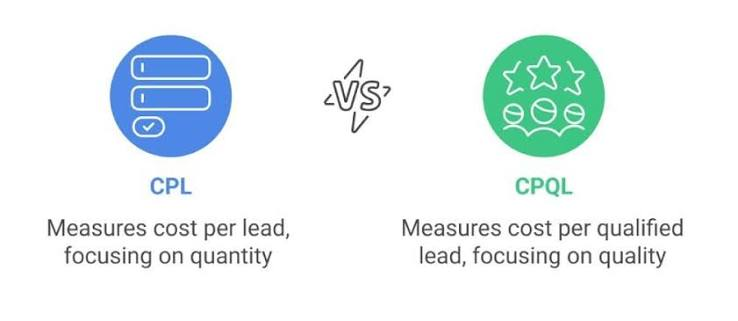
Cost Per Qualified Lead (CPQL)
CPQL = Total spend ÷ number of leads that actually meet your qualification criteria
This is the number that matters more than raw CPL. The average CPQL across industries sits around $198, though this varies heavily by channel and how tight your ICP fit is. A $50 raw lead that never qualifies is a worse deal than a $300 lead that closes.
Customer Acquisition Cost (CAC)
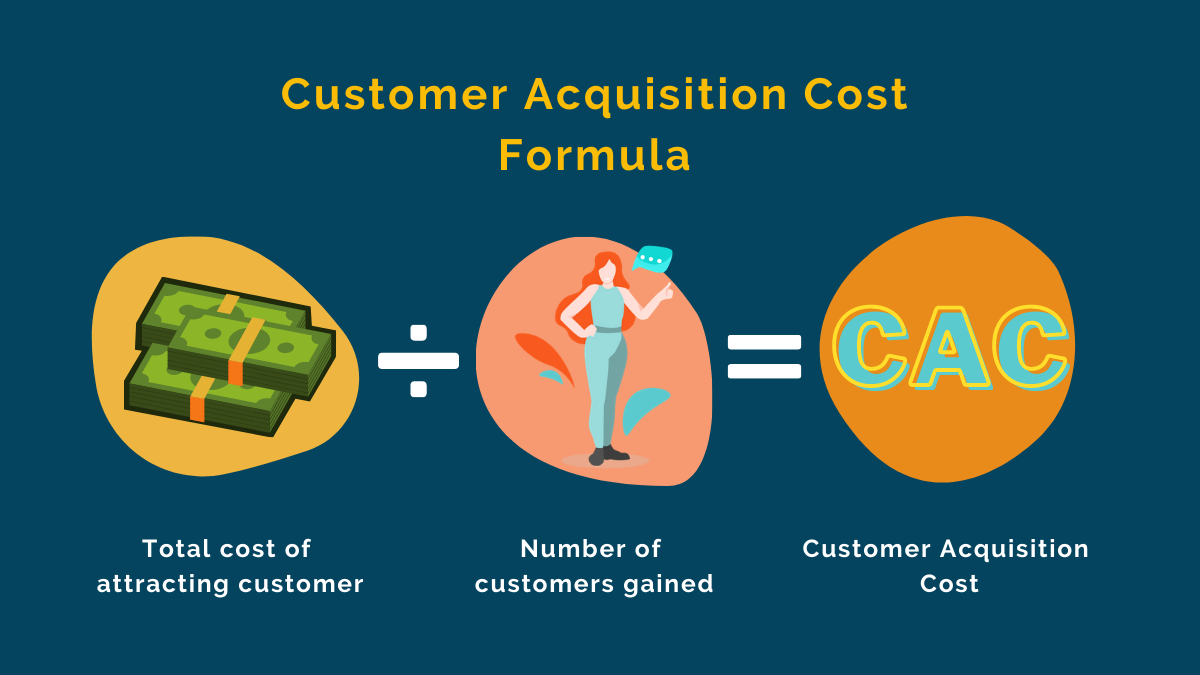
CAC = Total sales + marketing spend ÷ number of new customers acquired
This is where the inbound vs. outbound gap really shows up. Inbound-qualified leads close around 14.6% of the time. Cold outbound leads close around 1.7%. That gap compounds fast: it takes far more cold leads, and therefore far more spend, to land the same number of customers, which is exactly why CAC tends to run higher for outbound-only programs unless conversion rates are actively managed.
Cost Per Sales Meeting
Cost per meeting = Total channel spend ÷ number of qualified meetings booked
This is often the most actionable metric of the four. It's the one number most directly tied to pipeline, because a meeting is the first real signal that a lead is worth your sales team's time.
🚀 53,000+ Meetings. $312M+ Pipeline. Proven ROI.
See why 10,000+ businesses trust Cleverly to turn LinkedIn, cold email, and cold calling into predictable revenue.
LinkedIn Lead Generation ROI: Costs and Benchmarks
Paid LinkedIn ads average $408 in cost per lead, ranging anywhere from $15 to $800+ depending on industry and offer type. That's one of the highest CPLs of any B2B channel.
Organic or manual LinkedIn outreach looks different. Cold connection-based outreach typically runs $150 to $400 CPL, while inbound-style engagement methods (content, comments, warm network activity) can bring that down to $15 to $50.
LinkedIn Lead Gen Forms usually land in the $75 to $150 range.
Here's the trade-off: LinkedIn's CPL often looks expensive next to email. But it comes with the highest relationship-building value of the three channels and the most precise decision-maker targeting available anywhere.
A LinkedIn lead that costs 3x what a cold email lead costs can still deliver a better ROI if it converts at a meaningfully higher rate downstream, which it often does for high-ACV, relationship-driven B2B sales.
Cold Email ROI: Costs and Benchmarks
Cold email is where CPL gets genuinely cheap, when the infrastructure is right. With proper domain setup, warmup, and deliverability practices in place, cold email CPL can run as low as $18 to $45 for many B2B segments.
Without that infrastructure, costs climb fast. Broader industry averages for cold email sit closer to $150 to $300 when list quality is poor or deliverability isn't managed properly. That's the biggest lever in cold email ROI: infrastructure quality doesn't just affect inbox placement, it directly determines your cost per lead.
Strength: lowest cost per lead of the three channels by a wide margin, and the easiest to scale.
Weakness: reply and connect rates lag behind LinkedIn or cold calling unless personalization and list quality are genuinely strong. A cheap lead that never replies isn't cheap, it's wasted spend with a smaller price tag.
Cold Calling ROI: Costs and Benchmarks
Cold calling has the highest per-lead cost of the three channels, and for good reason. It requires trained SDRs, dialer infrastructure, and verified phone data, none of which are cheap to build or maintain.
Current benchmarks put the average connect rate around 16.6%, meaning roughly 1 in 6 dials reaches a live person. From there, dial-to-meeting conversion typically lands in the 2% to 3% range industry-wide, with top-performing teams hitting 5% to 8%+ through better data, tighter cadences, and consistent coaching.
If your dial-to-meeting rate is stuck below 2%, the issue is almost always data quality, not your script.
The bigger cost comparison to keep in mind: hiring an in-house SDR typically runs $60,000 to $80,000 per year in salary alone, before tools, dialer software, or management overhead. That reality shapes a lot of the "build vs. buy" decision-making around cold calling.
Strength: the highest-intent conversations of any channel, with real-time objection handling and qualification that email and LinkedIn simply can't replicate.
Comparing ROI Across LinkedIn, Email, and Cold Calling
The key takeaway: don't compare these three channels on CPL alone. Compare cost per qualified meeting and downstream close rate. A channel that costs more per lead but converts meetings into deals at a higher rate can easily out-earn a "cheaper" channel on actual ROI.
One more thing worth building into your ROI model: running channels together tends to outperform running them alone. Layering cold calling on top of email and LinkedIn outreach has been shown to lift overall conversion by roughly 28% compared to any single channel run in isolation.
If your ROI tracking treats each channel as fully independent, you may be underselling the value of your multichannel sequences.
Common Mistakes When Calculating Lead Generation ROI
❌ Using ROAS math instead of true ROI. Dividing revenue by spend without subtracting cost makes every channel look better than it actually is.
❌ Judging channels on CPL alone. A $400 LinkedIn lead that closes at 20% can easily out-earn a $40 email lead that closes at 2%.
❌ Bundling costs together. If your agency fees, software, and headcount costs are all lumped into one number, per-channel comparison becomes impossible.
❌ Ignoring sales cycle length. A channel with slightly lower ROI but a much faster payback period can be more valuable to your cash flow short-term than a "better" channel that takes twice as long to close.
❌ Switching attribution models mid-analysis. Flip-flopping between first-touch and last-touch attribution skews every comparison you make between channels. Pick one model and apply it consistently.
How Cleverly Helps You Maximize ROI Across LinkedIn, Email, and Cold Calling
Running all three channels well enough to generate clean, trustworthy ROI data takes dedicated headcount, infrastructure, and testing time that most internal teams simply don't have room for. That's usually where ROI tracking breaks down before it even starts.
We manage LinkedIn outreach, cold email, and cold calling as one coordinated B2B lead generation system, not three disconnected efforts, with transparent reporting on cost per lead, cost per meeting, and pipeline generated broken out by channel.
That matters for ROI calculation because you get real channel-level performance data instead of guessing which one is actually working.
We've generated $312M+ in pipeline for clients across LinkedIn, email, and cold calling campaigns combined, with clear attribution showing exactly where that pipeline came from.
This is the kind of clarity that's nearly impossible to build in-house without months of setup and a dedicated ops person just to keep the reporting clean.
If you want multi-channel lead generation without building and managing three separate in-house functions, book a strategy call with Cleverly and get clear ROI data across every outreach channel you're running.
Conclusion
ROI isn't just revenue divided by spend. It requires clean cost tracking, consistent attribution, and a formula you apply the same way across every channel, every time.
LinkedIn, email, and cold calling each carry different cost profiles and different strengths, and the "best" channel always depends on what you're actually measuring.
Cost per qualified meeting and downstream close rate matter more than raw CPL when you're comparing channels against each other. Track ROI per channel continuously, not as a one-time report, because costs, reply rates, and close rates shift as your messaging, your lists, and the market itself change.
Frequently Asked Questions
Free Resource
How to Scale a Profitable Cold Call System
Get the complete guide — download it instantly now.
Free Ebook
Download the Free Guide
Enter your details to get instant access.
You're all set! 🎉
Your ebook is downloading now.
Click below if the download didn't start automatically.


