

Table of Contents
Why Signal-Based Prospecting Beats Generic Outreach
Signals That a Company Needs Lead Generation Services
Where to Find These Signals
How to Qualify and Prioritize These Prospects
Common Mistakes When Prospecting for Lead Generation Buyers
If You Recognize Your Company in This List
Conclusion
Frequently Asked Questions
Modified On :
September 16, 2026
Key Takeaways
- Buying intent shows up in behavior long before a company ever searches for "lead generation agency." Hiring gaps, leadership changes, and stalled pipeline are the real triggers worth watching.
- A single signal is rarely enough to justify outreach. The strongest opportunities show up when two or three signals stack together at the same account.
- Timing decides everything. A signal that was true two months ago is often already stale, so acting fast matters more than finding more signals.
- Fit still comes before intent. A company showing every signal in this list is still a bad prospect if it doesn't match your ICP on size, budget, or industry.
- The same signals that help agencies prospect effectively also help internal teams recognize when they've hit the point where outsourcing makes more sense than hiring.
Companies that need lead generation help almost never say so out loud. Nobody posts "we're bad at outbound" on LinkedIn. But the signals are there if you know where to look, and they're a lot more reliable than a cold list built on job title and company size alone.
The math on building an in-house SDR team has gotten harder, not easier.
Companies looking for lead generation are often reacting to a real cost problem: a fully loaded SDR now runs base pay in the $55,000 to $60,000 range with on-target earnings closer to $83,000 to $95,000, and that's before you factor in tools, ramp time, and management overhead.
Layer on turnover, which sits at roughly 34% to 45% annually across SDR teams, with average tenure landing around 14 to 18 months, and you start to see why so many companies quietly give up on hiring their way out of a pipeline problem.
This guide breaks down the specific signals that indicate a company is a genuine fit for outsourced lead generation, where to actually find those signals, and how to prioritize them. If you're an agency, a sales team, or a BD professional prospecting for high-intent accounts, this is the playbook.
Why Signal-Based Prospecting Beats Generic Outreach
A cold pitch with no context is competing with dozens of other cold pitches hitting the same inbox. A message that references a confirmed funding round, a new VP of Sales, or an SDR seat that's been open for two months isn't competing with anything. It's addressing a problem the prospect is already thinking about.
That's the entire case for high-intent agency leads built on signals instead of firmographics alone.
Here's the practical difference:
- Generic outreach: "We help B2B companies generate more leads." Sent to 10,000 companies that match a title and headcount filter.
- Signal-based outreach: "Saw you've had the SDR role open for six weeks and just closed your Series B. Most teams in that spot end up choosing between hiring fast or filling the gap externally while they hire right." Sent to 200 companies where it's actually true.
The second message shortens the sales cycle because it does something a cold pitch usually can't: it names the problem before the prospect has to explain it. Companies dealing with SDR turnover, a stagnant pipeline, or a hiring gap are already primed for the conversation.
You're not creating urgency. You're just showing up at the moment urgency already exists.
🎯 Find More Qualified Leads
Cleverly helps 10,000+ businesses generate qualified prospects through done-for-you LinkedIn, cold email, and cold calling campaigns.
Signals That a Company Needs Lead Generation Services
Each signal below points to a different kind of pain. Some point to capacity problems, some to cost problems, and some to performance problems. Worth referencing the specific one directly in your outreach rather than a generic version of "we noticed you might need help."
Actively Hiring for SDR/BDR Roles
An open SDR or BDR posting is one of the most direct signals available, whether or not the company ever fills it internally. It means someone in the organization has already acknowledged a pipeline gap and gotten a budget approved to fix it.
The stronger version of this signal is a role that's stayed open for an extended period. A posting that's been live for six or eight weeks without a hire usually means the company needs pipeline now, not in three to six months once someone's hired, onboarded, and ramped. That gap is exactly where outsourced lead generation fits.
Pro tip: Check how long a posting has been live, not just whether it exists. LinkedIn Jobs and most job boards show posting age. A role open for 45+ days is a much stronger signal than one posted last week.
High Sales Team Turnover
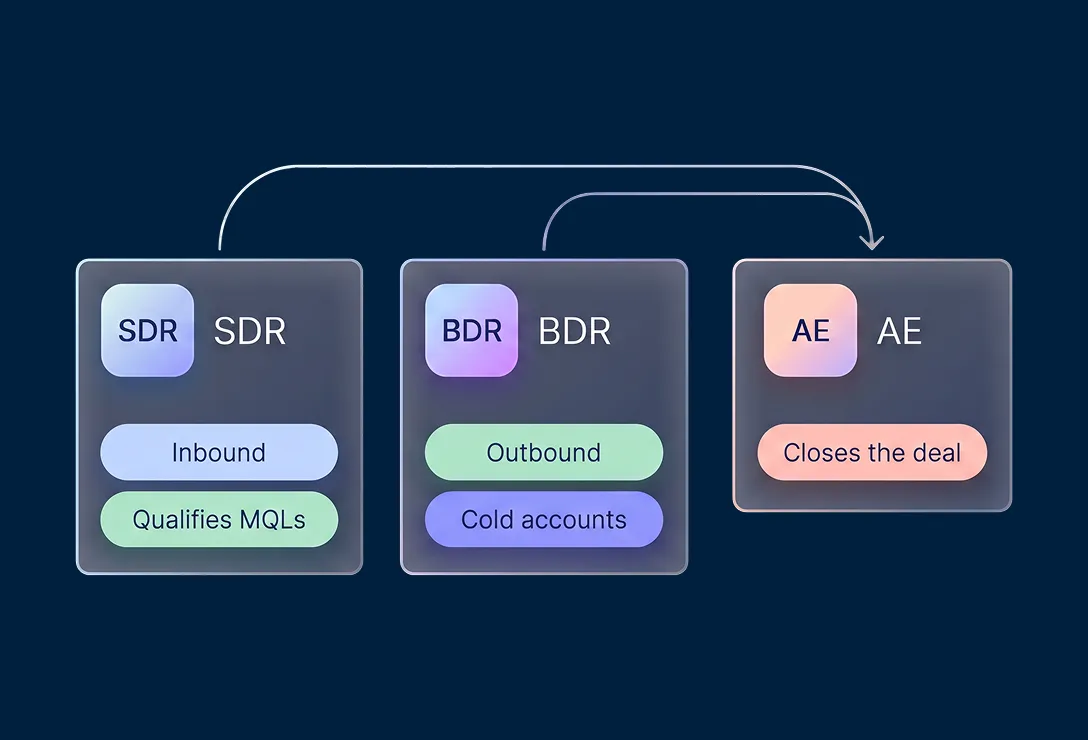
Average SDR tenure sits around 14 to 18 months, and annual turnover across the role runs 34% to 45% depending on the source and industry. Companies stuck in a cycle of hiring the same seat every year are dealing with an unstable, resource-draining internal motion, and most of them know it.
Glassdoor and Indeed reviews mentioning burnout, unrealistic quotas, or high attrition inside the sales org are a visible, checkable version of this same signal. If three or four reviews in the last year mention the same pattern, that's not noise.
Recent Funding Without a Scaled Sales Team
A funding round brings fresh budget and growth pressure at the same time. Companies at the Series B stage in particular often double or triple headcount within 12 months of closing, and much of that hiring is concentrated in sales and go-to-market roles.
A company that raised recently but hasn't visibly scaled its sales or BD team yet is actively deciding how to close that gap. Timing matters here more than almost anywhere else on this list: outreach sent within 30 days of a funding announcement tends to see meaningfully higher response rates than the same message sent to a company that raised six months ago and has since sorted itself out.
New Sales or Marketing Leadership
A new VP of Sales, CRO, or Head of Growth almost always evaluates the existing pipeline generation motion within their first 90 days. It's one of the first things a new leader looks at, because pipeline health is one of the fastest ways to show early impact.
New leaders are also often more open to outsourcing than an entrenched internal team would be. They don't have the sunk-cost attachment to whatever process was already in place, and they're usually under pressure to show results fast.

Expansion Into a New Market or Vertical
Companies entering a new geography or industry vertical frequently lack the internal expertise, relationships, or local nuance to prospect effectively there from day one. That's a natural moment to bring in outside help, and it doesn't reflect poorly on the existing internal team the way a general pipeline problem might.
Stagnant Pipeline Despite Active Marketing Spend
This one's a gap, not a lack of effort. Companies investing visibly in content, paid ads, or events but showing no corresponding growth in booked meetings have a disconnect between demand generation and pipeline conversion.
That gap specifically points to a need for outbound execution, not more top-of-funnel spend. A company already putting money into visibility but seeing flat meeting volume usually needs someone actually reaching out to the right people, not another blog post or ad campaign.
Low or Inconsistent Outbound Activity From Their Own Team
Checking a company's LinkedIn activity, job titles, and public outreach cadence can tell you a lot about whether they have a functioning outbound motion at all. Sparse posting, no visible SDR titles, or reps whose profiles look dormant often reflect a broader lack of structured process internally, not just a quiet week.
Where to Find These Signals
A few notes on using these well:
- Job boards and LinkedIn Jobs are the fastest way to spot open SDR/BDR roles and how stale they are.
- Crunchbase surfaces funding stage, round size, and date, which lets you filter for companies inside that critical 30 to 60 day window after closing.
- Glassdoor and LinkedIn tenure data reveal turnover patterns that a company would never volunteer directly.
- BuiltWith and similar tools show whether a company already runs outbound software like a sequencer or dialer, which tells you if they're actively investing in this motion or starting from zero.
- Intent data platforms flag accounts actively researching sales tools or agencies on review sites, which is about as close to raised-hand intent as prospecting data gets.
🚀Turn Outreach Into Pipeline
With 224.7K+ leads generated, 53,000+ meetings booked, and $312M+ pipeline, Cleverly helps B2B teams turn targeted prospects into meetings.
How to Qualify and Prioritize These Prospects
Not every signal deserves the same amount of outreach effort. Here's how to sort them:
1. Stack signals instead of acting on one. A funding round plus an open SDR role plus new sales leadership is a far stronger combined signal than any single one alone. If you're building a list, weight accounts by how many signals they show, not just whether they show any.
2. Prioritize recency. A signal from the last 30 to 60 days carries far more weight than one from six months ago. Relevance decays fast here, the same way it does with any trigger-based outreach. A job posting that's since been filled or a funding round the company has already absorbed into its plans isn't worth the same effort.
3. Confirm basic ICP fit before treating a signal as a green light. Company size, industry, and budget likelihood still matter. A strong signal at a poor-fit company still isn't worth pursuing. Signal-based prospecting narrows your list, but it doesn't replace basic qualification.
Common Mistakes When Prospecting for Lead Generation Buyers
Acting on a single weak signal. One open job posting doesn't confirm intent on its own. Look for at least two corroborating signals before prioritizing an account.
Using stale data. A funding round from six-plus months ago or a job posting that's long since been filled has already lost most of its relevance.
Pitching generically instead of referencing the specific signal. If you noticed the funding round or the open role, say so. A generic pitch wastes the advantage the signal gave you.
Ignoring ICP fit and chasing every signal. Ranking accounts purely on signal strength without checking fit leads to wasted outreach on companies that were never going to buy.
If You Recognize Your Company in This List
If any of this sounds familiar, an SDR seat that won't stay filled, pipeline that hasn't moved despite real marketing spend, a recent raise with sales still catching up, that recognition is itself worth acting on.
How Cleverly Fits In
As a B2B lead generation agency, we build and run LinkedIn, cold email, and cold calling campaigns for companies dealing with exactly these gaps, without the cost and turnover risk of building an internal SDR team from scratch.
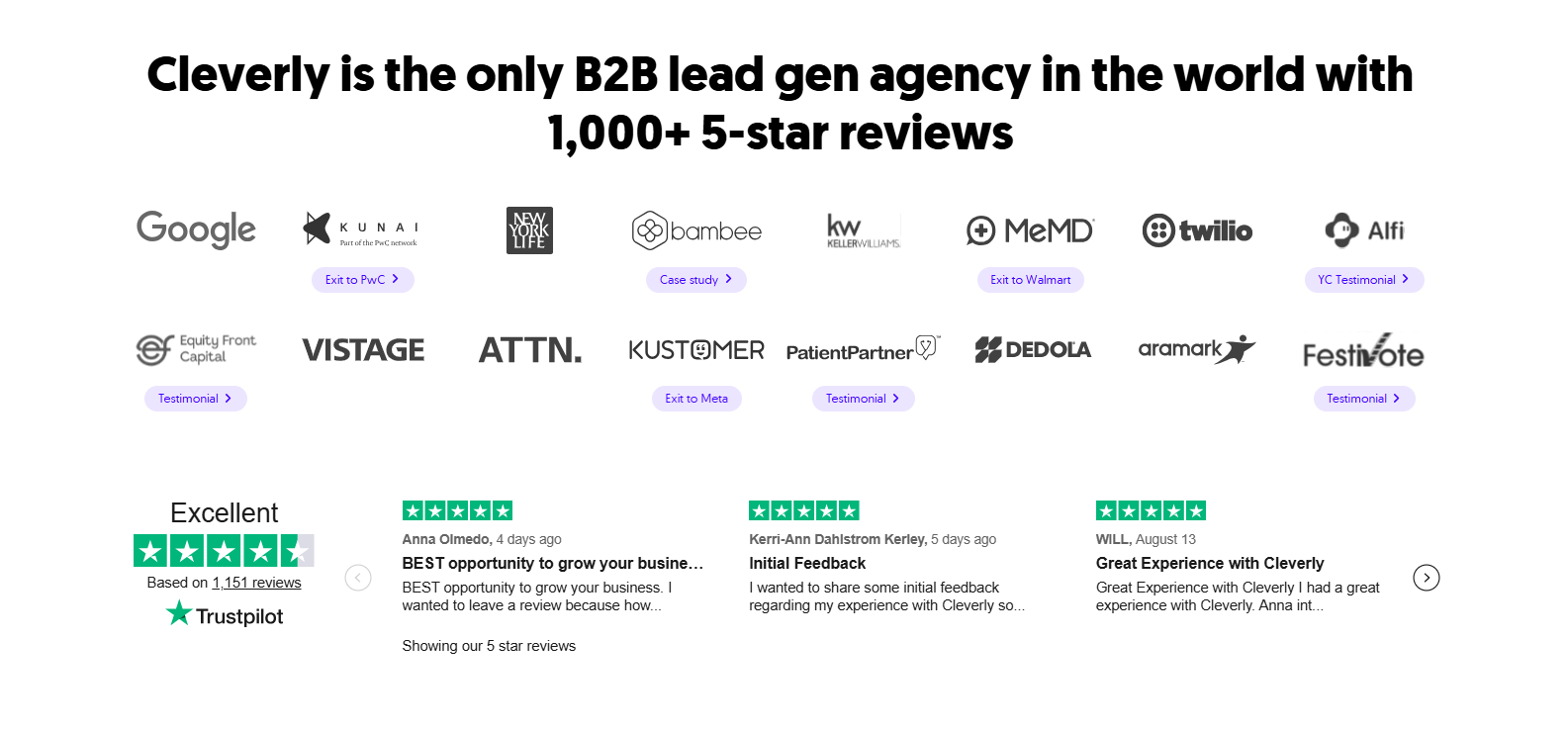
We've done this for 10,000+ clients across nearly every B2B industry, generating $312 million in client pipeline and $51.2 million in closed revenue along the way.
That track record includes companies at every stage, from early-stage startups filling their first SDR seat with an outsourced motion to established teams supplementing an internal team that's stretched thin.
The pattern we see over and over: companies that wait until the pain becomes urgent usually pay more to fix it later than the ones who act on the early signal.
If your company is currently showing one or more of the signals above and you're weighing whether to hire internally or bring in outside help, that's exactly the decision point we help companies work through.
Get a free pipeline fit-check and get an honest read on where you stand. No pitch, just a straight answer.
Conclusion
Companies that need lead generation services show consistent, findable signals: hiring gaps, turnover, funding events, leadership changes, and stagnant pipeline despite active marketing spend. None of these require guesswork to spot. They just require knowing where to look and how to weigh them against each other.
Stacking multiple signals and acting quickly on recent ones will consistently produce better-qualified outreach than a generic pitch built on company size and title alone.
And the same signals that help an agency prospect effectively also help a company recognize when it's time to stop patching the problem internally and bring in outside help. The businesses most likely to say yes are usually already showing you exactly why, before you even reach out.
Frequently Asked Questions
Free Resource
How to Scale a Profitable Cold Call System
Get the complete guide — download it instantly now.

Free Ebook
Download the Free Guide
Enter your details to get instant access.
You're all set! 🎉
Your ebook is downloading now.
Click below if the download didn't start automatically.


