Table of Contents
Why Tracking CAC Accurately Is Harder Than It Looks
What to Look for in a Customer Acquisition Cost Tracking Tool
Quick Comparison Table: Best Customer Acquisition Cost Tracking Tools in 2026
10 Best Tools to Track and Optimize Customer Acquisition Costs in 2026
How to Choose the Right CAC Tracking Tool for Your Business
Why Lowering CAC Starts with Better Prospecting, Not Just Better Tracking
Conclusion
Frequently Asked Questions
Modified On :
May 22, 2026
Key Takeaways
- Customer acquisition cost (CAC) has surged over 60% in the past five years — most B2B teams are calculating it wrong, costing them budget they don't know they're losing.
- The biggest CAC tracking mistakes: blended reporting that hides channel-level waste, and last-click attribution that misattributes budget away from what actually drove the deal.
- The right customer acquisition cost tracking tool depends on your business model — ecommerce, B2B SaaS, lead gen, and subscription businesses each need different attribution logic.
- iOS privacy changes and cookie deprecation have broken pixel-based attribution — server-side tracking is now a hard requirement for any serious CAC reporting.
- Tracking CAC accurately is only half the equation — the other half is reducing it. Tighter ICP targeting and outbound lead generation are the fastest levers most B2B teams overlook.
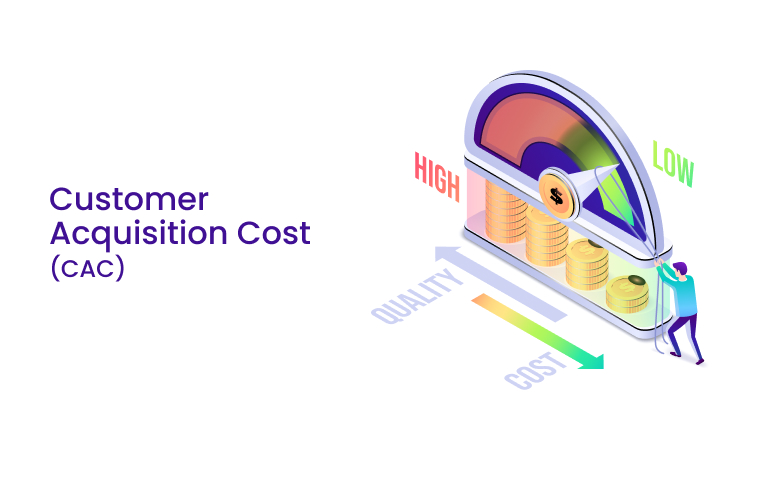
B2B customer acquisition costs have skyrocketed by 60% in the past five years — and the teams feeling it hardest aren't just the ones spending more. They're the ones spending blind.
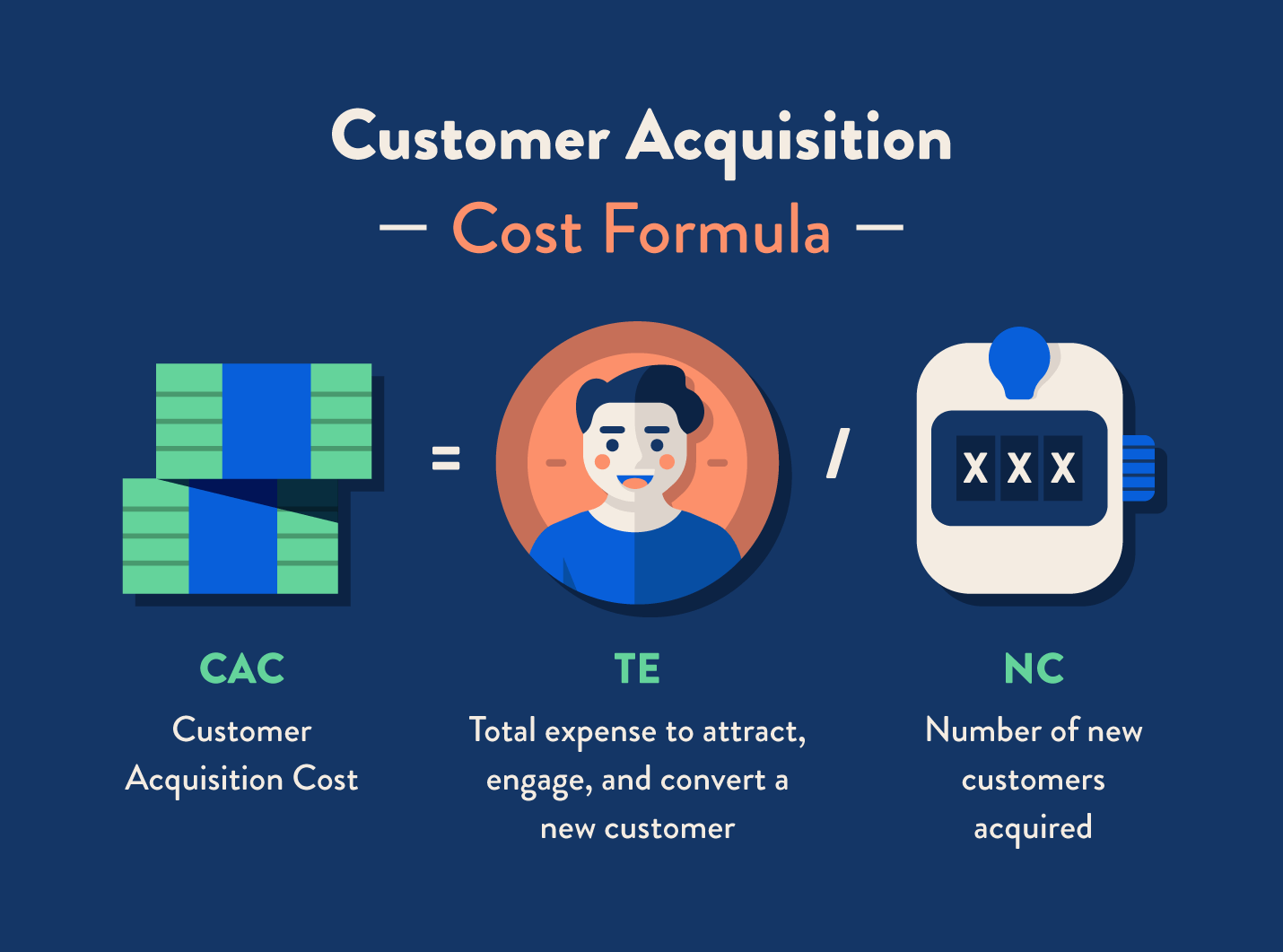
The formula is simple enough: CAC = (Sales costs + Marketing costs) ÷ Number of new customers acquired. But calculating it accurately is a different story.
Benchmarkit's 2025 data shows blended CAC has increased by 10% since 2022, meaning inefficiencies are harder to spot and the cost of acquiring each unit of new revenue is rising.
Meanwhile, attribution loss from cookie deprecation is inflating reported CAC by 25 to 45% for teams still relying on pixel-based tracking. That means your numbers are probably off — either understating true spend or over-crediting the wrong channels.
In 2026, the fix isn't a better spreadsheet. It's purpose-built customer acquisition cost tracking tools that connect ad spend directly to pipeline and closed revenue in one view — across every channel, not just the ones your ad platforms want you to see.
This guide covers the 10 best tools to track and optimize customer acquisition costs in 2026 — who each tool is built for, what it actually does, and how to pick the right one for your business model.
Why Tracking CAC Accurately Is Harder Than It Looks
Most B2B teams track CAC at the blended level — total spend divided by total customers acquired.
It's a starting point, but it hides everything that matters: which channels are pulling their weight, which ones are wasting budget, and which customer cohorts are actually worth acquiring.
There are three layers to CAC complexity that most customer acquisition tools miss:
- Channel-level CAC — Which paid and organic channels are acquiring customers most efficiently? Blended reporting masks this entirely. A team spending equally on LinkedIn, Google, and content might find that LinkedIn drives 70% of closed revenue at half the CAC — but they'll never see it without channel-level attribution.
- Cohort-level CAC — Customers acquired from different sources retain and expand at different rates. An SDR-sourced customer might have a higher acquisition cost but 3x the LTV of a paid search customer. Without cohort tracking, you're optimizing for a metric that doesn't reflect long-term profitability.
- Account-level CAC (B2B-specific) — In B2B, multiple contacts from the same company touch content, ads, and outreach before one person converts. Traditional person-level attribution can't handle this. You need tools that attribute cost across the full buying committee — not just the last person who clicked.
Add iOS 14+ to the mix, and browser-based attribution becomes even less reliable. Last-click data in Meta and Google dashboards overstates their contribution — sometimes dramatically.
The fix is server-side tracking combined with multi-touch attribution and CRM-connected closed-loop reporting. Teams that get this right can reallocate budget toward efficient channels and cut blended CAC by 20–40%.
📈 Lower CAC Starts With Better Outbound
We generate qualified meetings without burning budget on ads. LinkedIn, cold email & calling—done for you.
What to Look for in a Customer Acquisition Cost Tracking Tool
Before you evaluate any platform, you need to know what "good" actually looks like. The tools to optimize ROI in customer acquisition all claim to solve the same problem — but they're built on very different architectures.
Here's what actually matters when evaluating them:
✅ Multi-touch attribution — Does it track the full customer journey, not just the last click? First-click and last-click models are easy to implement and almost always wrong. Look for linear, time-decay, or data-driven models depending on your sales cycle.
✅ CRM integration — Can it connect marketing spend to closed deals, not just leads or MQLs? A tool that stops at form fill is leaving half the picture blank. You need revenue-connected reporting, not pipeline reporting.
✅ Server-side or privacy-resilient tracking — Can it capture conversions despite iOS restrictions and ad blockers? This is a non-negotiable in 2026. Any tool still relying on client-side pixels alone is giving you degraded data.
✅ Channel coverage — Does it automatically pull cost data from all your paid channels — Meta, Google, LinkedIn, and others — without manual CSV imports?
✅ AI or optimization layer — Does it surface recommendations, or just surface data? The best platforms flag inefficiencies and suggest reallocations. Reporting without recommendations is a dashboard, not an optimization engine.
✅ Business model fit — Ecommerce, B2B SaaS, and lead-gen businesses have fundamentally different attribution needs. A tool built for Shopify brands won't serve a company with a 6-month enterprise sales cycle.
✅ Reporting flexibility — Do you need pre-built dashboards or a custom data pipeline into your BI tool? Know which you need before you sign anything.
Quick Comparison Table: Best Customer Acquisition Cost Tracking Tools in 2026
🚀 Tracking CAC Is Easy. Lowering It Is Hard.
$312M pipeline generated across outbound channels. We help B2B teams scale pipeline more efficiently.
10 Best Tools to Track and Optimize Customer Acquisition Costs in 2026
Each tool below is reviewed for its use case, core capabilities, limitations, and pricing — so you can match it to your actual setup instead of guessing.
1. Cometly
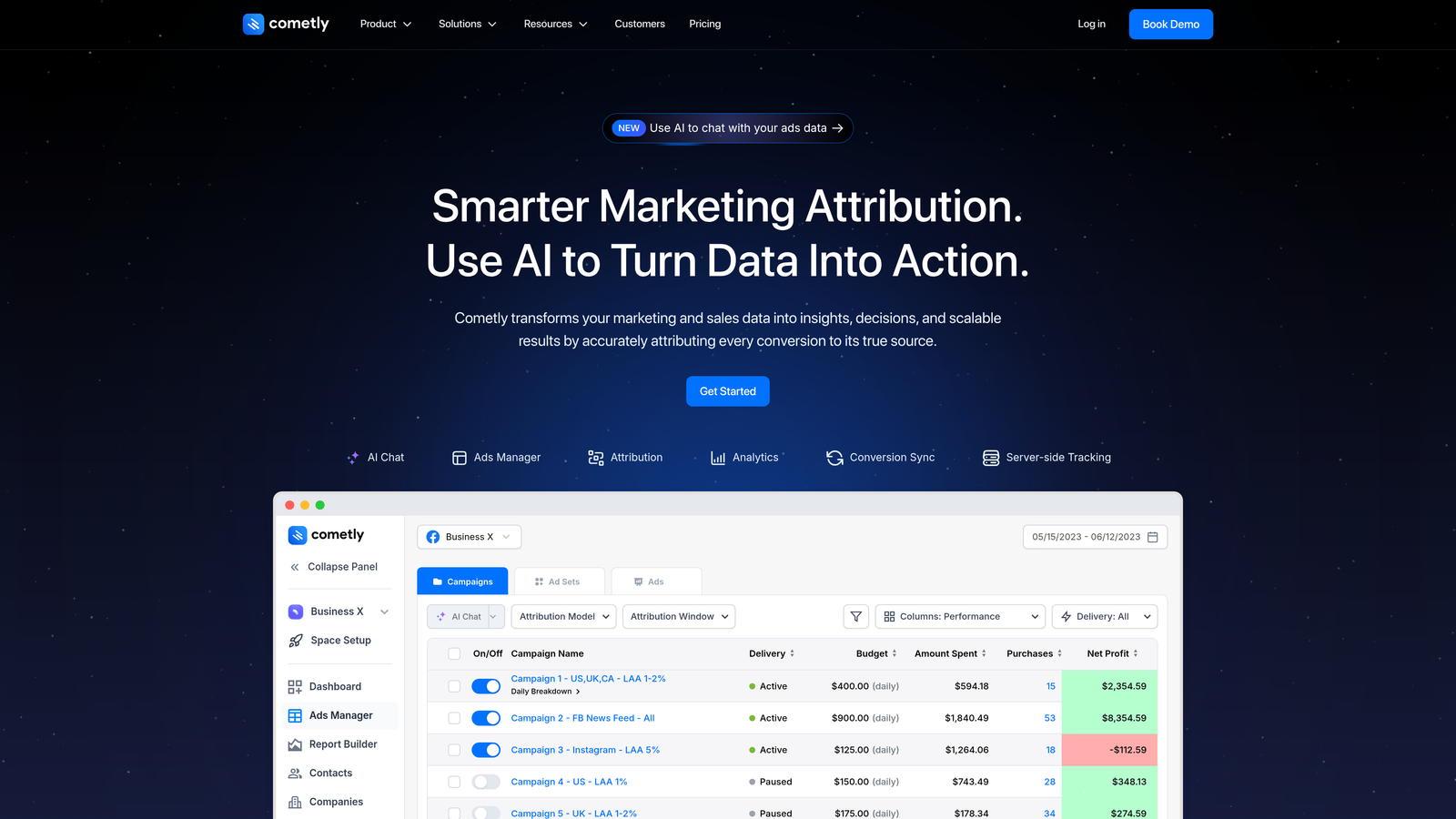
Cometly is an AI-powered marketing attribution platform built to show you which campaigns, channels, and ads are actually driving revenue — not just clicks or leads. It connects your ad platforms, CRM, and website data to track the complete customer journey from first touch to closed deal.
What sets it apart is its Conversion Sync feature, which sends enriched first-party event data back to Meta, Google, and other ad platforms — helping their algorithms optimize more effectively in an era where iOS changes and cookie deprecation have degraded signal quality.
For B2B and SaaS teams trying to calculate accurate CAC across multiple paid channels, Cometly replaces the fragmented spreadsheet approach with a single attribution layer that handles server-side tracking, multi-touch modeling, and channel-level cost reporting in one place.
Best For: Performance marketers and B2B SaaS teams running paid acquisition who want clearer, server-side attribution tied to pipeline and CRM outcomes.
Key Features:
- Server-side tracking that captures conversions browser-based tools miss.
- Conversion Sync to feed enriched signals back to ad platforms.
- AI Ads Manager with real-time optimization recommendations.
- Natural-language AI Chat to query campaign data without SQL.
- Multi-touch attribution across Meta, Google, LinkedIn, and more.
- CRM integration to connect spend to closed deals.
Limitations: Pricing isn't listed publicly — you'll need a sales conversation before you can budget. Some users report a steeper learning curve during initial setup, especially with complex tech stacks. Documentation has been flagged as less complete than expected.
Pricing: Custom, tiered by features and usage. Free trial available. Contact Cometly directly for a quote.
2. HubSpot Marketing Hub
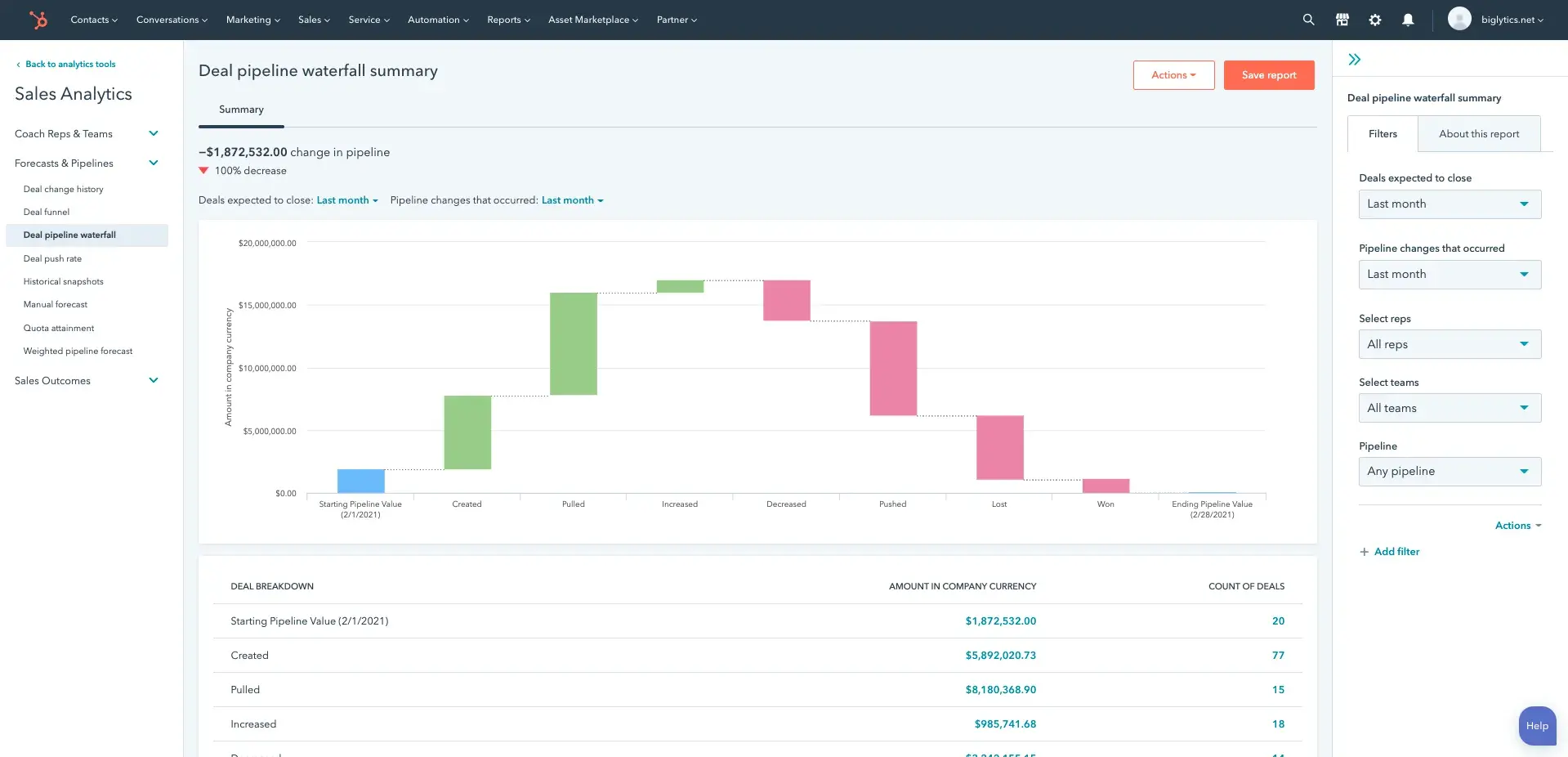
If your marketing, sales, and customer data already live in HubSpot, Marketing Hub is the most straightforward path to closed-loop CAC reporting.
Because everything sits in one platform — campaign spend, contact activity, pipeline stages, and closed revenue — you don't need external integrations to connect what you paid to acquire a customer to what that customer actually became.
HubSpot's attribution reporting covers first-touch, last-touch, linear, and time-decay models. It tracks contacts through the full funnel and ties them to revenue in CRM — which is exactly what most CAC calculations need.
Best For: B2B teams already using HubSpot CRM who want CAC reporting without additional software.
Key Features:
- Multi-touch attribution built into the CRM.
- Campaign performance tied directly to revenue and pipeline.
- Native ad tracking across Google, Facebook, and LinkedIn.
- Contact and deal reporting with closed-loop visibility.
- Custom dashboards for CAC, CPL, and channel-level performance.
Limitations: If you're not already a HubSpot customer, the onboarding investment is significant. Attribution reporting is solid but less sophisticated than dedicated attribution platforms for complex multi-channel buyers. Paid ads tracking is limited to connected channels.
Pricing: Free tier available with basic features. Paid plans start at $15/month (Starter), with Marketing Hub Professional from $800/month for full attribution reporting.
3. Google Analytics 4
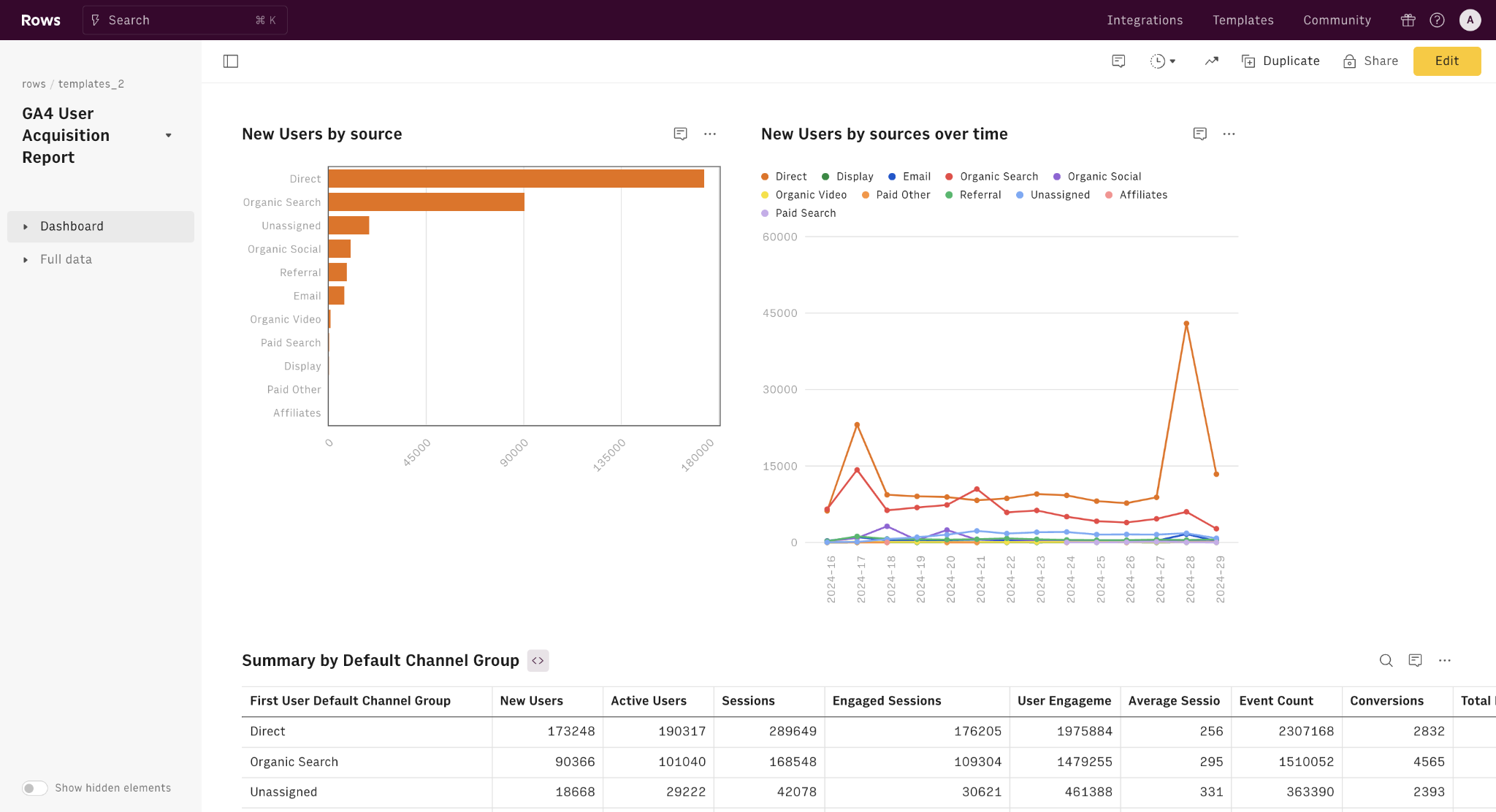
GA4 is the free data foundation most B2B teams should have running regardless of what else they use. It provides conversion tracking, user journey analysis, and attribution modeling at no cost — making it the baseline layer for calculating CAC on any channel you can connect through Google Tag Manager.
Its data-driven attribution model uses machine learning to distribute credit across touchpoints, which is a genuine upgrade from the old Universal Analytics last-click default. The native Google Ads integration makes cost-per-acquisition measurement on that channel clean and automatic.
The honest reality: GA4 is a starting point, not a complete solution. It doesn't pull cost data from Meta or LinkedIn automatically, and it doesn't connect to closed deals in your CRM. But for teams that need a foundation before investing in a dedicated attribution platform, it's the right first step.
Best For: Budget-conscious teams that want baseline web analytics and Google Ads attribution at no cost.
Key Features:
- Free, with no user or session limits.
- Data-driven attribution model across connected channels.
- Native Google Ads integration for CPA reporting.
- Event-based tracking with customizable conversion events.
- BigQuery export for custom CAC analysis in BI tools.
Limitations: Doesn't pull cost data from Meta, LinkedIn, or other paid channels automatically. No CRM integration for closed-revenue reporting. Browser-based tracking affected by iOS changes and ad blockers. Not built for account-level B2B attribution.
Pricing: Free. Google Ads 360 (enterprise version) starts at custom pricing for larger organizations.
4. Triple Whale
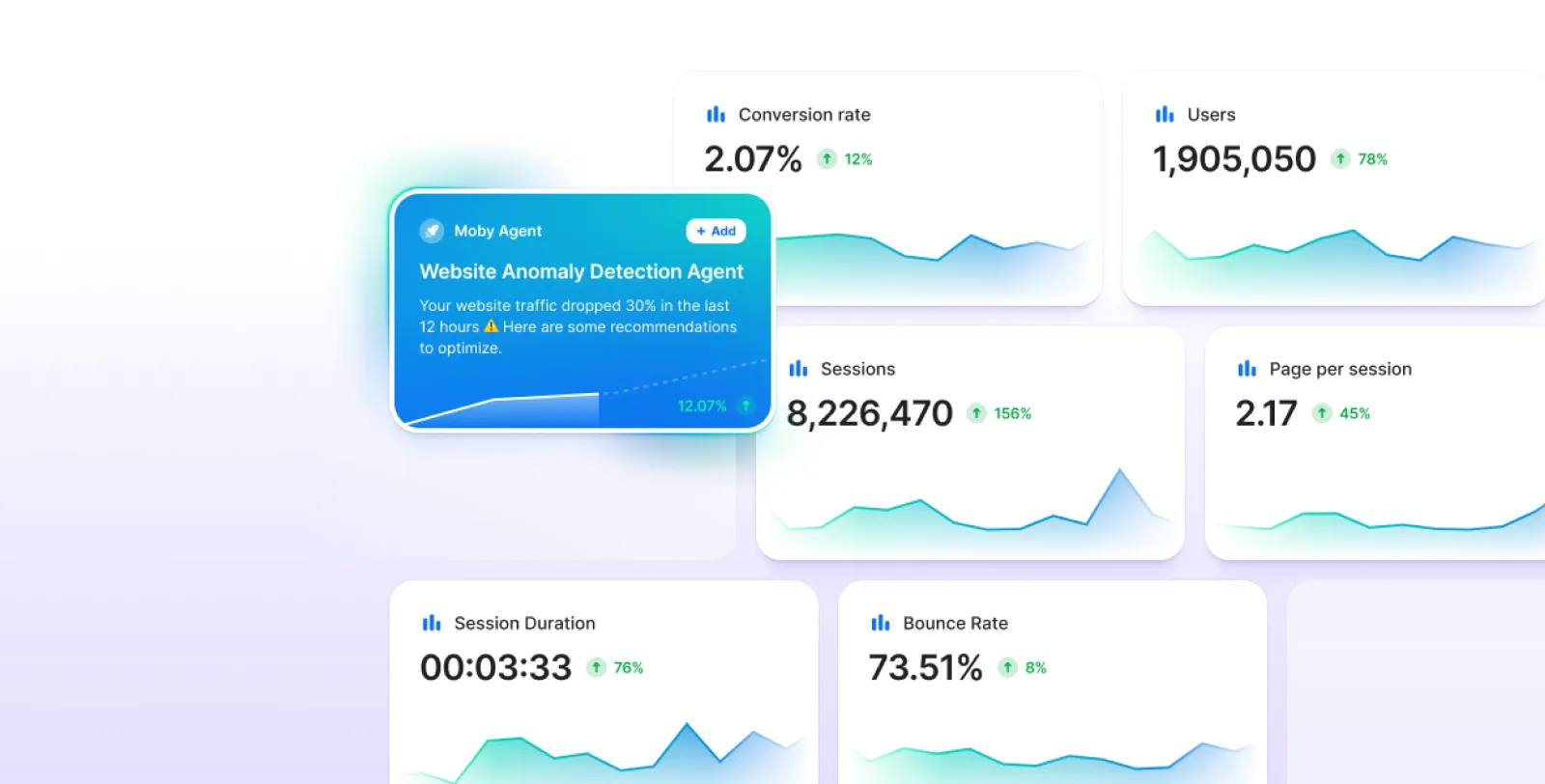
Triple Whale is purpose-built for ecommerce and DTC brands running on Shopify. It calculates blended CAC across paid channels and connects acquisition cost to profit — factoring in COGS, shipping, and discounts to show true acquisition economics, not just revenue numbers that look good on a dashboard.
Its first-party data pixel captures customer behavior independently of browser restrictions, which addresses a core problem that's gotten worse since iOS 14. The Sonar attribution feature sends enriched conversion data back to Meta and Google, similar to Cometly's Conversion Sync approach.
If you're not on Shopify or not in ecommerce, Triple Whale is probably the wrong tool — it's designed specifically for that motion, and trying to force it into a B2B SaaS workflow creates unnecessary friction.
Best For: Shopify and DTC ecommerce brands that need profit-aware attribution and creative analytics.
Key Features:
- First-party pixel for privacy-resilient tracking.
- CAC reporting connected to COGS, margins, and profit.
- Creative analytics to identify top-performing ad content.
- Sonar for conversion signal restoration to Meta and Google.
- Cohort analysis for LTV tracking by acquisition source.
Limitations: Built exclusively for ecommerce — limited value for B2B or SaaS. Shopify dependency is a hard requirement for most core features. Higher-tier pricing can climb quickly for growing brands.
Pricing: Starts around $129/month. Plans scale by Shopify store GMV. Enterprise pricing available.
5. Mixpanel
Mixpanel is a product analytics platform that connects acquisition source to what users actually do after they sign up. That makes it uniquely valuable for product-led SaaS companies where CAC is only meaningful when paired with activation and retention data.
Where most attribution tools stop at the conversion event, Mixpanel tracks what happens next — did the user activate key features? Did they retain? Did they expand? This gives you a more complete picture of acquisition quality, not just acquisition cost.
A channel with a lower CAC but 60% 30-day churn is worse than a channel with a higher CAC and 85% retention.
Best For: Product-led SaaS teams that want to connect acquisition channels to user activation, engagement, and retention.
Key Features:
- Event-based tracking across the full product lifecycle.
- Cohort analysis by acquisition source, channel, and campaign.
- Funnel analysis from acquisition to activation.
- A/B testing integration for acquisition channel experiments.
- Custom dashboards for CAC + LTV by cohort.
Limitations: Not built for multi-channel ad attribution — you'll need a separate tool for that. No native CRM integration for closed-revenue reporting. Best used alongside, not instead of, a dedicated attribution platform.
Pricing: Free tier for up to 20M events/month. Growth starts at $28/month. Enterprise pricing available.
6. Northbeam
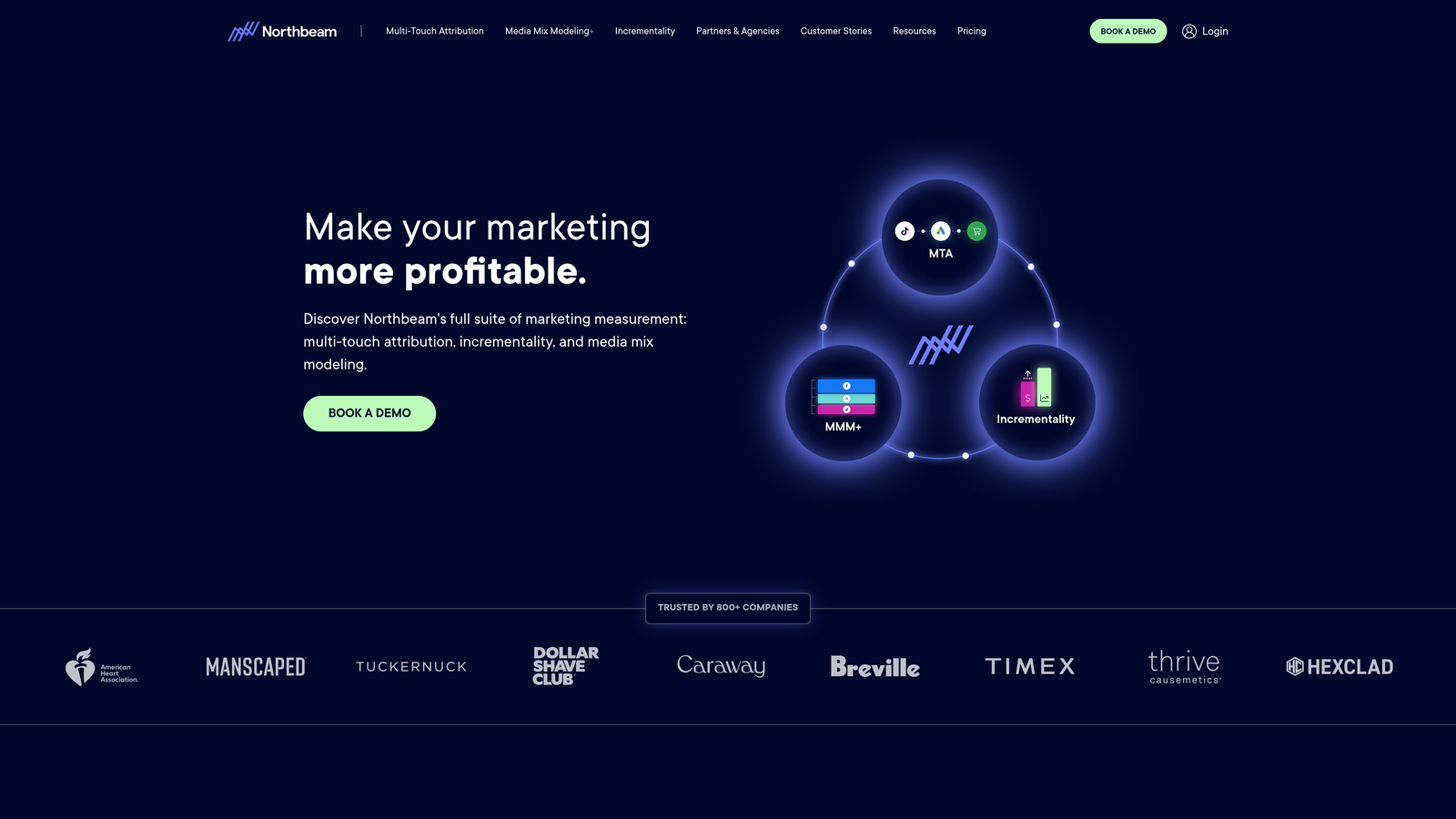
Northbeam is a machine learning attribution platform designed for high-spend DTC and ecommerce brands. It builds custom attribution models that adapt to your specific customer journey patterns — and includes incrementality testing to measure true channel lift beyond what last-click models report.
The incrementality layer is what makes Northbeam worth the investment at scale. Rather than asking "which touchpoint came last," it asks "would this customer have converted without this channel?"
That's a fundamentally better question — and the answer often reveals that a channel you've been scaling is delivering far less incremental revenue than your dashboards suggest.
Best For: Ecommerce brands spending $50K+ per month on paid media who need sophisticated ML attribution and incrementality testing.
Key Features:
- Machine learning attribution models that adapt to your funnel.
- Incrementality testing to measure true channel contribution.
- Multi-channel paid media reporting with media mix analysis.
- First-party data collection with privacy-resilient tracking.
- Predictive analytics for budget allocation.
Limitations: Pricing and minimum spend requirements make it inaccessible for smaller brands. Setup and implementation take time. Primary focus on ecommerce limits B2B use cases.
Pricing: Custom pricing. Typically designed for brands with significant paid media spend. Contact for a quote.
7. Ruler Analytics
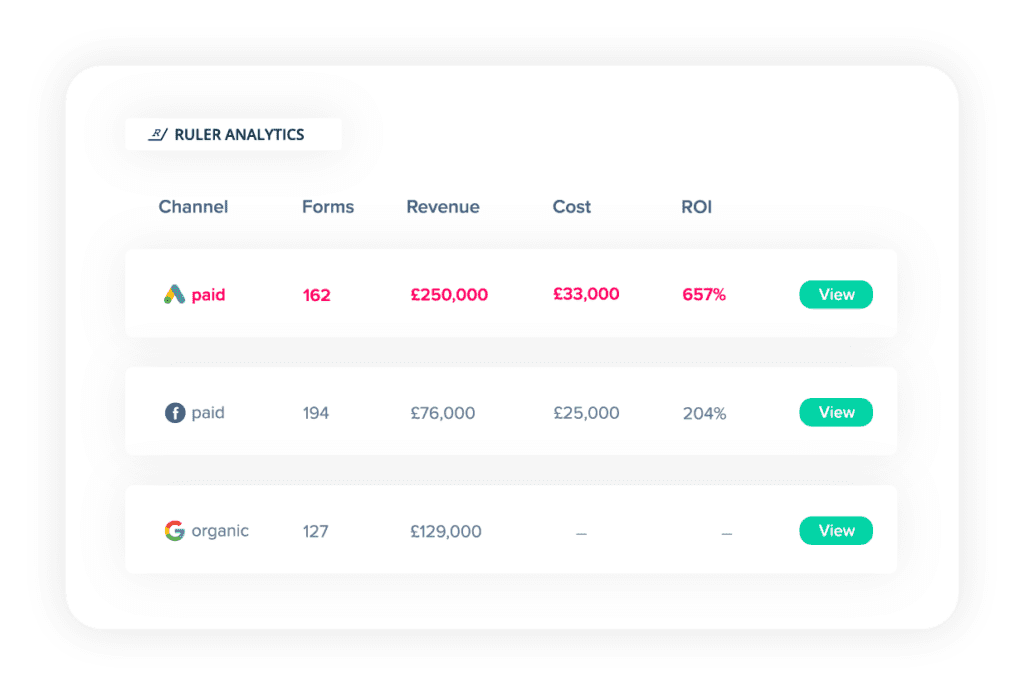
Ruler Analytics solves a specific problem that most attribution platforms ignore: offline conversions. It's a multi-touch attribution tool built for lead-gen businesses where customers research online but convert via phone, form, or in-person.
It tracks the full digital journey, then closes the loop when that lead calls in or fills out a form offline — connecting the eventual revenue back to the original digital source.
For B2B companies in services, professional consulting, healthcare, or any category where the final conversion doesn't happen in a browser, Ruler fills an attribution gap that GA4 and standard ad platforms will never plug.
Best For: Lead-gen businesses and B2B service companies where phone calls and offline conversions are a significant part of the sales process.
Key Features:
- Call tracking tied back to the original digital acquisition source.
- Multi-touch attribution across online and offline touchpoints.
- CRM integration to connect revenue to marketing campaigns.
- Visitor-level journey tracking across sessions.
- Attribution for forms, calls, live chat, and in-person conversions.
Limitations: More expensive than basic attribution tools for the volume of leads most mid-size teams have. Less suited for product-led or ecommerce motions. Implementation complexity can increase for teams with large call volumes.
Pricing: Starts at $48/month for 100 leads tracked. Scales by lead volume. Plans up to $3,600/month for 10,000 contacts.
8. Dreamdata
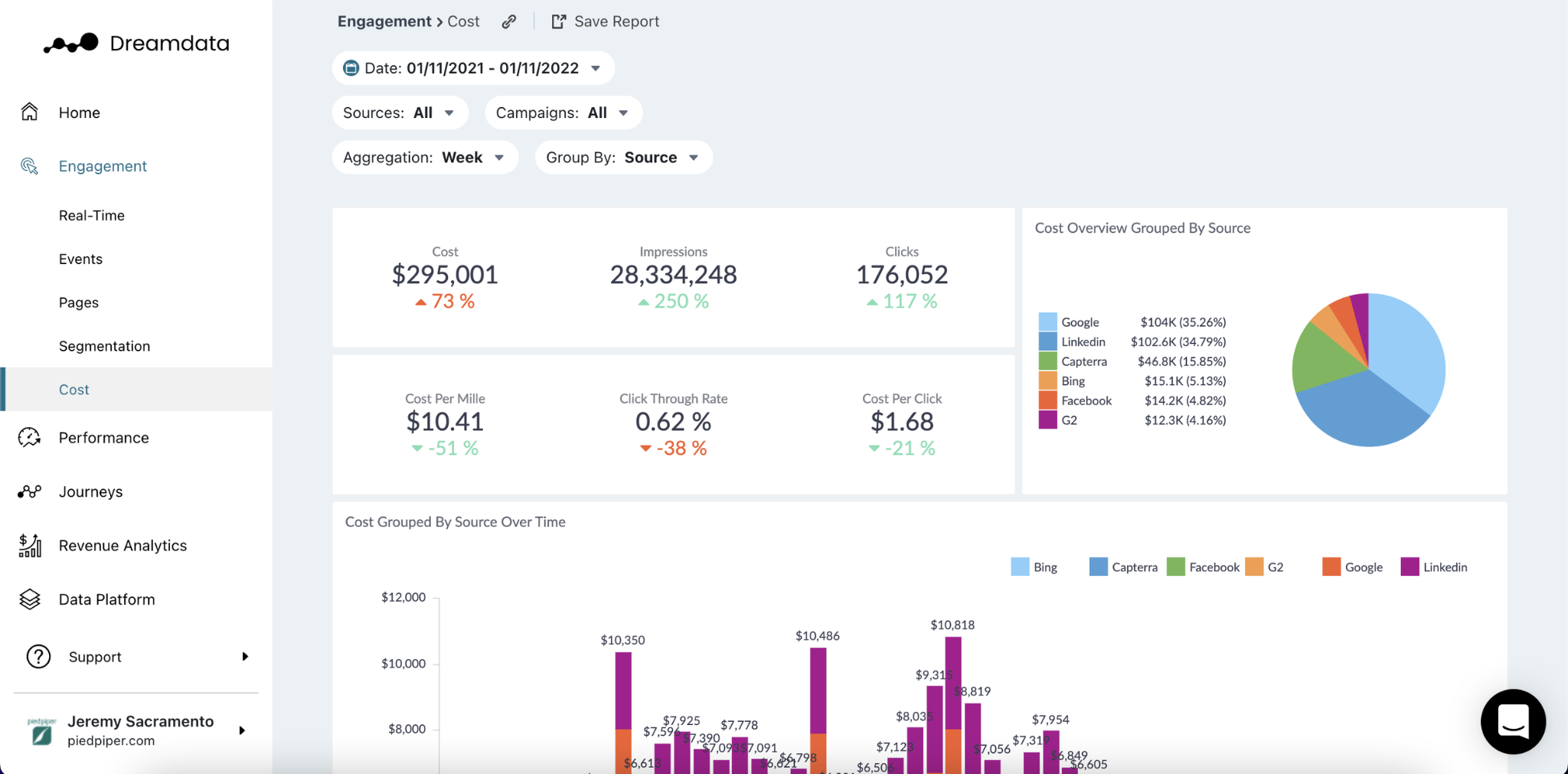
Dreamdata is a B2B revenue attribution platform built specifically for companies with long, multi-stakeholder sales cycles. It tracks acquisition cost at the account level — recognizing that in enterprise B2B, 6–10 people from the same company often engage across LinkedIn, Google, email, and events before a single person converts.
Where most attribution platforms struggle with B2B buying committees, Dreamdata stitches those touchpoints together by company, not just by individual. You can see what an account's full journey looked like, which channels contributed at which stages, and what the true CAC was for that deal — not just the last MQL that came through.
It has a free tier for B2B web analytics and basic audience building, which makes it a good place to start before committing to paid attribution.
Best For: B2B SaaS and tech companies with long sales cycles, multiple decision-makers, and complex multi-channel buying journeys.
Key Features:
- Account-level multi-touch attribution across the full buying committee.
- Revenue and pipeline analytics tied to marketing spend.
- AI-powered audience building and activation to ad networks.
- CRM and marketing automation integrations.
- Free tier with B2B web analytics and company identification.
Limitations: Paid plans require annual contracts from day one — no standard trial for attribution features. Pricing scales quickly for larger account volumes. Setup typically takes 2–8 weeks before useful data appears. Better suited for established B2B teams than early-stage companies.
Pricing: Free tier available. Paid plans start around $750/month. Enterprise pricing scales to $2,499/month and above.
9. Supermetrics
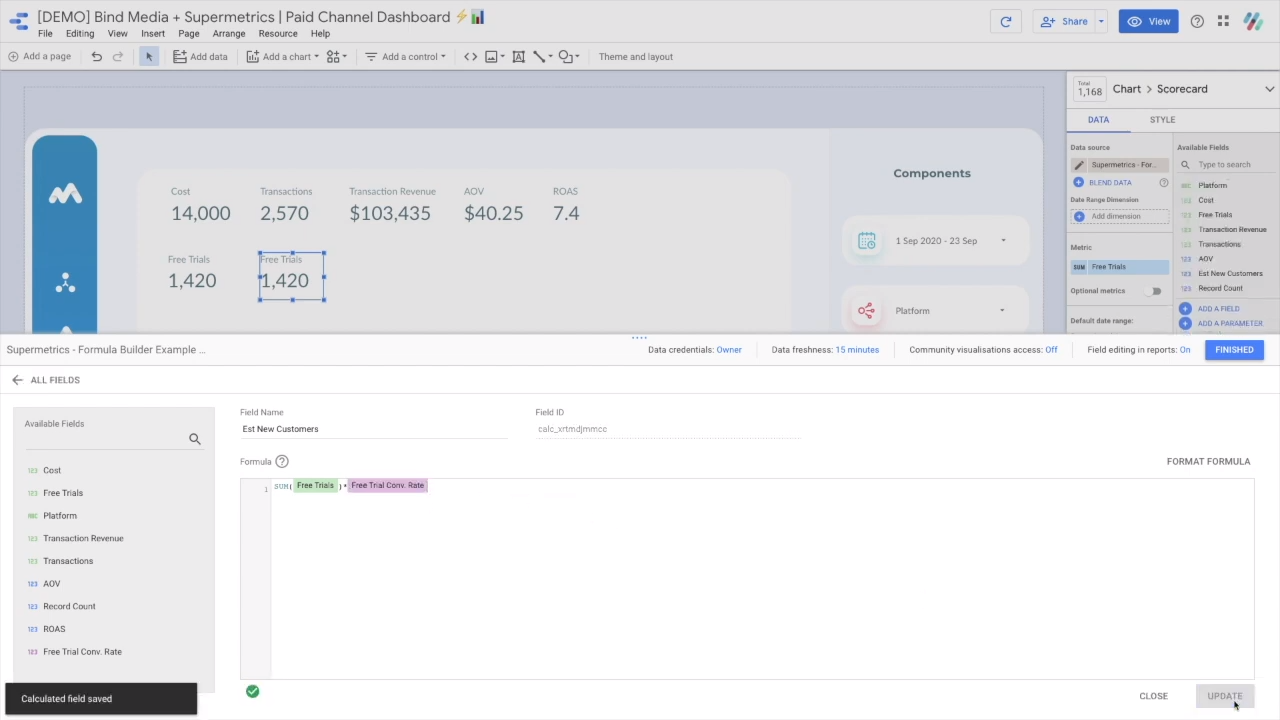
Supermetrics isn't an attribution platform — it's a data pipeline tool. It pulls marketing spend and conversion data from 100+ sources into Google Sheets, Looker Studio, Power BI, BigQuery, or any data warehouse your team uses. You're building the CAC dashboard yourself, not buying a pre-built one.
That distinction matters. If you have a data analyst or RevOps team that wants full control over how CAC is calculated, segmented, and visualized, Supermetrics gives you the raw material.
If you need a plug-and-play dashboard, it's the wrong tool — you'll need someone to build and maintain the reporting logic.
Best For: Analytics and RevOps teams that want to build fully custom CAC dashboards using data from multiple marketing sources.
Key Features:
- Connectors to 100+ marketing platforms, CRMs, and ad networks.
- Native integrations with Google Sheets, Looker Studio, Power BI, and BigQuery.
- Automated data refreshes on customizable schedules.
- No data transformation limits — full raw data access.
- Team and agency plans for multi-account reporting.
Limitations: No pre-built dashboards — you build everything from scratch. Requires technical resources to set up and maintain. Not an attribution platform — it's a data extraction tool. Attribution logic has to be built on your end.
Pricing: Starts around $99/month for basic plans. Scales by connector count, destination, and data volume. Enterprise plans available.
10. Baremetrics
Baremetrics is a SaaS analytics platform that calculates CAC automatically alongside the subscription metrics that actually matter — MRR, ARR, LTV, churn, and net revenue retention.
It connects directly to your payment processor (Stripe is the native integration) and surfaces the relationship between what you spent to acquire a customer and what that customer is worth over time.
For SaaS companies, the CAC number alone means nothing without LTV context. Baremetrics puts both in the same dashboard. If your LTV:CAC ratio is falling, you'll see it in real time — not three months later when the spreadsheet catches up.
Best For: SaaS and subscription businesses that want automated CAC tracking alongside MRR, LTV, and churn — without building custom reporting.
Key Features:
- Automated CAC calculation tied to Stripe payment data.
- LTV, MRR, ARR, and churn in a single dashboard.
- Cohort analysis for acquisition quality by source.
- Cash flow forecasting with subscription revenue projections.
- Customer-level profiles with full transaction history.
Limitations: Stripe-dependent — limited native support for other payment processors. Not a multi-channel attribution tool. Less suited for B2B companies with complex deal structures outside subscription billing. Some users report pricing is on the higher end for smaller SaaS teams.
Pricing: Plans start at $129/month. Scales based on MRR tracked.
How to Choose the Right CAC Tracking Tool for Your Business
The right customer acquisition cost tracking tool depends on your business model first, your channel mix second, and your technical resources third. Here's a practical decision framework:
By business model:
- Ecommerce / DTC on Shopify → Triple Whale or Northbeam
- B2B SaaS with complex buying cycles → Cometly or Dreamdata
- SaaS on subscription billing → Baremetrics
- Lead gen with offline / phone conversions → Ruler Analytics
- Product-led growth SaaS → Mixpanel (alongside an attribution tool)
By channel mix:
- Primarily Google Ads, small team, limited budget → GA4 covers the basics
- Multi-channel paid (Meta + Google + LinkedIn) → You need server-side attribution: Cometly or Northbeam
- Mostly inbound content with some paid → HubSpot Marketing Hub if you're already in the ecosystem
By CRM dependency:
- HubSpot-first teams → HubSpot Marketing Hub is the most efficient path
- Salesforce-first enterprise teams → Cometly or Dreamdata
- Stripe-connected SaaS → Baremetrics
By technical resources:
- Minimal setup, self-serve dashboards → Cometly, Triple Whale, or HubSpot
- Custom reporting needs → Supermetrics (bring your own analyst)
- Free starting point → GA4 or Dreamdata free tier
By sales cycle length:
- Short-cycle ecommerce or PLG → Most tools work
- Long B2B enterprise cycles → Account-level attribution is required; Dreamdata is built for this
One more thing: always pilot before committing. Most of these platforms offer demos or free tiers. Test with live campaigns before signing annual contracts — attribution tools behave very differently with your actual data than they do in a sales demo.
Why Lowering CAC Starts with Better Prospecting, Not Just Better Tracking
CAC tracking tools tell you which channels are efficient. But if the underlying targeting is wrong, no attribution tool can fix a leaking pipeline. You can measure waste perfectly and still keep generating it.
The root cause for most B2B companies isn't the tool — it's the targeting. Teams that prospect too broadly, use unverified contact data, or rely on paid channels before they've validated ICP fit end up burning significant budget acquiring wrong-fit customers. The tracking tool will accurately report that burn, but it won't stop it.
The lever that most B2B teams underuse is tighter ICP definition paired with verified outbound prospecting — reaching the right accounts before paid channels scale. Outbound brings pipeline through a controlled, targeted channel with measurable CAC that you set, not one determined by auction-based ad pricing.
That's exactly where we come in.
At Cleverly, we run fully done-for-you B2B lead generation through LinkedIn outreach, cold email, and cold calling — handling ICP targeting, verified list building, personalized sequencing, and qualified meeting delivery on your behalf.
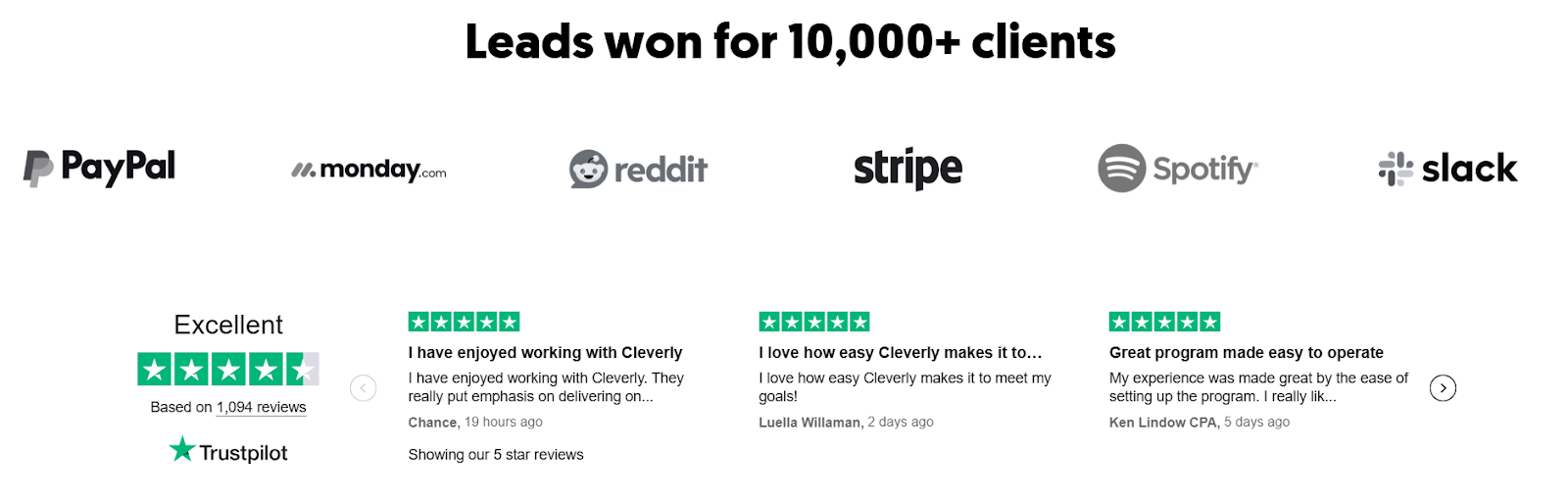
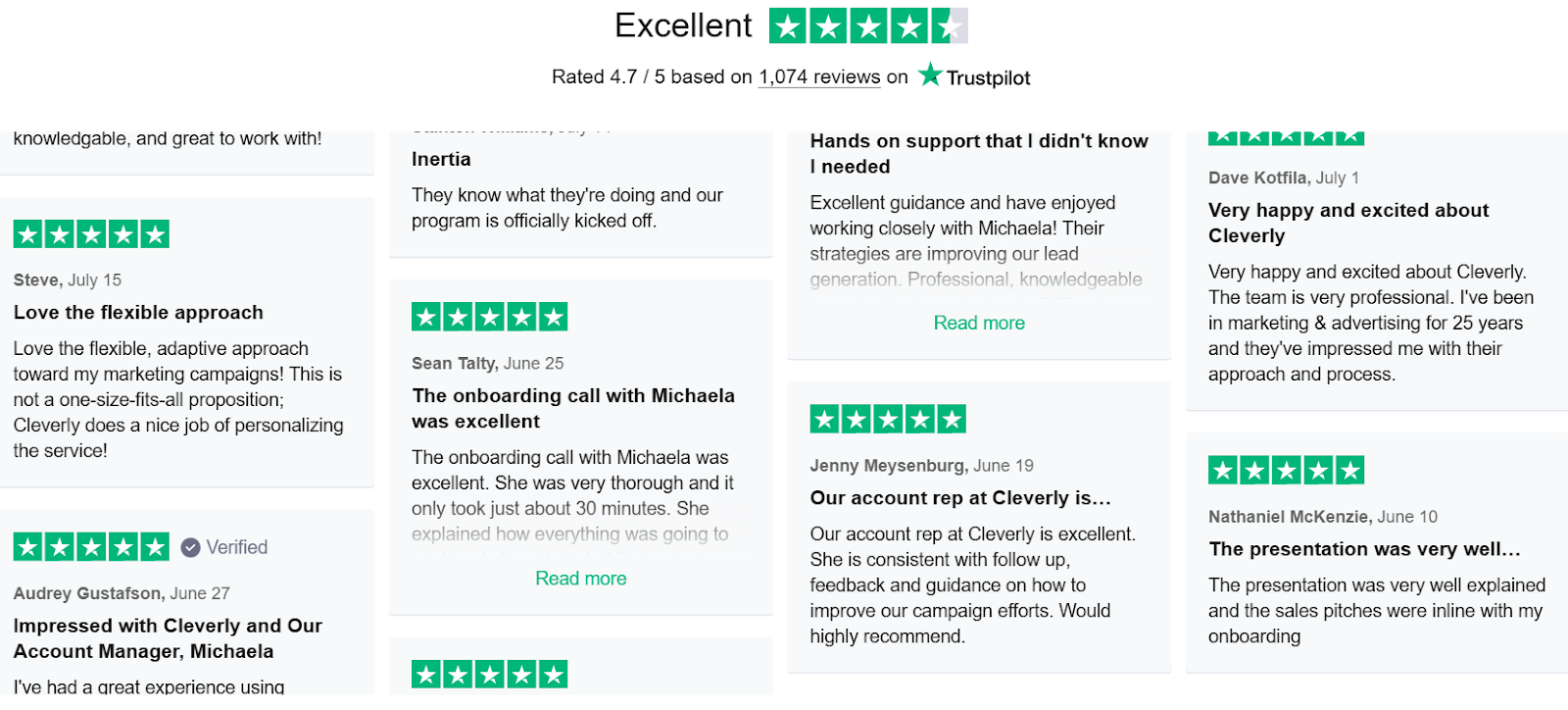
We've worked with over 10,000 B2B companies, generating $312M in pipeline through outbound.
🚀 LinkedIn services start at $397/month with month-to-month pricing and no long-term contracts.
🚀 Our cold email lead gen is performance-based — you only pay for meeting-ready leads we actually send you.
🚀 Cold calling services is half the cost of hiring in-house.
Adding a high-converting outbound channel through Cleverly reduces your dependency on expensive paid acquisition and brings your blended CAC down across the entire mix — because outbound is a cost you control, not one an algorithm sets.
Want to lower your CAC with a proven outbound channel?
🤝 Book a free strategy call with Cleverly!
Conclusion
Accurate customer acquisition cost tracking is impossible if you're not connecting ad spend data to closed-revenue data. Most B2B teams are flying blind on which channels are actually working — measuring MQLs and attributing deals to the wrong source, while paying for it every quarter.
The tool you choose should match your business model, not just your feature wishlist. Start with the framework: ecommerce goes to Triple Whale or Northbeam, B2B SaaS with complex sales cycles goes to Cometly or Dreamdata, subscription businesses go to Baremetrics, and lead-gen businesses with offline conversions go to Ruler Analytics.
If you don't have dedicated analytics resources yet, GA4 plus HubSpot gets you 80% of the way there before you need a specialized platform.
Tracking CAC accurately is step one. Step two is actually reducing it — and that starts with tighter targeting, verified data, and outbound channels that bring pipeline in at a cost you control.
Frequently Asked Questions
Free Resource
How to Scale a Profitable Cold Call System
Get the complete guide — download it instantly now.
Free Ebook
Download the Free Guide
Enter your details to get instant access.
You're all set! 🎉
Your ebook is downloading now.
Click below if the download didn't start automatically.