

Table of Contents
How Clutch Actually Works
Optimising Your Clutch Profile
Building the Review Engine
What Actually Drives Clutch Rankings
Paid Options and Whether They Are Worth It
Handling Clutch Leads Well
What to Measure in Your Clutch Lead Generation
Where Clutch Fits in a Wider Lead Generation Strategy
How Cleverly Builds Pipeline You Control
Conclusion
Frequently Asked Questions
Modified On :
October 30, 2026
Key Takeaways
- Reviews drive your Clutch rank, so a repeatable review process matters more than any profile tweak.
- Rank where you can win. A narrow category with a clear specialism beats a crowded one.
- Visibility on Clutch is partly bought, so model paid placement on cost per client, not cost per inquiry.
- Directory buyers shortlist several firms at once, so response speed and credibility proof decide who gets the call.
- Clutch captures demand that already exists. Pair it with a channel that creates demand on your schedule.
A Clutch profile with three reviews and a generic bio is a storefront on a street nobody walks down. That is the usual reason Clutch lead generation feels like it doesn’t work.
Here is what you are up against. Gartner research has found that B2B buyers spend only about 17% of their purchase journey meeting with potential suppliers. When they compare three providers, that drops to roughly 5 to 6% per vendor.
On Clutch, reviews make up 20 of the 40 points in the Ability to Deliver score, the biggest single piece of your ranking. And visibility is partly paid. Clutch’s Pay Per Lead program starts at $25 per lead with a $1,000 monthly minimum budget.
So Clutch can produce a real pipeline, but you earn part of it and buy part of it. This guide separates the two. We cover how Clutch works, profile optimization, the review engine, ranking factors, paid options, lead handling, measurement, and where Clutch fits in a wider strategy.

How Clutch Actually Works
To generate leads from Clutch, you first need to understand who is on the other side. Buyers on Clutch are not browsing. They have a project, a rough budget, and a deadline.
What Clutch is and how buyers use it
Clutch is a directory and review platform. Buyers filter B2B service providers by category, location, specialism, budget, and rating. Then they build a shortlist and contact several firms.
That last part shapes everything else. You are rarely the only firm getting the inquiry. You are one of three to five, and the buyer is comparing your reviews, your focus, and your response time.
How the scoring model works
Clutch ranks providers on an Ability to Deliver score out of 40 points, plus a Focus measure. Per Clutch’s own methodology, it breaks down like this:
Clutch Rank updates as your profile data changes. The Leaders Matrix plots the top 15 firms in a market on Focus and Ability to Deliver.
Pro tip: The review score rewards bigger projects. One detailed review from a $100K engagement can matter more than several small ones.
Why position on the category page matters
Position on a category page drives nearly all of your visibility. Buyers rarely scroll past the first screen or two. That is why where you compete matters as much as how well you compete.
Verified reviews, badges, and sponsored placement
Clutch reviews are verified, not self-submitted testimonials. Clients complete a review form, and sponsoring providers can also offer a phone interview with a Clutch analyst. Clutch checks the reviewer’s identity and project details before publishing.
Two other things sit alongside organic ranking:
- Verified and Premier Verified badges. Premier Verified requires a 3.0 or higher average rating, at least three verified reviews, and passing a business history check. Premier firms are listed above Verified ones.
- Sponsored placement. Clutch states that it receives payments from providers with the red “Visit Website” button. Paid and organic results share the same page.
🎯 Your Clutch Profile Gets You Seen. What Gets You Meetings?
Build a pipeline that doesn't depend on directory traffic. Let Cleverly turn targeted prospect lists into qualified sales conversations.
Optimising Your Clutch Profile
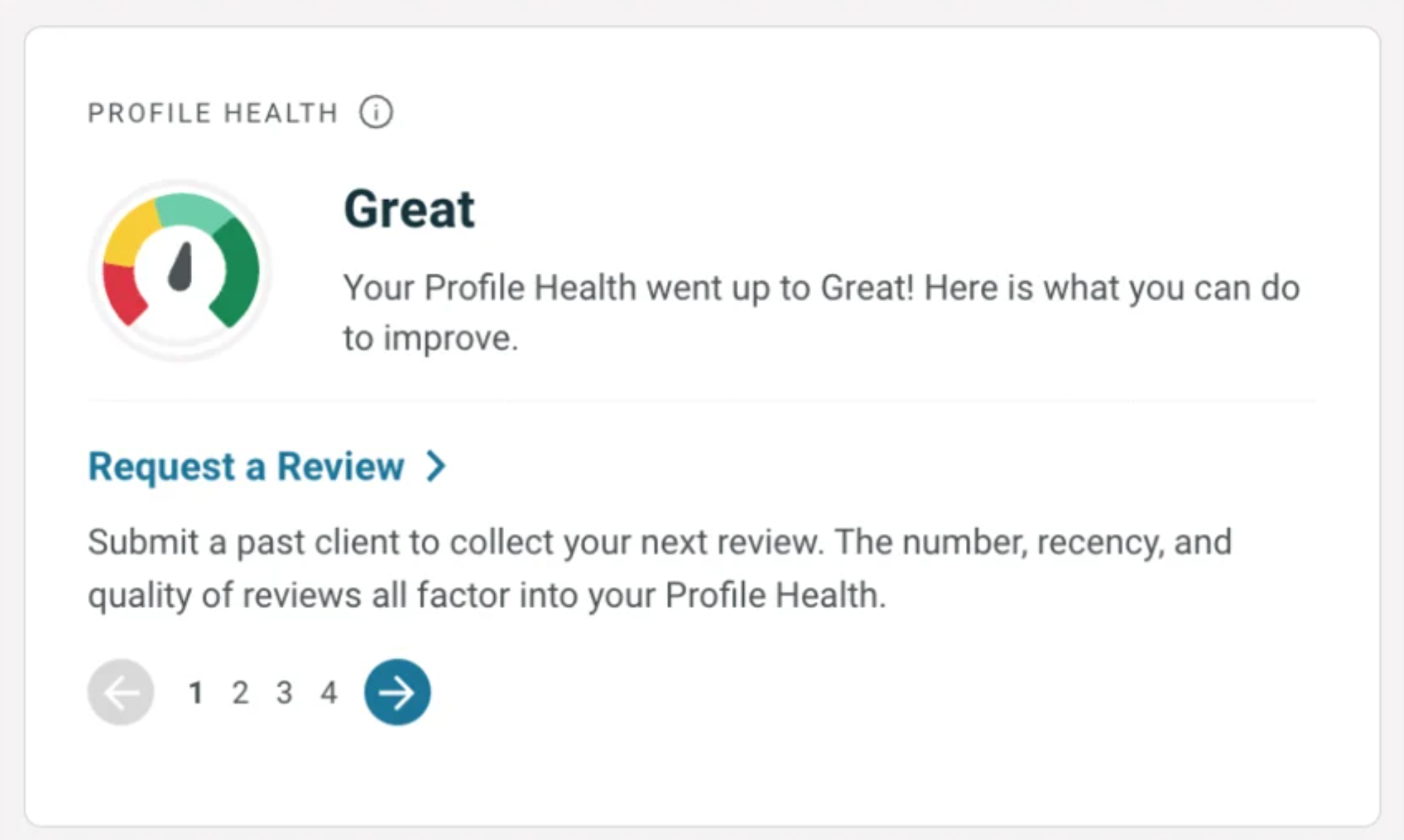
Clutch profile optimization is the cheapest work you will do on the platform. It also decides whether the reviews you earn actually convert. Think of the profile as your sales page for a buyer who is comparing five firms in ten minutes.
Choose your categories deliberately
Your first instinct will be to list in the biggest category. Resist it. A narrower category with less competition often outperforms the largest one, because ranking there is realistic.
Check the full category list before you commit. Pick two or three where your work and your reviews genuinely match.
Set specialism and focus percentages honestly
Buyers filter on service focus, and Clutch’s Focus measure rewards specialists. If 60% of your work is one service, show 60%. Spreading your percentages evenly across ten services makes you look like a generalist and dilutes your rank in each.
Qualify buyers before they contact you
Set your minimum project size and hourly rate so poor fits filter themselves out. A buyer with a $5K budget who sees a $25K minimum will not send an inquiry. That saves you a discovery call.
Write the description for a comparison shopper
Your brand guidelines are not your audience. Write for a buyer who has five tabs open. Lead with:
- Who you serve (industry, company size)
- What you do best
- A specific result you have delivered
- Why a buyer should pick you over the next firm
Cut the “full-service solutions partner” language. Nobody has ever hired a firm because of it.
Match portfolio, tags, and freshness
- Portfolio and case studies should map to the categories you are listed in. A SEO case study under a web development listing confuses the signal.
- Industry and location tags put you on more filtered pages.
- Freshness matters. A profile with work from three years ago suggests nobody is paying attention.
The three-competitor test
Open your profile next to three competitors in your main category. Ask one question: who would I shortlist if I did not know any of them?
If it is not you, fix the gap before you spend a dollar on promotion. A paid slot on a weak profile just sends more buyers to look at it.
Building the Review Engine

This section decides whether the rest works. Clutch reviews for lead generation are the core currency. They carry half of your Ability to Deliver score, and they are also the proof buyers read before they contact you.
The catch is that reviews take real effort. A verified review needs the client to complete a form or take a call, and they have no obvious incentive to do it. That is why most profiles stall at three to five reviews.
Make the ask a system, not a favor
Sporadic asking produces sporadic reviews. Build the request into your project close-out checklist, right next to the final invoice and the handoff doc.
Whoever owns the client relationship sends the ask. Track it like any other deliverable.
Ask at the moment of highest satisfaction
Timing is everything. The best moment is right after a result lands: the campaign launched, traffic moved, the audit finished, the client said thank you. Ask that day, not three months later when the glow has faded.
Make it easy to say yes
Tell the client exactly what to expect. Explain how long it takes, what they will be asked, and that Clutch verifies the review. A short, plain note works:
“Quick favor. Clutch is the directory we use to show prospects real client feedback. It takes about 15 minutes, and the form asks about the project, the results, and how we worked together. I’d really appreciate it if you were up for it. I can send the link now.”
That is a starting shape. Adjust it to how you actually talk to the client.
Prioritize clients who can speak to outcomes
A review that says “great team, would recommend” helps a little. A review that says “organic leads went up 40% in six months and the team hit every deadline” helps a lot. Pick clients who can talk about numbers, the problem you solved, and the budget involved.
If you are unsure, send a few starter prompts: what was the goal, what changed, what was the working relationship like.
Chase recency and coverage
Two things get overlooked:
- Recency. A profile with reviews from this quarter reads differently from one with reviews from 2022.
- Coverage. If you are listed in three categories, you want reviews that speak to each. Reviews for your main service do not help your rank in a secondary one.
Handle a bad review in public
Eventually you will get a lukewarm or critical review. Respond publicly, calmly, and specifically. Acknowledge what went wrong and what you changed.
Buyers read the response as much as the review. A professional reply can do more for trust than a stack of five-star ratings.
Do not write reviews for clients, offer incentives that compromise the review, or buy reviews from third parties. Clutch removes reviews that fail verification, and a profile caught gaming the system is worse off than a thin one.
This is a process, not a campaign
You will not run a “review push” in Q1 and be done. The firms that rank well on Clutch treat review collection like billing: it happens every time, on schedule, owned by someone.
🚀 Don't Wait for Clutch Leads to Find You
Build a pipeline beyond directory traffic. Cleverly handles prospect targeting, personalized messaging, and follow-ups to turn your ideal B2B accounts into sales conversations.
What Actually Drives Clutch Rankings
Compete where you can realistically rank
This is the strategic point. If you have 8 reviews, you will not outrank firms with 80 in the biggest category. But in a niche category, or filtered by a specific industry or city, 8 good reviews can put you on page one.
Win the small page first. Then expand as the reviews accumulate.
Check the methodology yourself
Clutch updates its scoring over time, and third-party explanations go stale quickly. Before you build a plan around any weighting, read Clutch’s current research methodology page and the help center article on ranking factors.
Paid Options and Whether They Are Worth It
Visibility on Clutch is partly purchasable. Pretending otherwise just means you misread why a competitor sits above you.
What you can buy
- Sponsored and featured listings. These place your profile higher on category pages. Clutch says pricing varies by sponsorship level and the number of pages you sponsor, so you will need to talk to their team for a quote.
- Pay Per Lead (PPL). You set a bid for each lead and a monthly budget. Clutch’s program page lists bids starting at $25 per lead and a minimum monthly budget of $1,000. You need to be Clutch Verified to join.
Confirm current terms before you commit. Pricing and eligibility change.
Model it on cost per client, not cost per inquiry
This is where agencies fool themselves. Cost per inquiry looks cheap. Cost per client tells the truth.
Here is an illustrative example with made-up numbers:
Now compare that $3,000 to what a client is worth over their lifetime and to the cost per client from your other channels. That comparison is the real decision.
The competitive dynamic to watch
If competitors in your category are paying, your organic position gets harder to hold. You can win that fight with better reviews, but be honest about how many months it takes.
When paid makes sense
- You have a proven offer that already closes.
- Your reviews already support credibility in the category.
- Your team has capacity to respond fast and handle volume.
When it doesn’t
- Your profile is thin or has few reviews.
- Your specialism is unclear.
- You are hoping paid placement will fix a weak profile.
Paying for visibility on a weak profile just sends more buyers to look at it and leave.
Test before you commit
Set a defined budget and a clear success measure before you start. For example: three months, a fixed monthly spend, and a target cost per qualified opportunity. Review it at the end, and keep or kill it based on the number.
Handling Clutch Leads Well
Getting inquiries is half the job. The other half is not losing them. Here is how to get clients on Clutch once the leads show up.
Speed beats polish
Directory buyers are contacting several firms at once. The first substantive response often shapes the shortlist. A thoughtful reply in 30 minutes beats a perfect one the next afternoon.
A good internal target is to respond within an hour during business hours. Set up alerts so the inquiry hits a real person’s phone, not a shared inbox.

Qualify early
Directory inquiries include a higher share of poor fits than referrals or outbound. Qualify in the first exchange:
- What is the project, and what outcome do they want?
- What is the budget range?
- What is the timeline, and who decides?
- Who else are they talking to?
If the answers do not fit your minimums, say so politely and move on.
Have a position on price
Expect comparison shopping. The buyer has several proposals open, and one of them is cheaper. Do not default to discounting.
Instead, anchor on what is different: your results in their industry, your process, your team. A short line works: “We’re not the cheapest option, and here is why clients still pick us.”
Use your credibility signals
The buyer found you through reviews and rankings, so give them more of the same. Reference two or three reviews that match their situation. Send a relevant case study. They are already responding to proof, so keep feeding it.
Track the source in your CRM
Tag every Clutch inquiry with its source from day one. Without that, you cannot measure Clutch against anything else, and you will end up arguing about it from memory.
Know when to decline
Chasing every directory inquiry is how agencies lose margin. If a lead is under your minimum, outside your specialism, or clearly a price shop, a fast and friendly “not a fit” protects your time for the ones that are.
What to Measure in Your Clutch Lead Generation
If you cannot tell whether Clutch pays for itself, you will either overspend or quit too early. Track these:
Compare on cost per client, not lead volume
Clutch might send 30 inquiries while your referral channel sends 4. If the referrals close at 50% and the Clutch leads close at 5%, volume tells you nothing. Put all channels on the same cost-per-client line.
Watch deal size
Directory-sourced work can skew smaller and more price-sensitive. Track average deal size from Clutch against your other sources. If it runs 30% lower, your cost per client needs to run lower to match.
Where Clutch Fits in a Wider Lead Generation Strategy
Be clear about what Clutch is good at and what it is not.
What Clutch genuinely gives you
- Credibility. A strong profile makes every other channel work better.
- In-market inbound. These buyers already have a project and budget.
- Third-party proof. Verified reviews carry more weight than anything on your own site.
Its structural limits
- You do not control it. Rankings shift and competitors can outbid you.
- Visibility is partly paid. You cannot rely on organic alone in a contested category.
- Volume depends on category demand. If few buyers search your niche, you cap out.
- Timing is the buyer’s. Clutch delivers leads when buyers decide to look, which may not be when you need a pipeline.
That last one hurts. We hear it from agency owners all the time: three great inquiries in March, nothing in April, and a payroll problem in May.
Use your reviews everywhere
Reviews are proof assets, so move them off the platform. Put them on your site, in proposals, and in your outreach. In one of our LinkedIn campaigns for a software development firm, name-dropping relevant clients lifted connection acceptance rates by 57%. Verified client feedback does the same job.
Land the strategic point
Clutch is a demand capture channel. It catches buyers who are already looking. It works best alongside something that creates demand, so you are not waiting on someone else’s timeline.
How Cleverly Builds Pipeline You Control
Directory leads arrive on the buyer’s timeline. That makes forecasting hard and leaves quiet months outside your control. The pattern is familiar: a trickle of inquiries, several competitors quoting on each one, and pipeline planning that turns into guesswork.
We see Clutch and outbound as complements. Clutch captures demand that already exists. Outbound reaches the accounts you want before they start shopping, and before they are comparing five providers.
At Cleverly, we run it end to end: ICP definition, verified list building, LinkedIn outreach, cold email, cold calling, and reply handling through to booked meetings.
The result is a conversation with a real decision-maker and no competing bidders.
We have generated $312M in pipeline and $51.2M in closed revenue for clients.
You do not manage tools, domains, or copy tests. We optimize for one thing: qualified meetings held with the people who sign the contract.
Waiting on directory inquiries? Cleverly builds a pipeline you can plan around. Book a free consultation now.
Conclusion
Clutch lead generation rewards a sustained review process more than anything else, and few agencies ever build one. Compete in categories where you can realistically rank, be clear about what you earn versus what you buy, and judge paid placement on cost per client.
Your next step is simple: audit your profile against three competitors, then set up a review request at project close-out.
Treat Clutch as a credibility and capture channel. Then build something next to it that generates demand on your schedule instead of the buyer’s.
Frequently Asked Questions
Free Resource
How to Scale a Profitable Cold Call System
Get the complete guide — download it instantly now.

Free Ebook
Download the Free Guide
Enter your details to get instant access.
You're all set! 🎉
Your ebook is downloading now.
Click below if the download didn't start automatically.


