Table of Contents
What to Look for in Social Selling Tools
Quick Comparison: Best Social Selling Tools
9 Best Social Selling Tools for B2B Sales Teams (Ranked and Reviewed)
How to Build a Social Selling Tool Stack for Your Team
Tools Build the Presence, Cleverly Builds the Pipeline Behind It
Conclusion
Frequently Asked Questions
Modified On :
August 21, 2026
Key Takeaways
- Social selling now works best as a coordinated stack, not a single tool. Prospecting, employee advocacy, and content distribution each solve a different piece of the motion, and most teams need at least two of the three.
- Native LinkedIn data almost always beats third-party alternatives for targeting precision. Tools that layer on top of Sales Navigator tend to outperform tools that try to replace it.
- Employee advocacy platforms only pay off with consistent internal buy-in. The software rarely fails, but adoption often does when there's no internal champion pushing it.
- Vanity metrics like impressions and follower counts are not the same as pipeline impact. The tools worth paying for tie social activity back to actual engagement or revenue.
- A strong social selling presence still doesn't guarantee booked meetings on its own. Visibility gets you noticed, but converting that into conversations usually takes a dedicated outreach motion behind it.
Your buyer has usually made up their mind about you before your rep ever sends a message. Roughly 95% of B2B purchases go to a vendor already on the buyer's shortlist before a sales conversation even starts, and that shortlist gets built during the quiet research phase happening entirely on LinkedIn.
Around 89% of B2B marketers already use LinkedIn to generate leads, and teams with strong social selling adoption see meaningfully higher revenue attainment than teams that don't invest in it at all.
That's the gap social selling tools are built to close. This guide breaks down 9 of the best options on the market in 2026, ranked and reviewed across three categories: prospecting, employee advocacy, and content distribution.
Social selling has grown well past personal LinkedIn activity. Coordinated employee advocacy and AI-assisted outreach are now standard parts of a real stack, not nice-to-haves.
This is written for B2B sales reps, marketing teams, and RevOps leaders who are either building a social selling program from scratch or trying to fix one that isn't producing pipeline.
What to Look for in Social Selling Tools
Before you buy anything, it helps to know what actually separates a useful tool from a shiny one.
✅ Native LinkedIn data depth. Third-party tools almost never match LinkedIn's own search and targeting precision. If a tool claims to out-target Sales Navigator, be skeptical. Most of the best tools work with LinkedIn's data, not around it.
✅ Employee advocacy support. If your goal is company-wide reach and not just your top rep posting daily, you need software built for advocacy specifically. This is a different category from personal branding tools.
✅ Pipeline-tied analytics. Impressions and follower growth feel good but don't pay bills. Look for tools that connect social activity to engagement quality or, better, actual pipeline movement.
✅ CRM integration. Social engagement data is only useful if it shows up where your reps already work. A tool that can't feed activity into Salesforce or HubSpot creates another silo, not less work.
✅ Free tier or trial. You shouldn't have to commit to a full rollout to know if a tool fits your team. The best options let you validate the approach before you scale spend.
🎯 Social Selling Is Good. Social Selling That Books Meetings Is Better.
Our LinkedIn outreach campaigns generate 15–30 qualified meetings every month with targeted, personalized outreach.
Quick Comparison: Best Social Selling Tools
9 Best Social Selling Tools for B2B Sales Teams (Ranked and Reviewed)
Each tool below is broken down the same way: what it's best for, its key features, where it falls short, and what it costs. That format makes it easier to compare apples to apples instead of getting lost in feature lists.
1) LinkedIn Sales Navigator
If there's one tool almost every social selling stack starts with, it's this one. Sales Navigator is LinkedIn's own paid layer on top of the platform, and because it's native, it sees data no third-party tool can fully replicate. Most reps use it as the foundation, then add other tools on top rather than trying to replace it.
Best For: Any B2B sales team needing precise, native LinkedIn targeting and relationship tracking.
Key Features:
- Search depth and data freshness no third-party prospecting tool fully matches.
- Lead and account tracking with real-time activity alerts.
- InMail and Smart Links for direct, trackable outreach.
Limitations:
- Prospecting depth alone underdelivers without a broader engagement or content strategy layered on top.
- Requires a paid seat per user, which adds up fast for larger teams.
Pricing: Paid, tiered per-seat plans, generally in the 99–120/month range for the entry tier depending on billing cycle, with higher tiers and enterprise pricing above that.
2) Oktopost
Oktopost is built specifically for B2B, which shows in how deeply it plugs into marketing automation systems most sales orgs already run on. It's less a social posting tool and more a data pipe between LinkedIn activity and your CRM.
Best For: Enterprise B2B teams wanting social engagement data piped directly into their marketing automation platform.
Key Features:
- Integrates social activity with Marketo, HubSpot, Salesforce, and Pardot so engagement shows up on lead records.
- Streamlines corporate and employee advocacy activity through a single platform.
- Built specifically for B2B, not repurposed general social media software.
Limitations:
- Pricing isn't publicly listed, so you'll need a sales conversation to evaluate cost.
- More platform than very small teams typically need.
Pricing: Custom
3) GaggleAMP
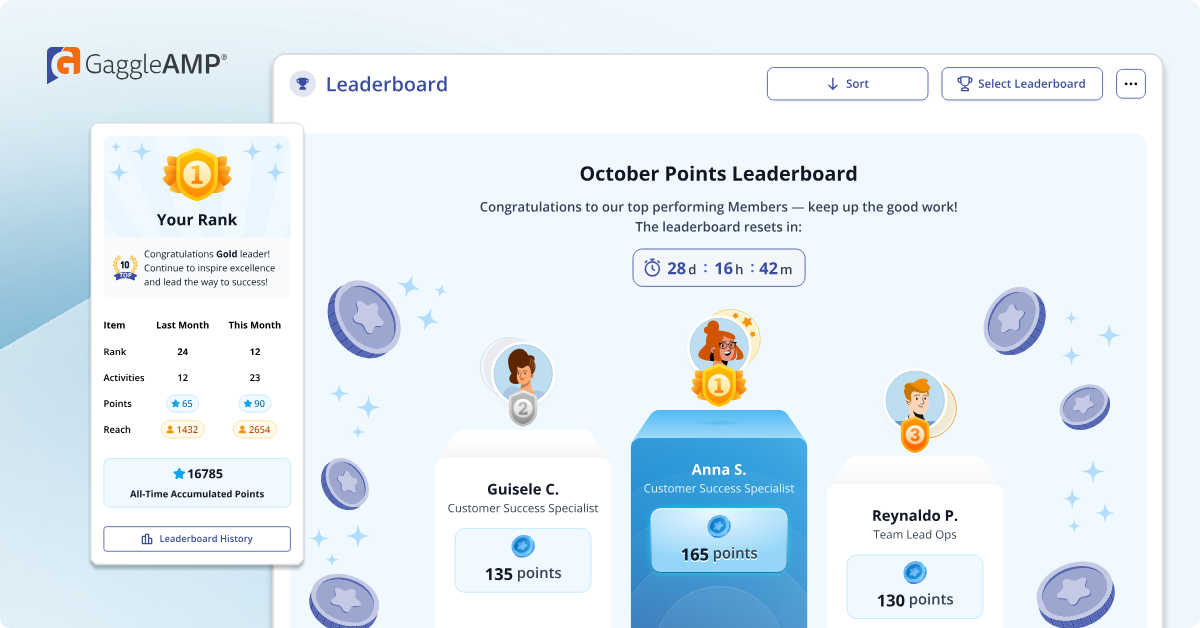
GaggleAMP leans into gamification to solve the hardest part of employee advocacy: getting people to actually participate past week one. If your team responds to friendly competition, this is worth a look.
Best For: Companies wanting to boost employee participation in social advocacy through competition and rewards.
Key Features:
- Supports 50+ social advocacy activity types across LinkedIn, Instagram, and other platforms.
- AI-assisted messaging lets employees personalize a core brand message while staying on-brief.
- Gamification and reward tools to increase ongoing participation.
Limitations:
- Value depends on consistent employee engagement, which needs ongoing internal promotion to stick.
- Custom, company-size-based pricing means costs can run higher than lighter-weight advocacy tools for smaller teams.
Pricing: Custom, priced by company size (previously advertised from around $300/month for smaller teams.
4) EveryoneSocial
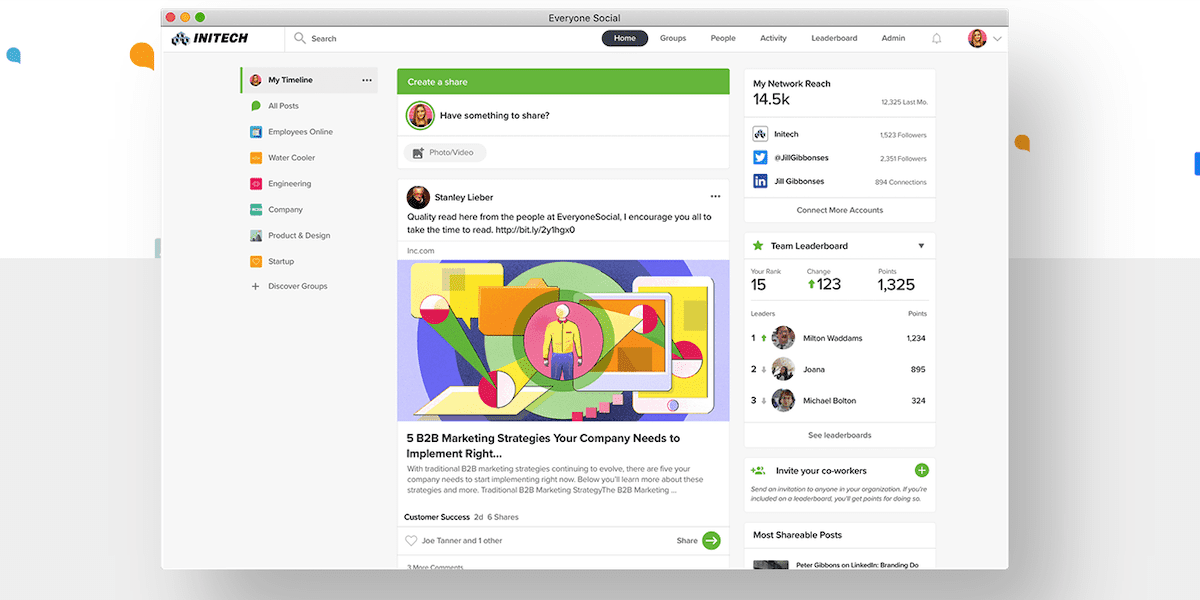
EveryoneSocial's edge is simple: it puts shareable content where employees already spend their day, inside Slack and Teams, instead of asking them to log into yet another platform.
Best For: Companies wanting to surface shareable content directly inside tools employees already use daily.
Key Features:
- Suggests social copy and hashtags to make sharing frictionless for non-marketing employees.
- Direct integration with Slack and Microsoft Teams.
- Established platform with a long track record specifically in employee advocacy.
Limitations:
- Fully custom pricing with no predefined tiers, which makes budgeting less predictable upfront.
- Best suited to companies with a reasonably large employee base to activate.
Pricing: Custom
5) Hootsuite
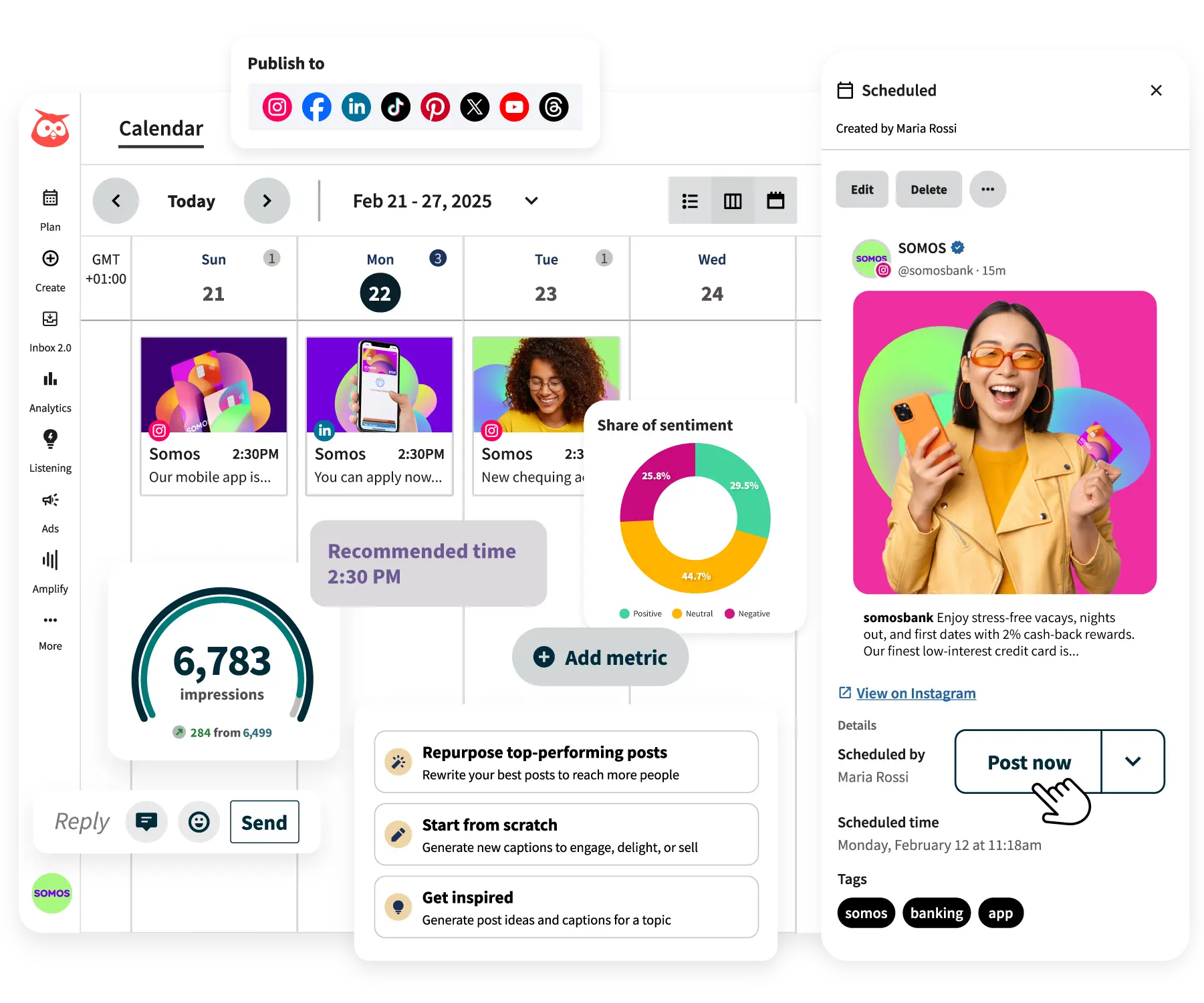
Hootsuite isn't purpose-built for B2B social selling, but if your team needs to monitor conversations across more than just LinkedIn, it's still one of the most established options for that job.
Best For: Teams needing to monitor and manage engagement across LinkedIn, X, and other platforms from one dashboard.
Key Features:
- Centralized dashboard for monitoring conversations and mentions across multiple platforms.
- Scheduling and publishing alongside monitoring in one tool.
- Broad platform support beyond just LinkedIn.
Limitations:
- Not purpose-built for B2B social selling specifically, more general social media management.
- Less depth on B2B-specific engagement-to-pipeline tracking than dedicated tools.
Pricing: Paid, tiered plans
6) Crono
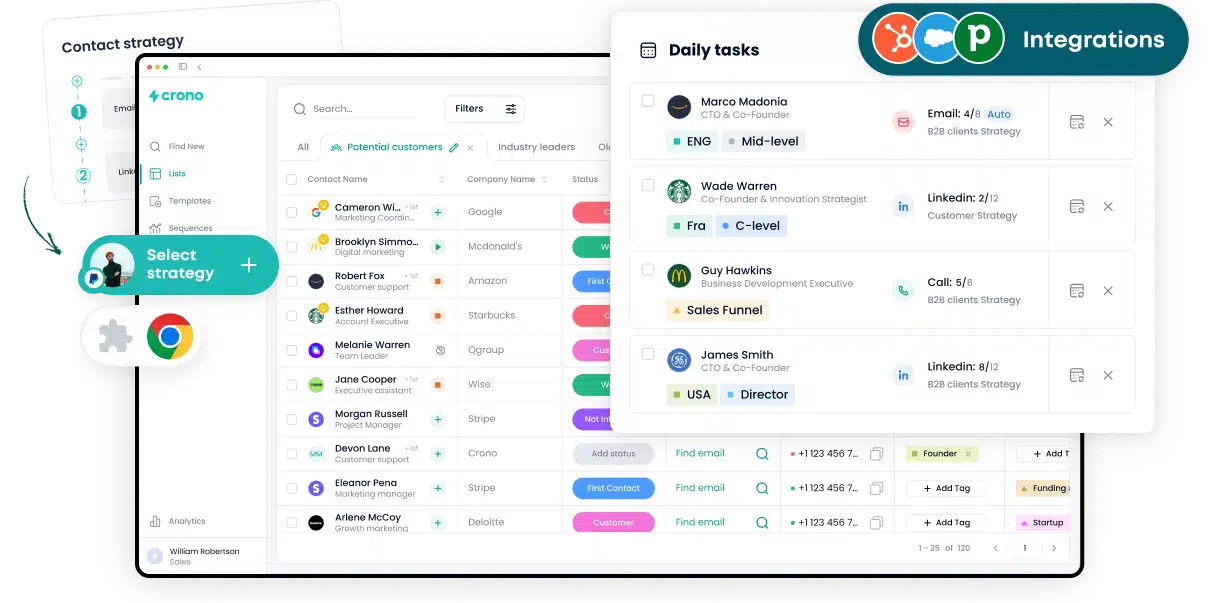
Crono's pitch is fewer tools, not more features. Instead of stitching together separate prospecting, enrichment, and engagement platforms, it bundles the three into one interface built around B2B sales workflows.
Best For: Teams wanting prospecting, enrichment, and engagement combined in a single platform rather than stitching tools together.
Key Features:
- Integrates lead generation, contact enrichment, and multichannel engagement in one interface.
- Reduces tool sprawl for teams currently juggling separate point solutions.
- Built with B2B sales workflows in mind, not adapted from general marketing software.
Limitations:
- Newer platform with a smaller market track record than established players.
- Broad feature set may exceed what smaller teams need on day one.
Pricing: Paid
7) Amplemarket
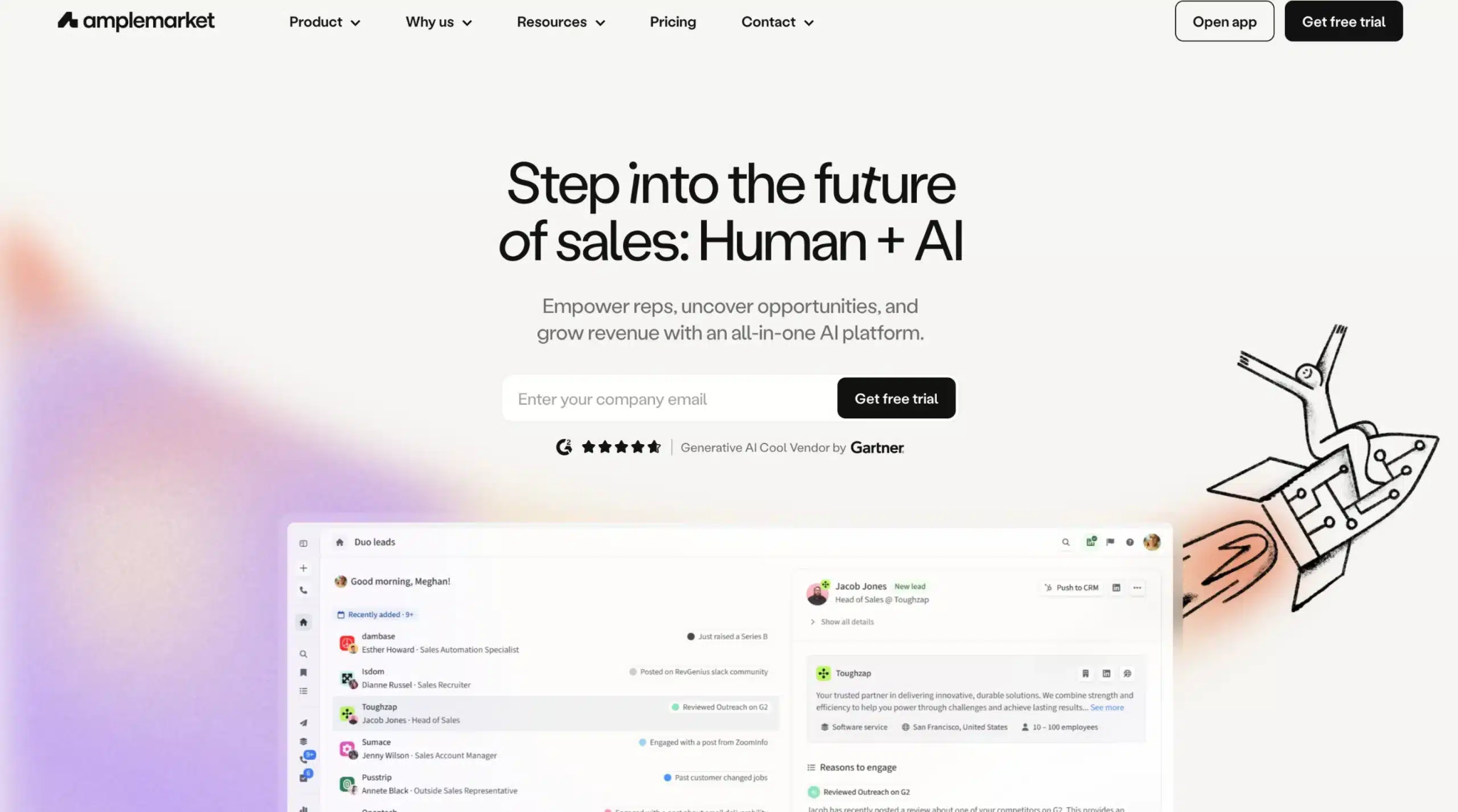
Amplemarket's angle is letting AI do the target prioritization work that reps used to do manually, layered on top of standard outreach data. It's a good fit if your ICP is well-defined enough for the AI to actually learn from.
Best For: Sales teams wanting AI to identify and prioritize social selling targets alongside traditional outreach.
Key Features:
- AI-assisted lead identification and prioritization layered on top of outreach data.
- Combines prospecting automation with engagement tracking.
- Useful for teams wanting to scale personalized targeting without manual research.
Limitations:
- Best value requires a reasonably defined ICP to point the AI targeting at.
- Custom pricing requires a sales conversation to evaluate cost.
Pricing: Paid
8) Shield
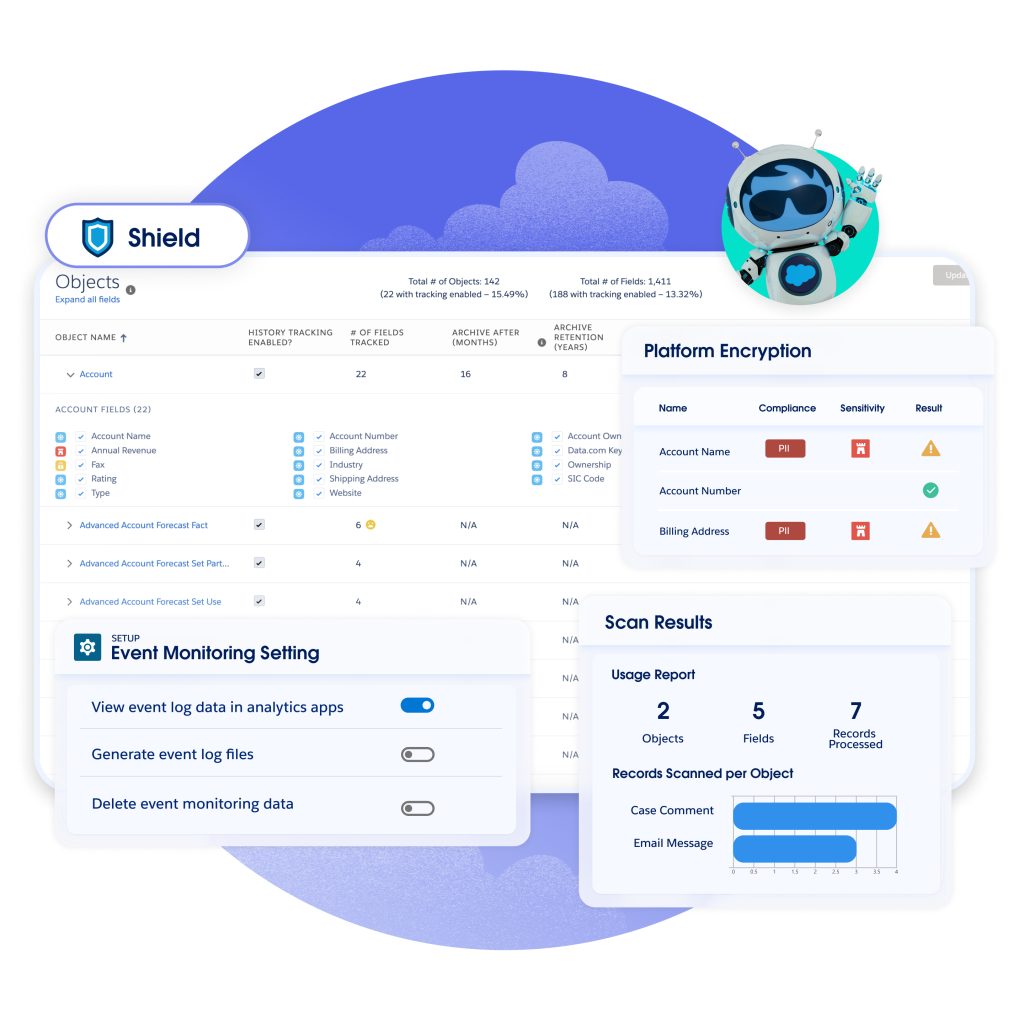
Shield is built for the individual, not the team. If a rep or exec is trying to build a personal brand on LinkedIn as part of their social selling motion, this gives them the analytics to know what's actually working.
Best For: Individual reps and executives building a personal brand on LinkedIn as part of a social selling motion.
Key Features:
- Detailed analytics on personal post performance, audience growth, and engagement trends.
- Helps identify which content formats and topics actually drive engagement.
- Useful for coaching reps on what's working in their individual efforts.
Limitations:
- Focused on individual analytics rather than company-wide advocacy or prospecting.
- Best paired with a broader social selling tool rather than used standalone.
Pricing: Paid
9) Buffer
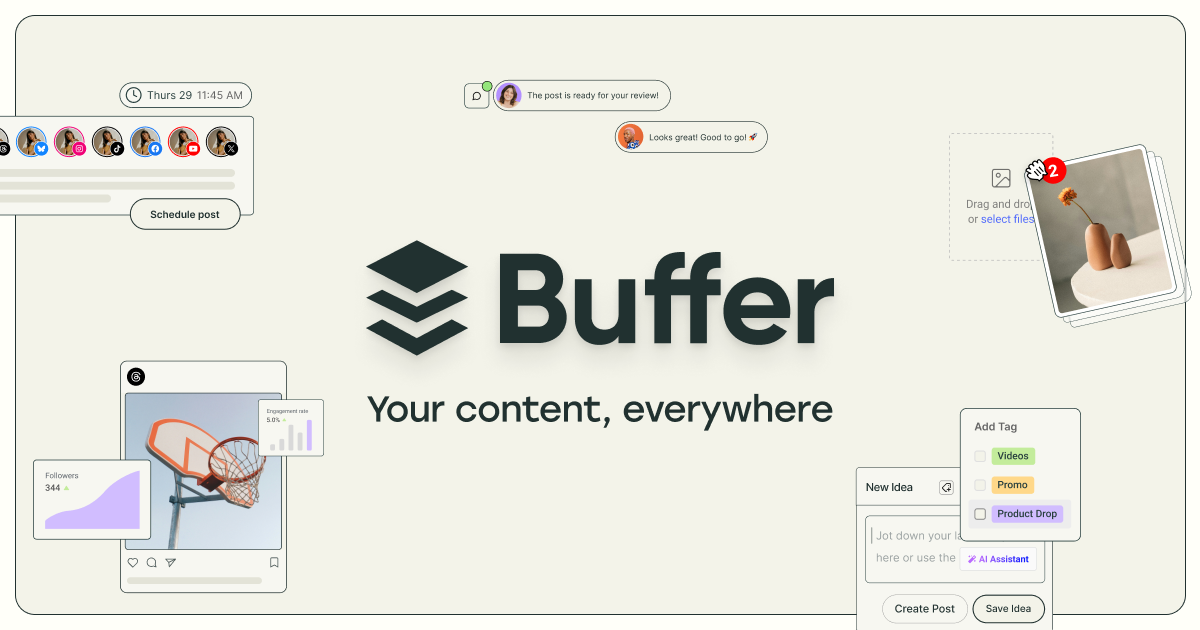
Buffer is the easiest entry point on this list, and often the right starting point if your team hasn't built a posting habit yet. Free doesn't mean feature-rich, but it's enough to get consistent.
Best For: Individual reps or small teams wanting a free way to schedule and maintain consistent LinkedIn posting.
Key Features:
- Free tier supports basic scheduling and publishing across LinkedIn and other platforms.
- Simple, low-friction setup for reps just starting a personal content habit.
- Analytics available on paid tiers for teams wanting to scale up.
Limitations:
- Lacks the B2B-specific advocacy and pipeline-tracking features of dedicated social selling platforms.
- Free tier functionality is limited for anything beyond basic scheduling.
Pricing: Free tier available; paid plans for expanded features
🚀 Turn Social Connections Into Sales Conversations
With 224.7K+ leads generated, 53,000+ meetings booked, and $312M+ in pipeline, Cleverly helps 10,000+ businesses turn LinkedIn into predictable pipeline.
How to Build a Social Selling Tool Stack for Your Team

You don't need all 9 tools above. Most teams only need two or three, layered in the right order.
Start with LinkedIn Sales Navigator as your prospecting foundation. Nearly everything else on this list is designed to sit on top of it, not replace it. Once that's in place, decide if you need an employee advocacy tool like GaggleAMP, Oktopost, or EveryoneSocial. That's only worth adding if the goal is company-wide reach, not just individual rep activity.
If your team hasn't built a consistent posting habit yet, start with something free like Buffer before investing in analytics or automation platforms. There's no point paying for advanced reporting on activity that isn't happening consistently yet.
Whatever you build, track one thing above all else: whether social engagement is actually tied to pipeline. Not impressions. Not follower growth.
If you can't answer that question after 90 days, that's the signal to fix before you scale spend on the stack.
Tools Build the Presence, Cleverly Builds the Pipeline Behind It
Social selling tools are genuinely useful for building visibility and relationships on LinkedIn. But visibility alone doesn't consistently turn into booked meetings, and that gap is where most social selling programs quietly stall out.
That's the piece Cleverly handles.
As a B2B lead generation agency running LinkedIn outreach for companies across every industry, Cleverly turns LinkedIn presence and connections into actual qualified conversations, not just engagement metrics.
The difference matters: a strong personal brand or company page without a structured outreach motion behind it still leaves pipeline generation up to chance. Cleverly runs hyper-personalized, multi-touch campaigns targeting your exact ICP, so the visibility your team is building through social selling tools gets converted into real sales conversations instead of just impressions.
This is the right fit for companies already investing time and budget into social selling tools who want a dedicated team turning that visibility into meetings on the calendar, not just better analytics.
Cleverly has generated $312 million in pipeline for clients across LinkedIn, cold email, and cold calling outreach.
Building a social selling presence but need it converting into actual meetings? Book a strategy call with Cleverly!
Conclusion
Social selling in 2026 works best as a coordinated stack, not a single tool bet. Prospecting, employee advocacy, and content distribution each solve a different piece of the motion, and most teams underinvest in one of the three.
LinkedIn Sales Navigator remains the foundational layer almost every other tool on this list is designed to build on top of, while something as simple as Buffer can get a content habit started before you invest in a full platform.
The tools make social selling scalable. But turning that visibility into a real pipeline still comes down to having a deliberate outreach strategy behind it, not just consistent posting.
Frequently Asked Questions
Free Resource
How to Scale a Profitable Cold Call System
Get the complete guide — download it instantly now.
Free Ebook
Download the Free Guide
Enter your details to get instant access.
You're all set! 🎉
Your ebook is downloading now.
Click below if the download didn't start automatically.