Table of Contents
What to Look for in a Technographic Data Platform
Quick Comparison Table: Best Technographic Data Platforms
10 Best Technographic Data Platforms for B2B Targeting (Ranked and Reviewed)
How to Choose the Right Technographic Data Platform
Technographic Data Sharpens Targeting. Cleverly Runs the Outreach.
Conclusion
Frequently Asked Questions
Modified On :
August 25, 2026
Key Takeaways
- Detection method is the single biggest differentiator: web-crawl tools (BuiltWith, Wappalyzer) only see client-side tech, while IT-spend modeling platforms (HG Insights) can surface backend and infrastructure systems.
- Budget splits the market cleanly. Entry-level tools run $21 to $295/month, while enterprise platforms (ZoomInfo, 6sense, Demandbase, HG Insights) require custom pricing and a sales conversation.
- BuiltWith has the largest technology database at roughly 114,000 tracked technologies, making it the strongest pick when your targeting criteria involves niche or uncommon tools.
- Some platforms bundle technographic data with firmographic and contact info (ZoomInfo, SalesIntel), while others are technographic-only and expect a separate contact tool layered on top.
- ABM-focused teams get the most value from platforms that pair technographic signals with intent data, like 6sense and Demandbase, rather than a standalone lookup tool.
- There's no single "best" platform. The right choice depends on matching detection method and data depth to your actual target accounts, not picking the tool with the longest feature list.
Once you decide to target accounts by tech stack, the platform you pick determines almost everything else. How accurate the data is. How deep it goes. Whether you catch a signal the day it happens or three months later.
That decision matters more than most teams realize going in. Buyers spend only about 17% of their total purchase time in direct contact with vendors.
The rest happens before anyone picks up the phone.
If you're not already showing up with relevant signal when a prospect starts that self-directed research, you're behind before the conversation even starts.
Technographic data is one of the few ways to get ahead of that curve, because it tells you who's already using (or just adopted, or just dropped) a technology that makes them a fit.
This guide breaks down 10 of the top technographic data platforms on the market right now. You'll get how each one detects technology, what it's actually good at, where it falls short, and what it costs.
Some tools are built for a quick web-tech lookup. Others model backend infrastructure spend that no crawler could ever see. A few bolt technographics onto a full ABM suite.
This is written for sales, marketing, and RevOps teams evaluating a technographic data provider for account targeting.

What to Look for in a Technographic Data Platform
Not all technographic data works the same way, and the differences matter more than most buying guides let on.
Detection method
This is the biggest fork in the road. Web-crawl tools like BuiltWith and Wappalyzer scan a website's front end and detect what's visible client-side: analytics pixels, CMS platforms, chat widgets, ad tech. They can't see what's running on the backend.
Enterprise IT-spend platforms like HG Insights model infrastructure and software using a mix of data sources, which means they can surface technologies a crawler would never find, like a company's cloud provider or its data warehouse.
Database size and refresh frequency
A bigger database catches more of what's actually out there. But size only matters if the data stays current. A platform that tracks 100,000 technologies but refreshes twice a year isn't more useful than one that tracks 3,000 and updates weekly, depending on what you're trying to catch.
Bundled firmographic and contact data
Some platforms are technographic-only and expect you to layer a separate tool on top for contact info. Others, like ZoomInfo or SalesIntel, bundle technographic signals with company and contact data in one place. Neither approach is wrong. It depends on whether you already have a data stack you're happy with.
Budget fit
This market splits cleanly by price. Entry-level tools like Datanyze and Wappalyzer start in the tens to low hundreds of dollars per month. Enterprise platforms like HG Insights, 6sense, and Demandbase require a sales conversation and a five-figure-plus annual budget. Know which category you're shopping in before you start taking demos, or you'll waste time on calls that were never going to fit.
🎯 Know Their Tech Stack. Know Who to Target.
Our LinkedIn, cold email, and cold calling campaigns generate 15–30 qualified meetings every month with high-fit B2B prospects.
Quick Comparison Table: Best Technographic Data Platforms
10 Best Technographic Data Platforms for B2B Targeting (Ranked and Reviewed)
1. BuiltWith
BuiltWith is the heavyweight of the web-crawl category. If your targeting criteria involves a technology that's even remotely niche, BuiltWith is usually the tool that actually finds it. It tracks roughly 114,000 technologies, which is by far the largest database of any crawl-based tool on this list, and it's been doing this since 2007, so its historical adoption data goes back further than almost anyone else's.
Best For: Teams wanting the broadest possible technology detection coverage.
Key Features:
- Massive detection scope. Tracks roughly 114,000 technologies, well ahead of any other crawl-based competitor.
- Detailed usage reporting. Keyword and technology usage reports that go deeper than a simple yes/no on adoption.
- Long track record. One of the most established and trusted names in web technology detection.
Limitations:
- Priced higher than lighter alternatives like Wappalyzer or Datanyze.
- Web-crawl detection only, so it misses backend and infrastructure technologies entirely.
Pricing: Basic runs around $295/month, Pro around $495/month, and Team around $995/month.
2. Wappalyzer
Wappalyzer is the tool most people already know from its browser extension, but the full platform is a legitimate lead-gen and technographic tool in its own right. It covers a smaller technology set than BuiltWith, but for the most commonly used stacks, that gap barely matters in practice.
Best For: Smaller teams wanting reliable client-side tech detection without BuiltWith's price tag.
Key Features:
- Straightforward detection. Covers a curated set of around 3,000 technologies with a clean, fast interface.
- Accessible for quick lookups. No steep learning curve if you just need to check what a site is running.
- Free browser extension. Useful as a companion tool for one-off checks even if you're not on a paid plan.
Limitations:
- Smaller technology database than BuiltWith, so niche or emerging tools may not show up.
- Lower tiers cap results, which pushes active users toward an upgrade fairly quickly.
Pricing: Starter plans run around $250/month.
3. HG Insights
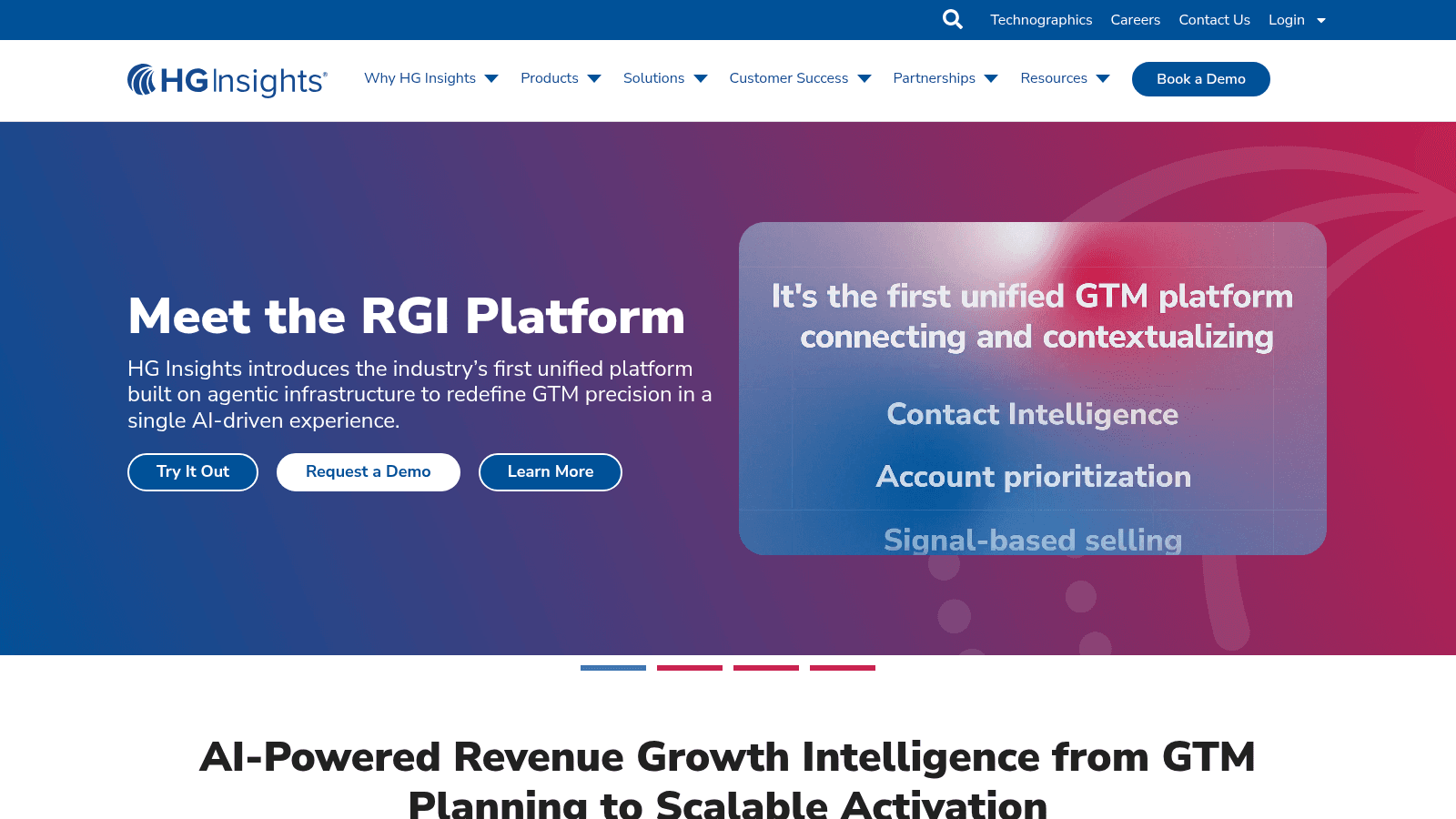
HG Insights plays a different game entirely. Instead of crawling what's visible on a website, it models IT spend, which means it can surface backend infrastructure, cloud contracts, and enterprise software that a crawler would never see. This is the platform enterprise teams reach for when they need to know what a large account is actually spending on technology, not just what's running on their marketing site.
Best For: Enterprise teams needing modeled IT spend data, not just detected web technologies.
Key Features:
- Backend visibility. Models infrastructure and technology spend that web-crawl tools simply can't detect.
- Built for enterprise motions. Strong fit for sales teams targeting large accounts with complex tech stacks.
- Spend intelligence layered in. Combines technographic signals with modeled spend data for sharper account prioritization.
Limitations:
- Enterprise-only pricing puts it out of reach for smaller teams and individual reps.
- Requires a sales conversation just to access pricing and scope.
Pricing: Custom, enterprise.
4. SalesIntel
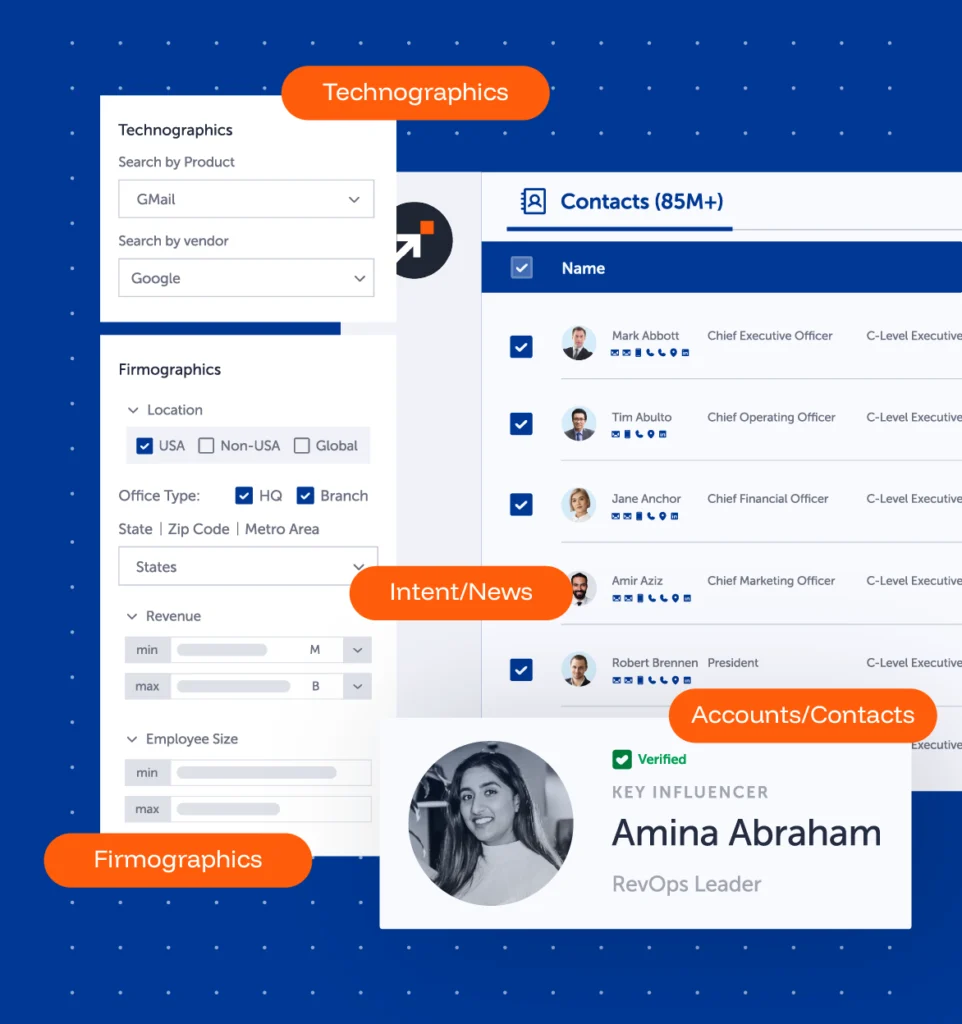
SalesIntel's pitch is accuracy. Instead of relying purely on automated detection, it layers human verification on top of its technographic and firmographic data. If you've been burned by stale or inaccurate technographic signals before, this is the kind of provider worth a look.
Best For: Teams wanting human-verified accuracy layered on top of technographic detection.
Key Features:
- Combined data types. Technographic and firmographic data in one platform, so you're not stitching two tools together.
- Human-verified accuracy. Verification processes that go beyond what a purely automated crawl can guarantee.
- One less tool to buy. Functions as a combined data source rather than requiring a separate firmographic layer.
Limitations:
- Custom pricing means you'll need a sales call before you know if it fits your budget.
- Verification introduces a small lag, so freshness may trail pure web-crawl tools slightly.
Pricing: Custom.
5. Datanyze
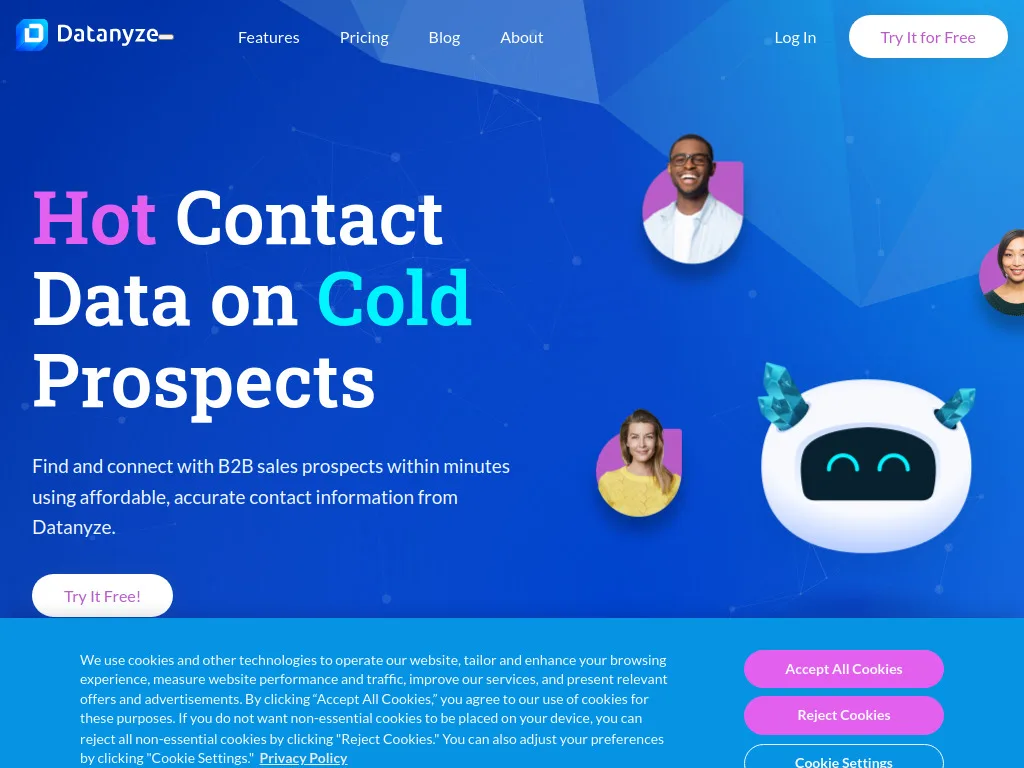
Datanyze is the budget pick, and it's a genuinely good one if your use case is straightforward. It's SaaS-focused, easy to use, and offers a free tier so you can test the data before spending anything.
Best For: SaaS businesses and smaller teams wanting an affordable technographic tool.
Key Features:
- Solid coverage for the price. Tracks 70K+ software products across 15M+ companies.
- Built for accessibility. A user-friendly platform designed specifically for identifying prospects by software usage.
- Free tier to test first. You can evaluate the data before committing to a paid plan.
Limitations:
- Less enterprise depth than platforms like HG Insights or ZoomInfo.
- Smaller company database compared to aggregated enterprise platforms.
Pricing: Free Nyze Lite plan (10 credits/month for 90 days). Nyze Pro 1 runs around $21/month and Nyze Pro 2 around $39/month, billed annually.
6. ZoomInfo
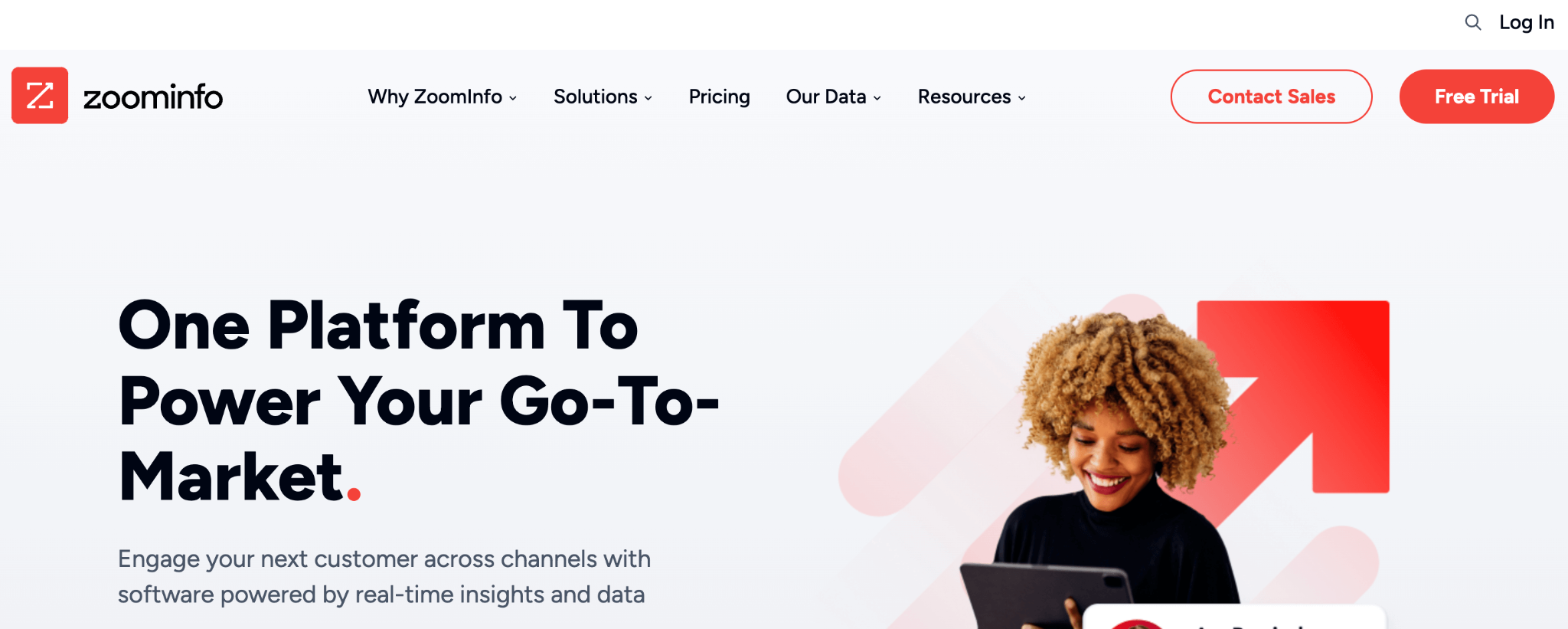
ZoomInfo is the all-in-one option. It aggregates technographic data alongside its much larger contact and company database, so if you're already using ZoomInfo for prospecting, adding technographic filtering is mostly a matter of turning it on rather than buying a whole new tool.
Best For: Enterprise teams wanting technographic data bundled with contact and company intelligence in one platform.
Key Features:
- Everything in one place. Aggregates technographic data alongside its broader contact and company database.
- Fewer tools to manage. Reduces the need for a separate contact-finding tool layered on top.
- Frequent data refresh. Backed by large-scale enrichment processes that keep records current.
Limitations:
- Enterprise pricing puts it out of reach for smaller teams.
- If it's not your primary data source, it can overlap heavily with tools you're already paying for.
Pricing: Custom, enterprise.
7. Clearbit
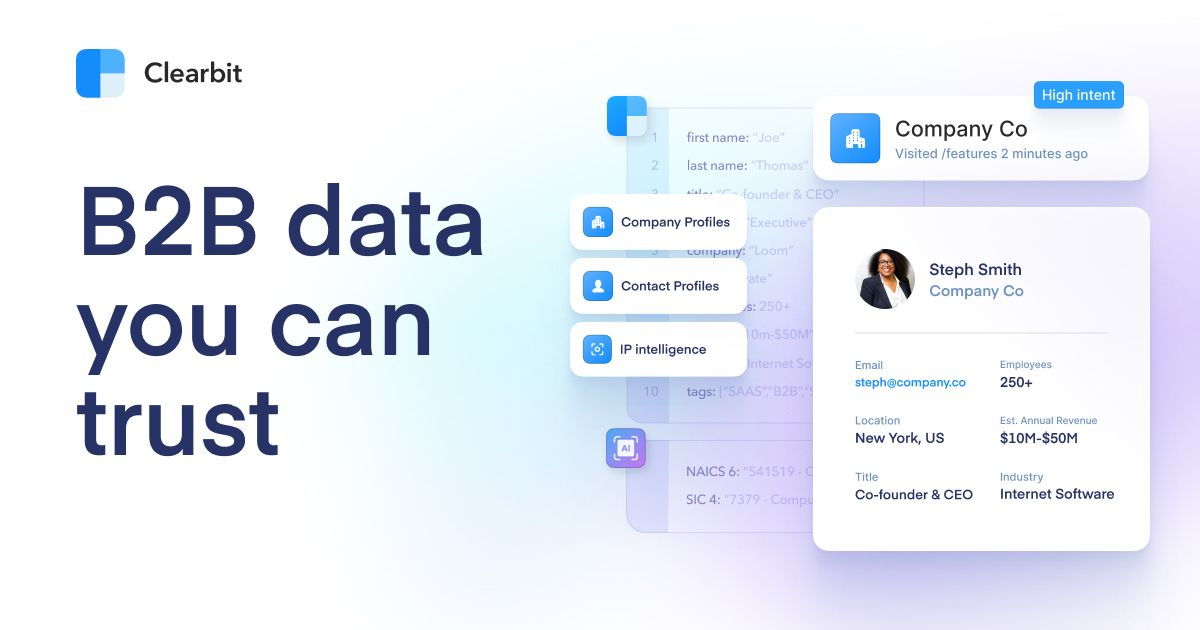
Clearbit is built for teams who'd rather pipe technographic data directly into their own systems than log into a dashboard. It's API-first, which makes it a favorite among product-led and engineering-heavy go-to-market teams.
Best For: Technical teams wanting to build technographic enrichment directly into their own tools and workflows.
Key Features:
- API-first architecture. Built for enriching records programmatically at scale, not for manual lookups.
- Broader enrichment, not just tech. Combines technographic signals with wider company enrichment data.
- Popular with dev-heavy teams. A go-to for product-led GTM motions that want data close to the codebase.
Limitations:
- Getting full value out of it requires engineering resources to implement properly.
- Less turnkey than platforms designed for non-technical sales users.
Pricing: Custom.
8. 6sense
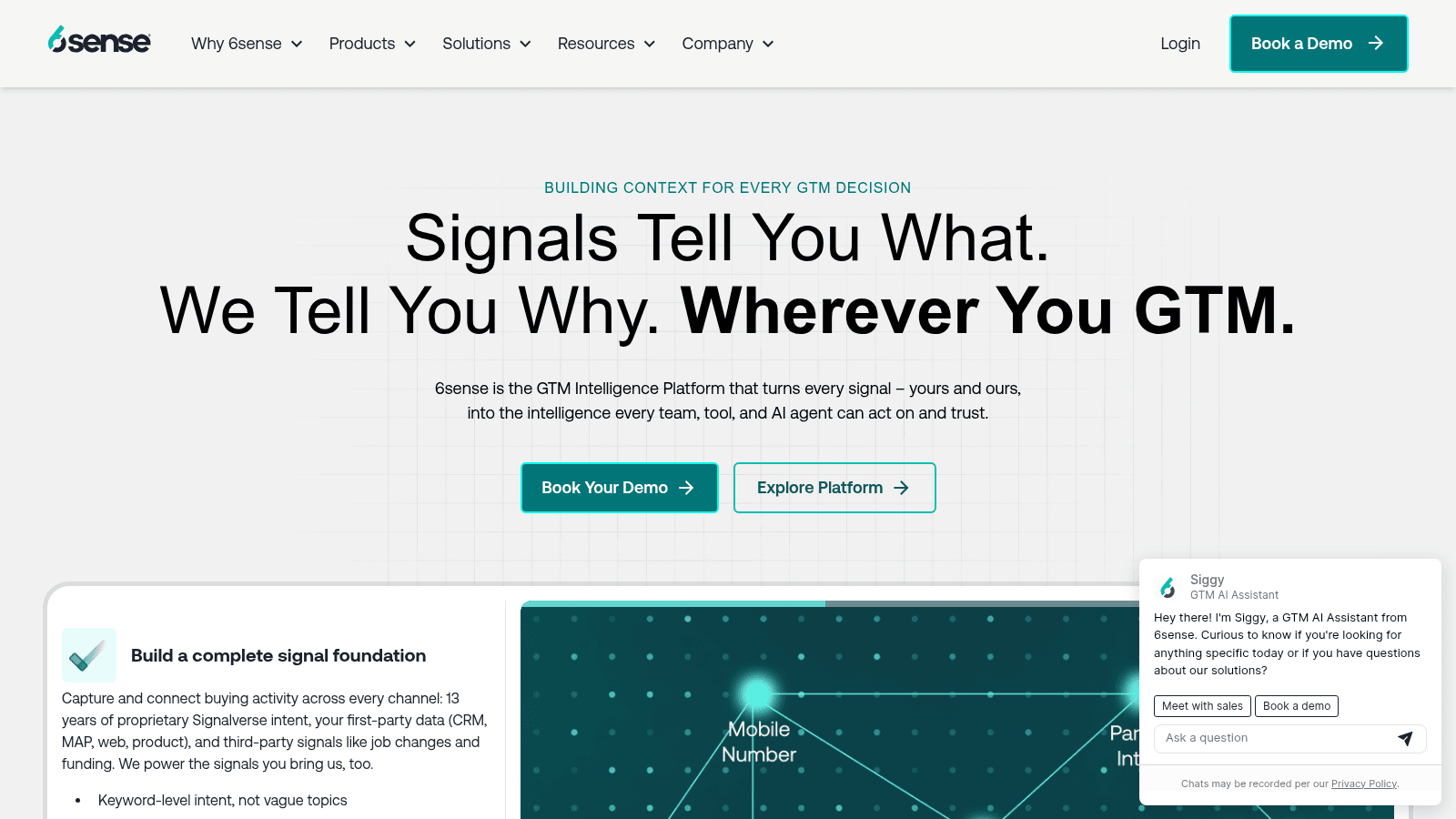
6sense pairs technographic detection with predictive intent data, which changes what you're actually looking at. Instead of just knowing what tech a company runs, you're seeing which accounts are showing buying signals right now. That combination is the whole point of the platform.
Best For: ABM-focused teams wanting technographic signals combined with predictive intent data.
Key Features:
- Signal plus intent. Combines technographic detection with intent data to flag in-market accounts.
- Aligns sales and marketing. Both teams work off the same account signals instead of separate lists.
- Full-funnel platform. Built for ongoing ABM programs, not a one-off technographic lookup.
Limitations:
- Enterprise pricing sits well above smaller technographic-only tools.
- You need a reasonably mature ABM motion already in place to get full value from it.
Pricing: Custom, enterprise.
9. Demandbase
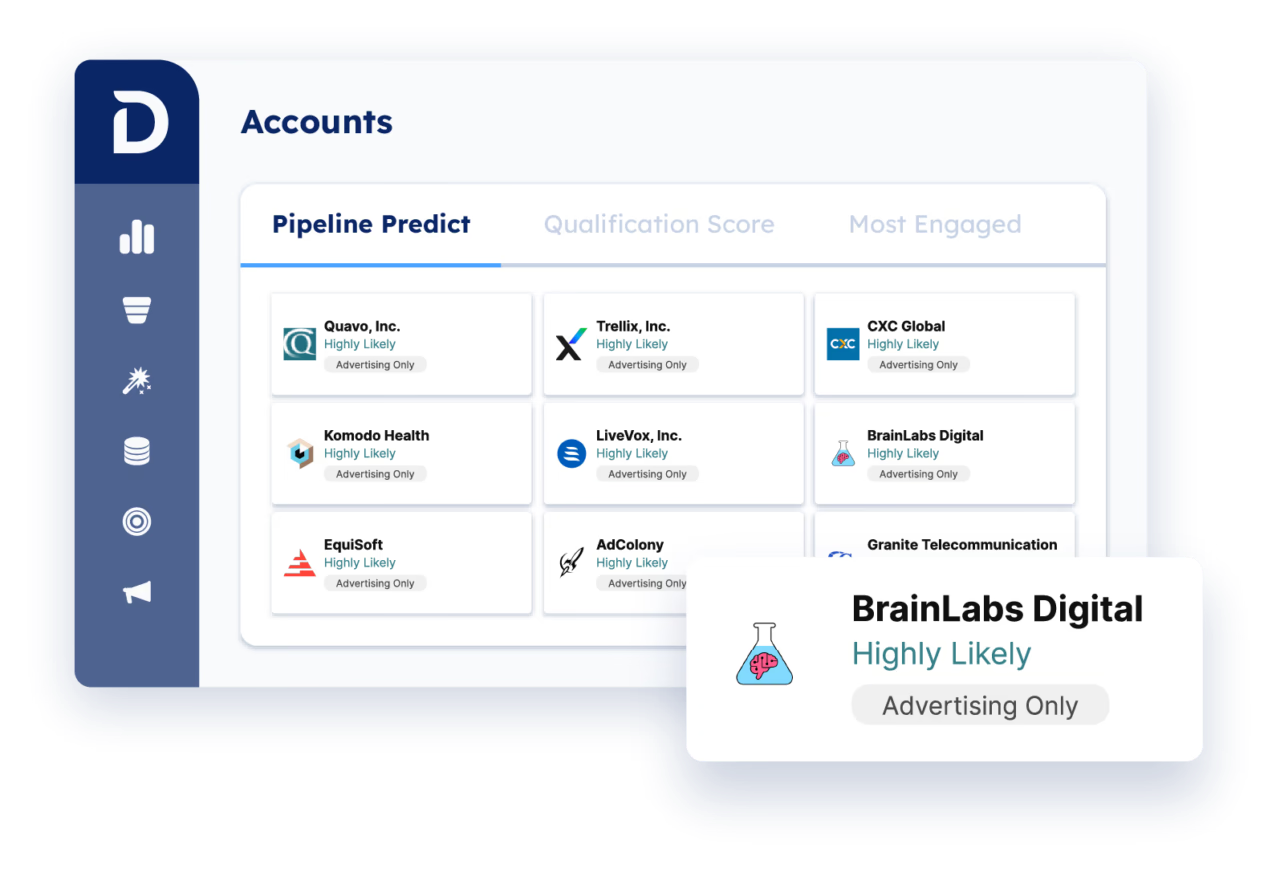
Demandbase takes a similar approach to 6sense, folding technographic data into a broader account-based advertising and targeting platform. If you're already running ABM campaigns and need tighter targeting layered on top, this is built for exactly that.
Best For: Enterprise ABM teams wanting technographic targeting as part of a broader account-based platform.
Key Features:
- Technographics inside a full ABM suite. Targeting data feeds directly into advertising and campaign execution.
- Regularly refreshed aggregation. Data sources update on a consistent cadence for account intelligence.
- Built for teams already running ABM. A natural fit if you need tighter targeting on an existing motion.
Limitations:
- Enterprise-only, with pricing and scope requiring a sales conversation.
- Overkill if all you want is technographic data without the rest of the ABM suite.
Pricing: Custom, enterprise.
10. PredictLeads
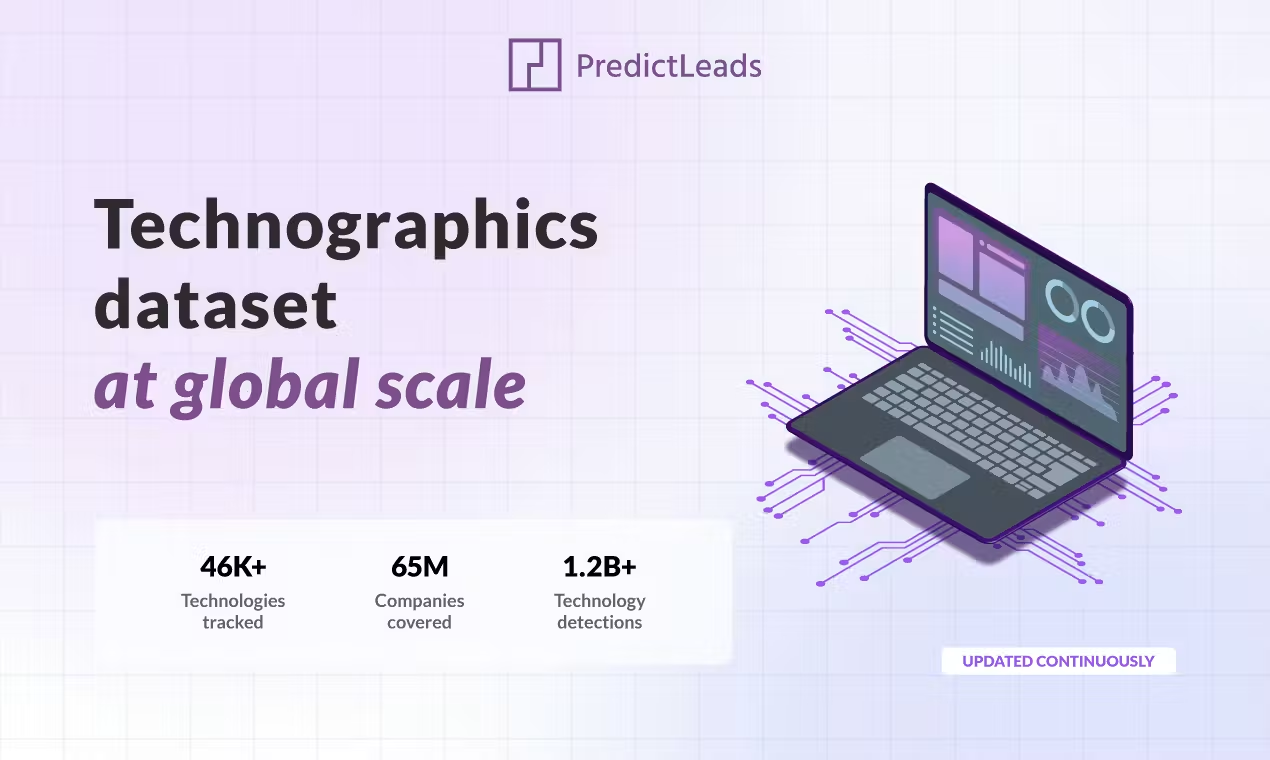
PredictLeads rounds out the list as another API-first option, aimed squarely at technical teams who want raw technographic data to feed into their own systems rather than a polished dashboard.
Best For: Technical teams wanting raw technographic data via API to power custom workflows.
Key Features:
- Built for integration. API-first delivery designed to plug into existing systems, not stand alone.
- Developer-friendly docs. Web-crawl based detection with documentation built for engineers, not sales reps.
- Flexible for custom scoring. A solid base for teams building their own enrichment or scoring logic on top.
Limitations:
- Less suited to non-technical sales teams wanting something out of the box.
- Custom pricing requires a sales conversation to evaluate cost.
Pricing: Custom.
🚀 Better Data. Smarter Targeting. More Pipeline.
With 53,000+ meetings booked and $312M+ in pipeline generated, Cleverly helps 10,000+ businesses turn smarter targeting into predictable growth.
How to Choose the Right Technographic Data Platform
The right platform depends on your budget and what you actually need to detect. Here's a quick way to map your situation to a tool:
- Small budget, simple web-tech detection. Wappalyzer or Datanyze cover the basics affordably without overbuying.
- Need the broadest technology database. BuiltWith offers the deepest coverage of any crawl-based tool on this list.
- Enterprise account targeting with IT-spend depth. HG Insights or ZoomInfo fit larger budgets and more complex use cases.
- Already running ABM. 6sense or Demandbase layer technographics into a broader intent-driven platform you can act on immediately.
- Building custom workflows. Clearbit or PredictLeads give technical teams API-first access to build on top of.
Technographic Data Sharpens Targeting. Cleverly Runs the Outreach.
Here's the part these platforms don't solve. They tell you which accounts run the right tech stack. They don't write the outreach, and they don't manage the campaign that turns that signal into an actual meeting on your calendar.
That gap is where a lot of technographic investment quietly goes to waste. A list of 2,000 accounts running the exact right technology is worth nothing if nobody's reaching out to them, or if the outreach that does go out is generic enough to get ignored.
Cleverly is a B2B lead generation agency, and technographic and firmographic targeting is something we build directly into LinkedIn, cold email, and cold calling campaigns. Once the targeting is in place, our team executes personalized outreach against it, so the signal a platform surfaces actually turns into a conversation instead of sitting in a spreadsheet.
This is the fit if you already have (or are evaluating) a technographic data platform and need a team to turn that targeting into booked meetings.
Have the technographic data? Need it turned into outreach? Book a strategy call with Cleverly!
Conclusion
Technographic platforms split cleanly by specialty. Web-tech detection, enterprise IT-spend modeling, verified data, and full-funnel ABM are four different jobs, not four versions of the same tool. Match the platform to the job, not the other way around.
Budget-friendly options like Datanyze and Wappalyzer work well for smaller teams that need the basics without a five-figure commitment. Enterprise platforms require bigger budgets and an actual sales conversation, but they unlock depth that a lightweight crawler can't touch.
Detection method is the detail that trips people up most. Web-crawl tools miss backend systems entirely, which means the platform with the biggest technology count on its homepage isn't automatically the best fit for your account list.
The best technographic platform is the one whose detection method and data depth actually match your target accounts. Not the one with the longest feature list.
Frequently Asked Questions
Free Resource
How to Scale a Profitable Cold Call System
Get the complete guide — download it instantly now.
Free Ebook
Download the Free Guide
Enter your details to get instant access.
You're all set! 🎉
Your ebook is downloading now.
Click below if the download didn't start automatically.