Table of Contents
Why Prospect Research Actually Wins Deals
The 3-Pillar Prospect Research Framework
Pre-Call Research Checklist (Step by Step)
How Much Time to Spend on Research by Deal Size
Best Tools and Sources for Prospect Research
Common Mistakes in Prospect Research
How Cleverly Handles Prospect Research Before Every Booked Meeting
Conclusion
Frequently Asked Questions
Modified On :
September 11, 2026
Key Takeaways
- Prospect research works best time-boxed. The first 15 minutes deliver most of the value, and anything past 20 usually just delays the call.
- CRM and deal history often matter more than anything you'll find externally. Check what's already been said before you go digging on LinkedIn.
- A useful pre-call research process covers three things only: company context, trigger events, and the specific person you're talking to.
- Match your research depth to deal size. A $5K SMB deal doesn't need the same prep as a six-figure enterprise contract.
- The point of account research isn't information for its own sake. It's asking one sharper question that changes how the whole call goes.
Something a lot of reps don't want to hear: showing up unprepared is showing up expensive.
Recent data backs this up hard. Sales teams that invest in comprehensive pre-call research see conversion rates climb by up to 30%, and 91% of sales professionals agree that pre-meeting research has a substantial impact on how a meeting goes.
On the flip side, 82% of B2B decision-makers say they think the sales rep sitting across from them is unprepared. That gap between what works and what actually happens is where most pipelines get lost.
The problem isn't that reps don't know research matters. It's that prospect research feels open-ended. Where do you stop? What actually matters versus what's just trivia you found on someone's LinkedIn?
Roughly a quarter of reps already point to pre-call research as one of the best ways to build rapport on a call, but almost nobody has a repeatable process for doing it fast.
This guide gives you that process. You'll get a framework for what to research, a step-by-step checklist you can run in under 20 minutes, and a way to scale your prep time up or down depending on deal size. This is built for AEs, SDRs, and founders who want a system, not a scramble.

Why Prospect Research Actually Wins Deals
Most of the value in sales prospect research shows up fast. The first 10 to 15 minutes typically surface the details that actually change the conversation. Everything after that is often just more information you won't use.
That's an important distinction, because preparation isn't about walking in with trivia to impress the prospect. It's about asking sharper questions and spending your limited call time on what the person in front of you actually cares about.
If you know their company just closed a funding round, you don't need to mention it as a fun fact. You use it to ask why growth is the priority right now.
Here's what surprises a lot of reps: deal and engagement history inside your own CRM is frequently more valuable than anything you'll dig up externally.
If a prospect already told a colleague about a specific pain point six months ago, that single note outweighs an hour of fresh LinkedIn scrolling. External research fills gaps. Internal history tells you what's already true.
Both under-preparing and over-preparing hurt you here. 76% of top-performing sales representatives always research their prospects before reaching out, but the goal isn't unlimited research time. It's a time-boxed process that gets you the highest-signal information first and stops there.
🎯 Research Less. Sell More.
Cleverly helps B2B teams reach the right prospects with targeted LinkedIn outreach, cold email, and cold calling.
The 3-Pillar Prospect Research Framework
Almost everything worth knowing before a call falls into three buckets. Anything outside these three is usually just noise that eats your prep time without changing the outcome.
Pillar 1: Industry and Company Context
You don't need to become an industry expert in 10 minutes. You need enough context to speak the prospect's language without asking questions that make it obvious you skipped their website.
Know the basics: what the company does, roughly how big it is, and how it makes money. Then check for anything timely, a recent product launch, a public announcement, or news that's actually relevant to why you're calling. Skip the deep dive into their entire product catalog. That's not what wins the call.
Pillar 2: Account Trigger Events
A trigger event is any recent shift that signals new priorities or new budget. Funding rounds, leadership changes, office expansions, new hires in relevant roles. These give you something concrete and specific tied to timing.
"I saw you just brought on a new VP of Sales" is a far stronger opener than "tell me about your challenges." One shows you did the work. The other asks the prospect to do it for you.
Pillar 3: The People You're Talking To
This is the pillar most reps under-research. They'll spend 15 minutes on the company and 30 seconds on the actual human joining the call.
Look at the person's role, their seniority, and how much influence they likely have on a buying decision. Then think about their probable priorities based on their function, not just their title. A VP of Ops and a VP of Sales at the same company are going to care about completely different things, even if their titles look similar on paper.
Pre-Call Research Checklist (Step by Step)
This is a sequential, time-boxed checklist built for a standard 30-minute discovery call. Adjust the minutes up or down based on deal size using the section below.
Step 1: Review CRM History and Prior Touchpoints (3 Minutes)
Start here, not with Google. Check for any prior conversations, notes, or marketing touchpoints already logged. If a colleague talked to this prospect three months ago, or marketing sent them a specific piece of content they engaged with, that context outweighs almost anything you'll find externally. This is consistently the single highest-value step in the whole process.
Step 2: Research the Company, Role, and Recent News (7 Minutes)
Now pull company background, the contact's specific role, and any relevant recent news or trigger events. The key word here is usable. You're not building a dossier. You're looking for two or three things you can actually bring into the conversation.
Step 3: Verify Contact Details (1 Minute)
This sounds too basic to mention, and that's exactly why reps skip it. Confirm the phone number connects or the meeting link actually works before the call starts. A dead link or a wrong number at the top of a call is an avoidable, unprofessional delay that costs you credibility before you've said a word.
Step 4: Set a Specific Call Objective (4 Minutes)
Define what success looks like for this specific call, then plan a research-informed opening based on what you found in steps 1 and 2. "Have a good conversation" isn't an objective. "Confirm whether budget exists for a Q1 rollout" is. A vague goal produces a vague call. A specific one gives you something to steer toward.
🚀 Turn Prospects Into Pipeline
With 224.7K+ leads generated, 53,000+ meetings booked, and $312M+ pipeline, Cleverly helps 10,000+ businesses grow through outbound.
How Much Time to Spend on Research by Deal Size
Not every deal deserves the same prep time, and treating them all the same wastes time on small deals while under-preparing you for big ones.
Time-boxing by deal size protects you from two failure modes at once: over-researching a small deal that never justified the time, and under-researching a complex one where missing a stakeholder or trigger event actually costs you the deal.
Best Tools and Sources for Prospect Research
You don't need a dozen tabs open before every call. What you need is a short, reliable stack where each tool does one job well. Here's how to actually use each one inside your time-boxed process, not just what each one is.
LinkedIn Sales Navigator
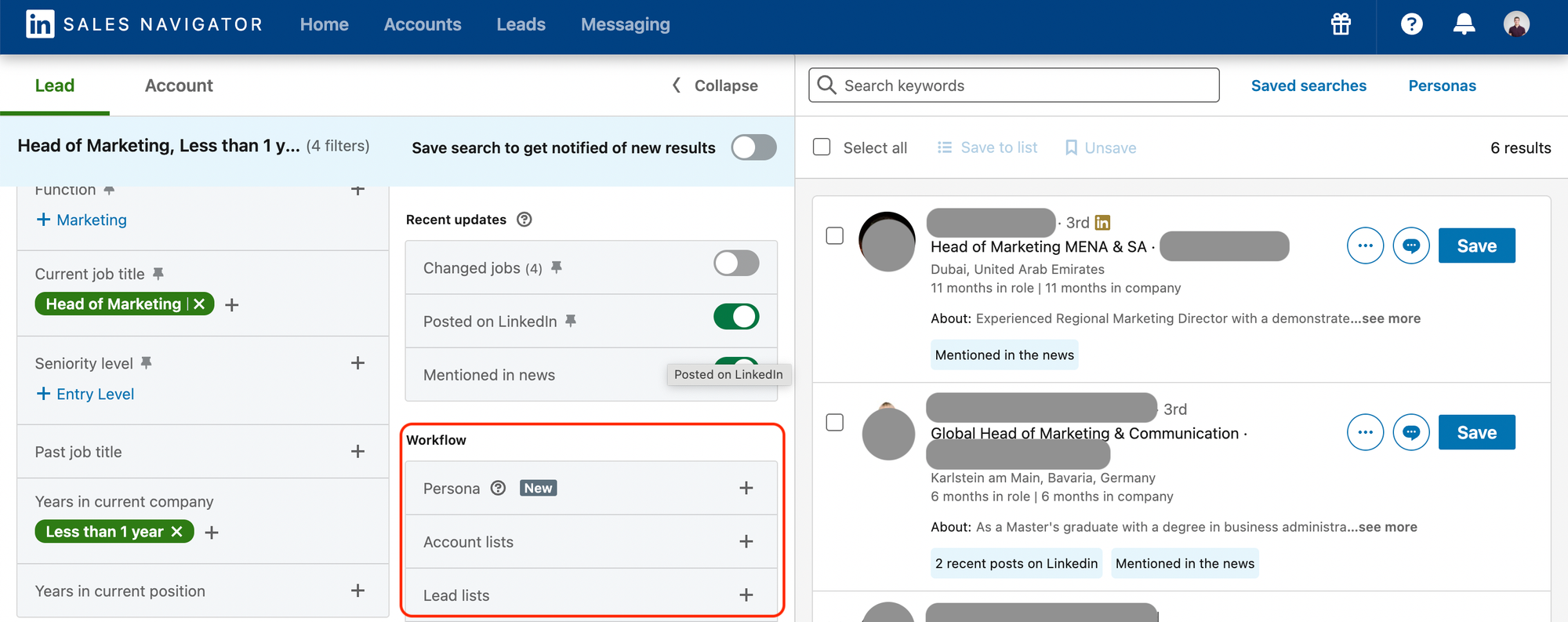
This is your strongest source for org context. Use it to confirm the prospect's current title (job boards and old CRM records go stale fast), see who else sits on their team, and spot other likely stakeholders you haven't met yet. The "who's viewed your profile" and recent activity feed also double as light trigger-event research. If the prospect posted about a new initiative last week, that's your opener.
Pro tip: Save the prospect and their company as a lead and account inside Sales Navigator once you start the deal. Future reps or you on a later call inherit that context instead of starting from zero.
Crunchbase
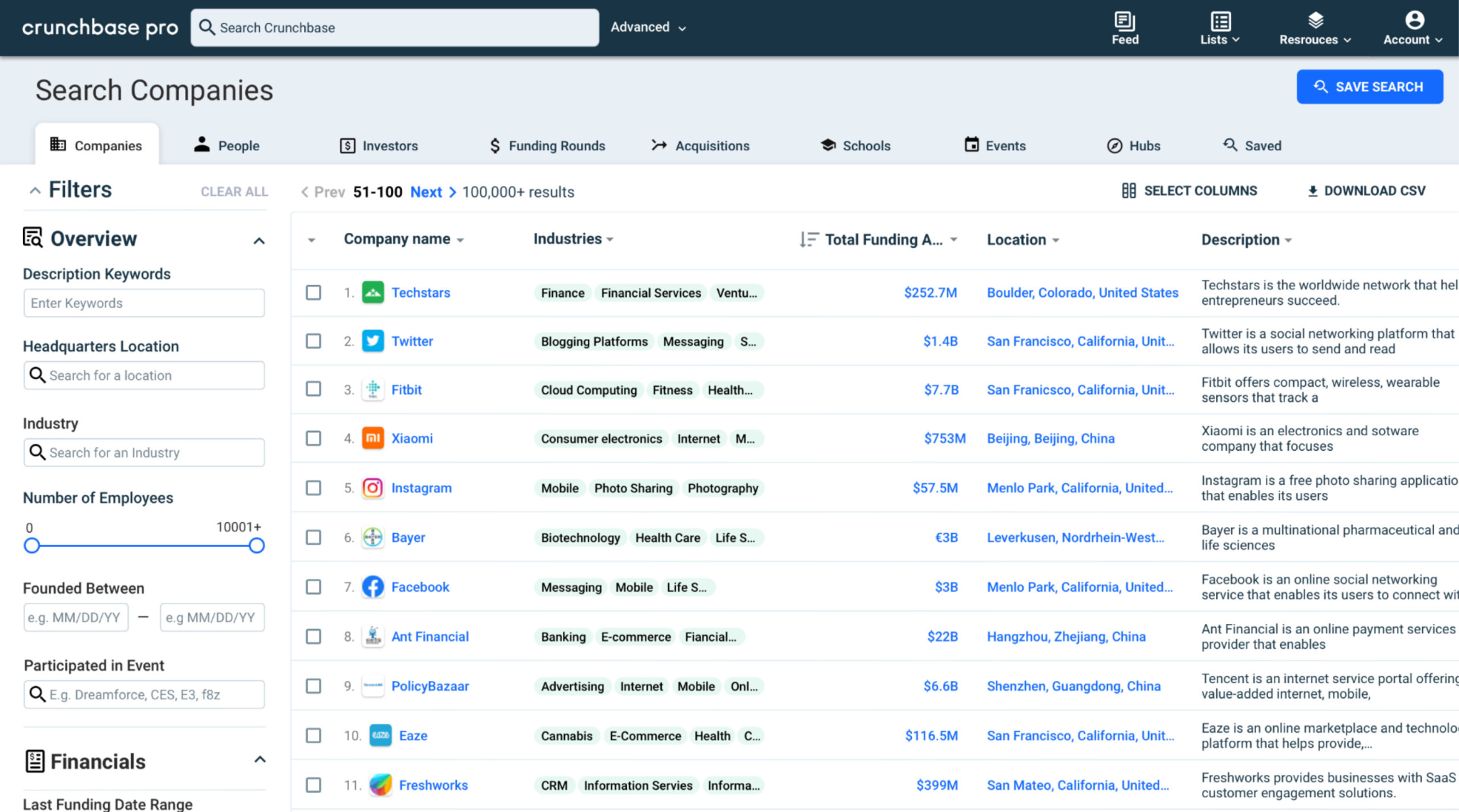
Best for anything funding-related. Recent raises, investor names, and valuation history all live here, and a funding event is one of the strongest trigger events you can reference on a call. It's also useful for mapping the startup ecosystem around a prospect, competitors they're likely tracking, or portfolio companies from the same investor that might be relevant social proof.
Owler
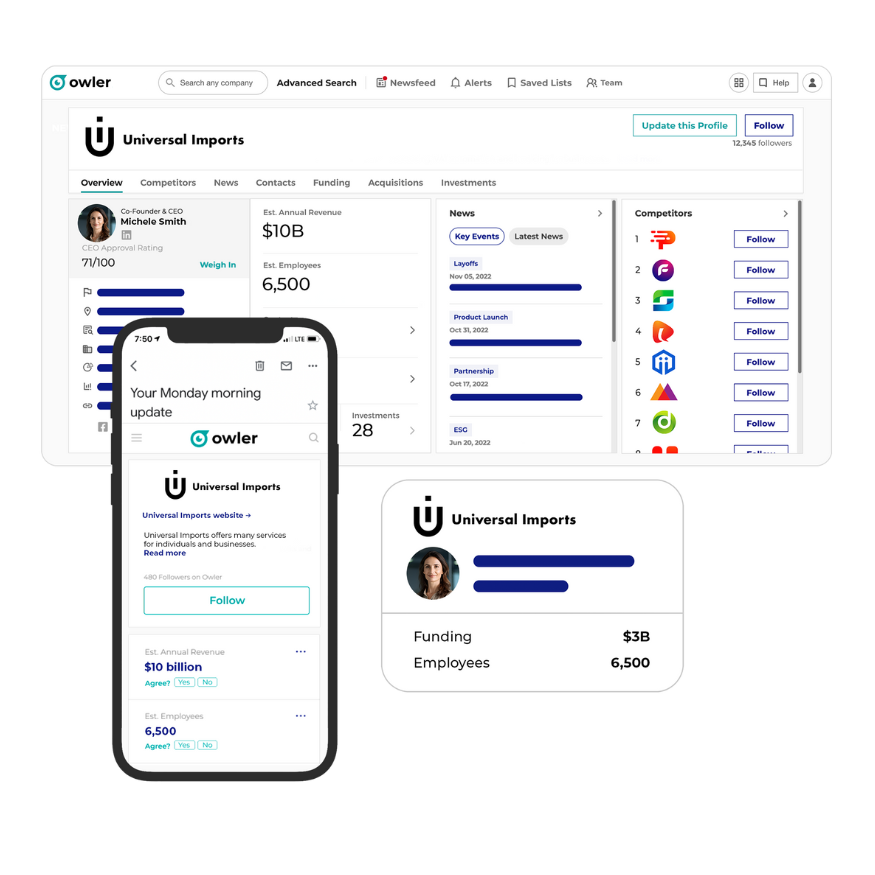
Owler's edge is competitive intelligence and aggregated news you'd otherwise miss by only checking the company's own site. It surfaces mentions across smaller outlets and gives you a quick competitive landscape view, useful when you need to understand who else the prospect is likely evaluating or benchmarking against.
BuiltWith
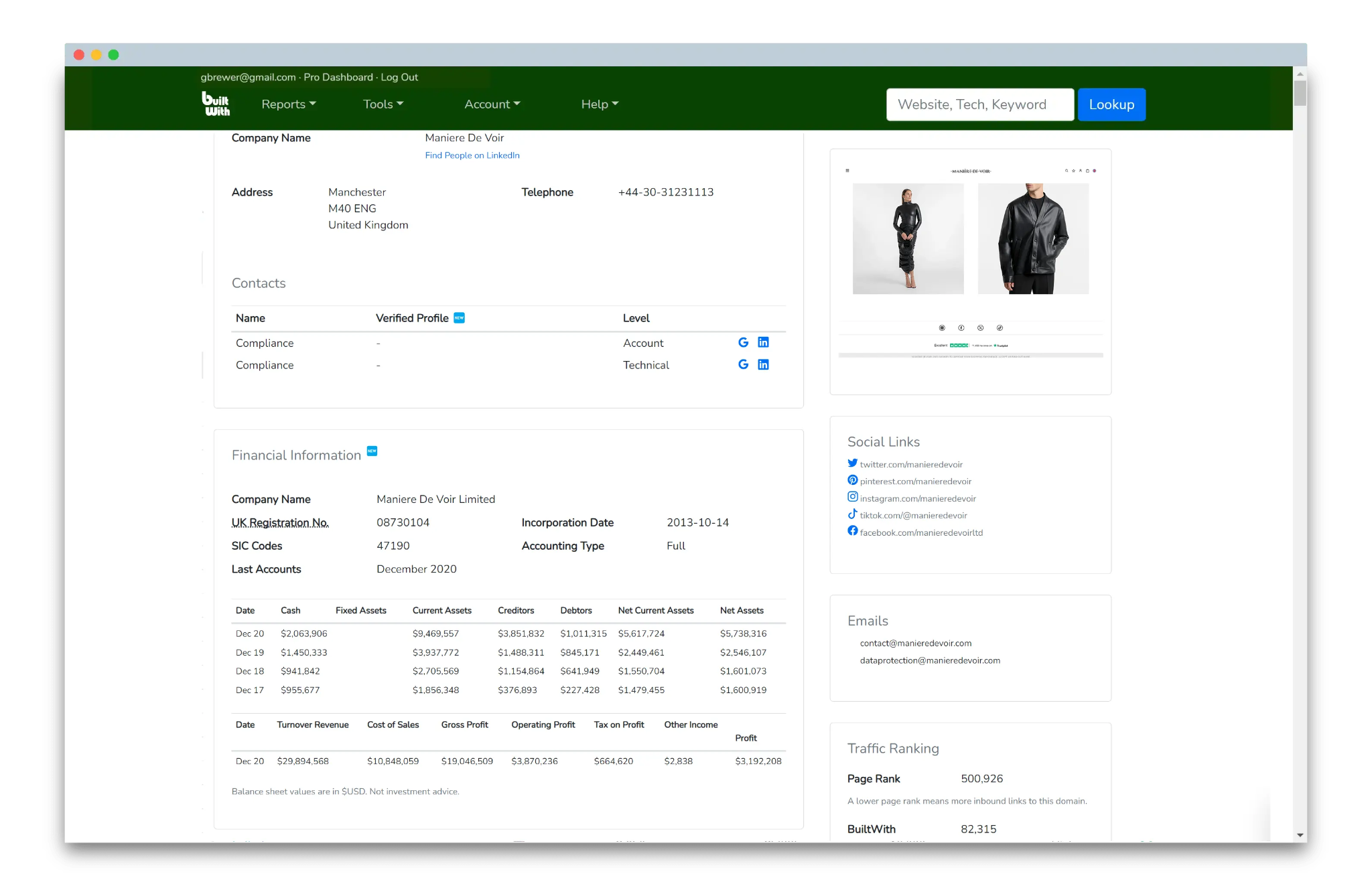
This one's specifically for prospecting research tools focused on technographics. Punch in a company's domain and see their tech stack: what CRM they run, what marketing automation they use, what's in their infrastructure. If your product integrates with or replaces something in that stack, this is where you confirm it before the call instead of asking and hoping.
Company Website and Newsroom
Often skipped because it feels too obvious, but the "About," "Press," and "Careers" pages are underused. Careers pages in particular are a fast trigger-event source. A company hiring five new AEs or opening a new department tells you something concrete about where budget and priority are shifting.
Google Alerts or a Quick News Search
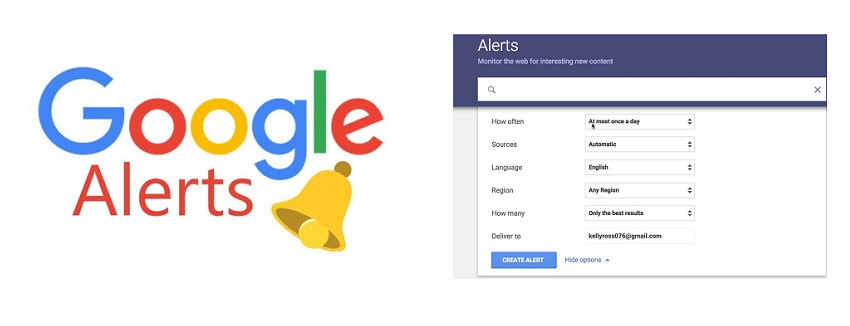
Set an alert on the company name, or just run a 30-second news search before the call. This catches announcements that haven't made it into Crunchbase or Owler yet, especially for smaller or newer companies that don't have heavy press coverage.
ZoomInfo or Similar Data Platforms (Apollo, Clearbit)
These matter more at scale than for a single call. If you're researching multiple contacts or accounts in one prep session, a data platform lets you pull firmographic and contact details across a whole list at once rather than repeating manual lookups per person. For a single high-stakes call, the tools above are usually faster.
A Word on Stacking Tools
89.9% of companies already use two or more data tools to research prospects before outreach, so you're not overbuilding by combining two or three of these. The mistake isn't using multiple tools, it's using all of them on every call regardless of deal size. Match your tool stack to the checklist step: CRM first, then one or two of these for company and role context, and stop once you've got what the framework calls for.
Common Mistakes in Prospect Research
Most research mistakes aren't about laziness. They're about spending time in the wrong place or the wrong amount. Here's where it tends to go wrong, why it happens, and what to do instead.
❌ Spending 30-Plus Minutes Gathering Background That Never Gets Used
This is the most common failure mode, and it usually comes from a good instinct taken too far. A rep wants to be thorough, so they keep digging past the point of usefulness, reading old blog posts, scrolling through a prospect's entire post history, checking every executive's LinkedIn instead of just the one on the call. None of that extra digging tends to make it into the actual conversation. Research value drops off sharply after the first 15 minutes, so time spent past that point is mostly just delaying the call, not improving it.
Fix: Set a timer. Once your 15 to 20 minutes are up, stop, even if you feel like there's more to find. If it mattered, you'd have found it already.
❌ Skipping CRM and Deal History and Starting From Zero Externally
This one happens because external research feels more active. Opening LinkedIn and searching a company feels like "doing the work" in a way that clicking through old CRM notes doesn't. But 42% of sales reps say they don't have enough information about a prospect before a call, and a lot of that gap isn't missing data, it's data that already exists in the CRM and simply wasn't checked. If a prospect told a colleague about a specific pain point six months ago, that single note is worth more than 20 minutes of fresh external digging.
Fix: Make CRM review step one, not step three. It's also the fastest step, so there's no real cost to checking it first every time.
❌ Researching the Company Deeply but Not the Specific Person
Reps will happily spend 15 minutes learning a company's business model, funding history, and market position, then spend 30 seconds on the actual human joining the call. It's an easy trap because company research feels more concrete and easier to find. But the person on the call is the one asking questions and making the decision to keep talking to you, not the company as an abstract entity. A VP of Ops and a VP of Sales at the same company, with the same seniority, are going to care about entirely different things.
Fix: Treat "the person" as its own required step, not something that falls out of company research automatically. Pull their specific role, how long they've been in it, and what their function typically prioritizes, even if that only takes two minutes.
❌ Using the Same Research Depth for Every Deal
This mistake runs in both directions. Some reps default to a light five-minute check on every deal, which under-serves complex enterprise opportunities with multiple stakeholders and longer cycles. Others default to a thorough 30-minute process on every deal, which burns time on small, low-complexity SMB deals that never needed that depth. Both come from not having an explicit rule for scaling research time, so reps fall back on habit instead of matching effort to the deal in front of them.
Fix: Use deal size as your default scaling rule, 5 to 10 minutes for SMB, 15 for mid-market, up to 30 for enterprise, and adjust from there only if something in the account genuinely calls for more or less.
❌ Confusing Volume of Information With Quality of Preparation
A subtler version of the mistakes above: some reps walk into a call having gathered a lot, but none of it is usable. They know the company's founding year, funding history, and headquarters address, but nothing that changes what they'll actually say. Preparation isn't measured by how much you know, it's measured by whether what you know changes the conversation.
Fix: Before the call, ask yourself one question: "What will I actually say because of this?" If you can't answer that for a piece of information, it wasn't worth the time it took to find, no matter how thorough it felt.
How Cleverly Handles Prospect Research Before Every Booked Meeting
Everything above assumes you already have a meeting on the calendar. Getting a qualified prospect to that point in the first place is a separate job, and it's the one we focus on at Cleverly.
As a B2B lead generation agency, we do account and prospect research upfront, as part of every campaign, before a single outreach message goes out. That means identifying ICP fit, spotting trigger events, and mapping the right stakeholders at the account level, then using that research to book the meeting itself.
We've helped 10,000+ clients run this exact process, generating $312M in client pipeline along the way.
Here's why the distinction matters. A rep can run a perfect 20-minute pre-call checklist, but if the meeting on their calendar was booked with the wrong person at a company that never matched their ICP, no amount of prep fixes that.
Our research and targeting happen earlier, at the outreach stage, so the meetings that land on your calendar are already qualified before your own pre-call prep even starts.
If you'd rather your team spend its research time on calls worth preparing for, book a free consultation and see how we build that qualification into every campaign we run.
Conclusion
Effective prospect research isn't about gathering everything you can find. It's a time-boxed process built around five or six data points that actually change how the call goes, pulled from CRM history first and external sources second.
Match your research depth to the deal in front of you. Five to ten minutes for SMB, up to thirty for enterprise, with the three-pillar framework guiding what you look for either way. The goal was never a longer prep checklist. It's a sharper, more relevant conversation the moment the call starts.
Frequently Asked Questions
Free Resource
How to Scale a Profitable Cold Call System
Get the complete guide — download it instantly now.
Free Ebook
Download the Free Guide
Enter your details to get instant access.
You're all set! 🎉
Your ebook is downloading now.
Click below if the download didn't start automatically.