Table of Contents
What Are Lead Nurturing Emails?
Why Lead Nurturing Emails Matter for B2B Pipeline
5 Types of Lead Nurturing Emails (With Examples and Templates)
How to Build a Lead Nurturing Email Sequence: Step-by-Step
Lead Nurturing Email Best Practices
How Cleverly's Cold Email Outreach Turns Cold Prospects Into Nurtured Pipeline
Conclusion
Modified On :
June 25, 2026
Key Takeaways
- Lead nurturing emails work because they keep you relevant during the long gap between first contact and buying decision — most B2B prospects need 5 to 20 interactions before they're ready to commit.
- A structured nurture sequence uses five core email types — welcome, educational, social proof, soft check-in, and re-engagement — each mapped to a specific stage in the prospect's journey.
- Segmenting leads before you build a sequence is what separates an 8% CTR nurture program from a generic send that gets ignored — relevance drives every performance metric that matters.
- Subject lines, send cadence, and single-CTA structure are the three mechanical levers that determine whether a well-written email actually converts — get all three right or the rest doesn't matter.
- Cold outreach and nurturing aren't separate strategies — a strong cold email sequence pre-warms prospects before they ever hit your formal nurture track, which is exactly how Cleverly's cold email system feeds qualified pipeline.
80% of new leads never turn into sales. Not because the leads are bad. Not because the product isn't a fit. But because most companies have no system for staying relevant between first contact and the moment a prospect is actually ready to buy.
That gap — sometimes weeks, sometimes months — is where deals are won or lost. And lead nurturing emails are how the best B2B teams close it.
Companies that excel at lead nurturing generate 50% more sales-ready leads at 33% lower cost, while nurtured leads make 47% larger purchases and convert 23% faster than non-nurtured prospects. Meanwhile, B2B firms using strategic email nurturing sequences report 451% increases in qualified leads. The math on nurturing is not subtle.
This guide covers everything you need to build a nurture program that actually works: what lead nurturing emails are and where they fit in your funnel, the five highest-performing email types with real copy frameworks and examples, a step-by-step sequence-building process, and the best practices that separate programs generating pipeline from ones generating unsubscribes.
If you're generating leads but losing too many of them before a sales conversation happens, this is the guide you need.
What Are Lead Nurturing Emails?
Lead nurturing emails are a structured series of messages sent to prospects at defined intervals — not to push a sale, but to build trust, demonstrate expertise, and move someone closer to a buying decision at a pace that matches where they actually are.
The distinction that matters: promotional emails are about you. Nurturing emails are about the prospect's problem, their situation, and their journey. One pushes an offer. The other builds a relationship.
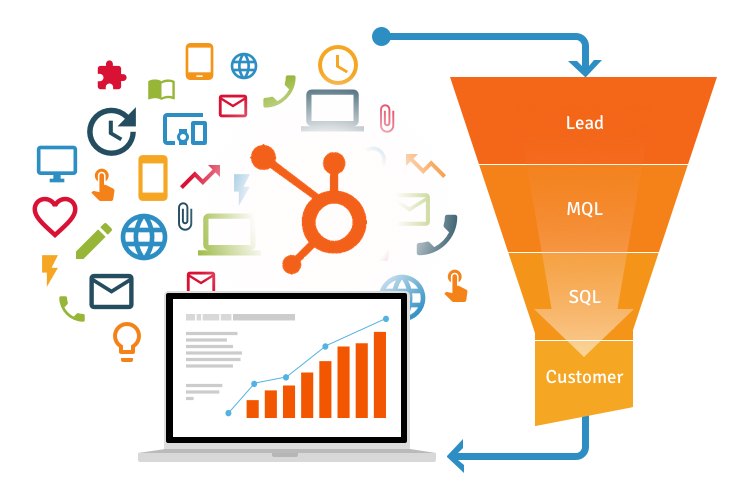
Where nurturing fits in the funnel is worth being specific about. Lead nurturing lives in the middle — after a prospect has entered your pipeline (through inbound content, a cold email reply, a webinar registration, whatever the source) and before they're ready for a direct sales conversation. It's the bridge between expressed interest and actual intent.
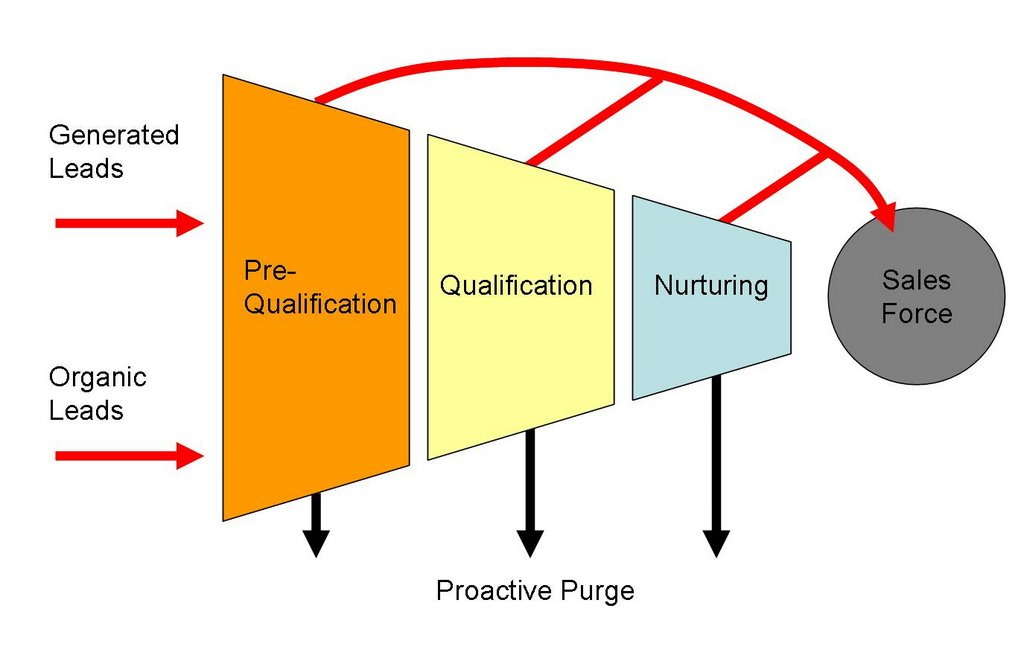
Who belongs in a nurture sequence? Any contact who has entered your pipeline but isn't sales-ready yet: MQLs who need more education, prospects who went quiet after an initial conversation, contacts who downloaded something but never took a next step. All of them need continued engagement before they'll convert.
The 80/20 rule holds here more than almost anywhere in B2B marketing. At least 80% of your nurture content should deliver genuine value — education, insight, proof, tools — before you make any direct ask.
A 10-email sequence with 8 value-adds and 2 direct asks consistently outperforms one that pitches in every email.
📧 Most Leads Don't Convert on the First Touch
That's why we build outbound systems that combine prospecting, follow-ups, and nurturing to generate more qualified meetings.
Why Lead Nurturing Emails Matter for B2B Pipeline
B2B buying cycles are long, and they're getting longer. The average B2B buying committee in 2026 is 6.8 stakeholders — not one person making a call, but a group of people with different concerns, different timelines, and different definitions of "ready."
Without a nurture program, most leads disengage and eventually buy from whoever stayed relevant long enough to still be in the conversation.
Speed gets you in the door. Sustained relevance closes the deal. That's a distinction a lot of B2B teams miss. They invest in outreach speed (and you should — first-response time matters) but drop the ball on the multi-touch follow-through that actually moves a buying committee from interested to committed.
The cost argument for nurturing is direct. Generating a new lead is always more expensive than converting an existing one. A prospect who has already expressed interest and entered your pipeline has crossed the awareness barrier — they know who you are, they've engaged with something, and they're at least open to the conversation. That's worth protecting through a nurture system that keeps them engaged rather than letting them quietly exit the pipeline.
Email marketing ROI in 2026 sits between $36 and $42 for every $1 spent. And lead nurturing emails generate an 8% CTR compared to 3% for general email sends — that gap reflects what happens when you send the right message to the right person at the right stage, rather than broadcasting the same content to everyone at the same time.
The most effective B2B nurture programs also think past the champion. The CFO needs an ROI framework. The VP of Ops needs to understand implementation. The end user wants to know what changes for them day-to-day. Your nurture sequence should map content to each stakeholder's specific concern, not just fire the same email at everyone on the account.
5 Types of Lead Nurturing Emails (With Examples and Templates)
These five email types are the building blocks of any B2B nurture sequence that actually converts. Used in the right order and combination, they move a prospect from initial interest to sales-ready across a defined timeline.
1. The Welcome Email
Welcome emails average an 83.63% open rate — the highest of any email type — because they arrive at the exact moment a prospect has just done something. They're engaged right now. Wasting that with a generic "thanks for signing up" is one of the most common nurture mistakes in B2B.
Your welcome email has one job: confirm the value exchange, set expectations for what's coming, and deliver one immediately useful piece of value. That's it. Not a product pitch. Not a demo request. One job.
What to cover:
- Acknowledge what they did (downloaded, registered, replied to a cold email)
- Deliver the promised resource or insight immediately
- Preview what's coming in the next few emails and how often they'll hear from you
- End with one low-friction CTA — a reply, a click, a next step that costs them nothing
Template framework:
One important note on format: plain text wins in B2B welcome emails. A heavily designed HTML email with logos and buttons signals "campaign." A clean, personal-looking message signals "someone is paying attention to you." The latter earns the relationship.
2. The Educational Email
Educational emails are the core of the sequence. They build credibility without asking for anything in return, which is exactly why they work. By the time a prospect has read three or four value-packed emails from you, they've already decided you know what you're talking about — which makes the eventual ask feel natural rather than pushy.
The key is specificity. Not "here are some tips for B2B sales." More like "here's why most SaaS AEs misread their pipeline health in the first 30 days of a new quarter." That second one earns the read because it's written for a specific person with a specific problem.
What to cover:
- The specific problem your ICP is dealing with, named plainly
- A framework, mental model, or insight that shifts how they think about it
- 2–3 concrete, actionable points — not a listicle, just the useful stuff
- A soft CTA: reply with a question, read more, nothing demanding
Template framework:
Keep educational emails in the 150–250 word range. If the topic requires more depth, link to a blog post rather than expanding the email. The goal is to earn 90 seconds of focused attention, not ask for 10 minutes.
3. The Social Proof Email
Every B2B prospect has the same unspoken question before buying: "Has this worked for someone like me?" A well-timed case study email answers that question before they can ask it — and it often tips a prospect from "interested but cautious" to "ready to have a conversation."
The performance of social proof emails comes down entirely to specificity. "Our clients see great results" does nothing. "A four-person sales team at a Series A SaaS company went from 3 meetings per month to 19 in 60 days" does a lot.
What to cover:
- Who the client was (company type, team size, role of the champion)
- Where they started (the specific problem or pain state)
- What happened (exactly what was done and why)
- The measurable outcome (numbers, not adjectives)
- A low-friction CTA: "Does this sound familiar?" or a link to the full case study
Template framework:
Time these emails at the midpoint of your sequence — email 3 or 4 in a 7-email flow. By then, you've built enough credibility through educational content that a case study feels like proof, not a sales pitch.
4. The Soft Check-In Email
The soft check-in is a pattern break. After two or three educational emails, a short personal message that opens a direct conversation — without a hard pitch — signals that a human is paying attention, not just an automation tool. That signal matters in B2B.
This email should be the shortest one in your sequence. One sentence of context. One direct question. No links, no formatted CTA, no branded footer. It should look like someone took 60 seconds to send it.
Template framework:
That's it. Seriously. The simplicity is the point. Converting a lead typically takes between 5 and 20 interactions — a check-in email is one of those interactions, and it's often the one that triggers a reply that changes the trajectory of the relationship. Amra & Elma
When someone replies to a check-in email, that's a strong buying signal. Move them out of the automated sequence immediately and into a direct sales conversation. Don't let the automation keep running on a lead who just raised their hand.
5. The Re-Engagement Email
Not every prospect moves at the same pace. Some of your best-fit leads go quiet — not because they're disinterested, but because they got pulled into a different priority, the timing changed, or they just need a nudge. Re-engagement emails exist to recover those leads before they become dead pipeline.
The trigger should be behavioral, not calendar-based. After 3–4 consecutive unopened emails, or 30–45 days of complete inactivity, send a re-engagement email. Don't wait longer — the longer the silence, the harder the re-activation.
Template framework:
The final email in any re-engagement sequence should offer a graceful exit: "If the timing's off, I'll pause these. Just reply 'not now' and I'll check back in a few months." This preserves the relationship, often generates a reply, and keeps you from burning a lead permanently by sending into silence indefinitely.
Any contact who doesn't re-engage after two or three attempts should move to a low-frequency nurture or be archived. Keeping them in an active sequence hurts your deliverability and skews your engagement metrics.
🚀 Turn More Prospects Into Pipeline—Automatically
From cold email strategy to appointment setting, we help B2B teams create predictable revenue opportunities at scale.
How to Build a Lead Nurturing Email Sequence: Step-by-Step
Step 1 — Segment Leads Before You Write a Single Email

One generic nurture sequence for all leads is the fastest path to average results. Segmentation is what allows each email to feel relevant — and relevance is the only thing that earns opens, reads, and replies at scale.
At minimum, segment by lead source and buying stage. Inbound leads and outbound cold email leads behave differently and need different framing — inbound prospects already know they have a problem and are actively looking for solutions; outbound prospects may be less aware and need more education before a direct ask lands.
Buying stage matters even more: a prospect who visited your pricing page three times last week is not in the same place as someone who downloaded a top-of-funnel guide and never came back.
For most B2B teams, two tracks are enough to start: an educational-heavy sequence for early-stage leads and a social-proof-and-CTA-heavy sequence for mid-stage leads showing intent signals. Add more segments as you gather data on what's converting.
Step 2 — Map Your Sequence Cadence and Email Mix
A standard cadence that works well for most B2B teams:
One email per week is the right frequency baseline for most sequences — frequent enough to stay top of mind, infrequent enough not to feel like pressure. Keep the mix at 80% value, 20% ask. Sequences that over-index on asks produce unsubscribes.
Automated lead nurturing emails generate 320% more revenue than manual campaigns — but that only holds when the automation is doing something intelligent. A time-based sequence is a good starting point.
As you gather behavioral data, layer in triggers: if someone clicks the pricing link in email 3, skip to the check-in. If they've opened every email but never clicked, send the re-engagement earlier. Trigger-based sequencing produces better results; just start simple and build from there.
Step 3 — Write Subject Lines That Earn the Open
The best-written email in the world produces a 0% conversion rate with a bad subject line. In B2B, the subject lines that consistently earn opens share three characteristics: they're specific, they're relevant to the reader's situation, and they feel like they were written for one person, not a list.
What works:
- Specificity: "3 things most RevOps leaders miss in their pipeline reports"
- Direct questions: "Still dealing with cold outreach volume problems?"
- Data: "80% of new leads never turn into sales — here's why"
What doesn't: vague curiosity bait, company-centric announcements ("We've launched something new"), and anything that sounds like a marketing email subject line — which signals campaign, not conversation.
Treat preview text as a second subject line. Most marketers ignore it and let the email's first sentence auto-populate, which is a missed opportunity to add a second reason to open. Use preview text to extend the hook, not repeat it.
AI-generated subject lines now outperform manual ones by 26% — worth testing as part of your ongoing optimization stack, but subject lines still need a human review to make sure they feel like a person wrote them.
Step 4 — Structure Each Email for Conversion
Every nurture email should follow the same basic anatomy:
- Subject line — earns the open
- Opening line — confirms you're talking to the right person about the right thing (1 sentence)
- Body — delivers the value in 150–250 words with short paragraphs
- Single CTA — one action, proportionate to where the prospect is in the sequence
The single CTA rule is worth enforcing strictly. Multiple links and multiple buttons divide attention and reduce click-through rate. The more options you give a reader, the easier it is to choose nothing.
Mobile now accounts for 65% of email opens — which means short paragraphs (2–3 sentences max), single-column layout, and readable font sizes aren't optional. Most nurture emails get read on a phone while someone is between meetings. If your email doesn't read cleanly on mobile, it doesn't read.
On format: plain text outperforms HTML in B2B nurture sequences across open rate, click-through rate, and reply rate. HTML emails feel like newsletters and ads. Plain text feels like a colleague. For nurturing, that distinction matters.
Step 5 — Measure Performance and Optimize Continuously
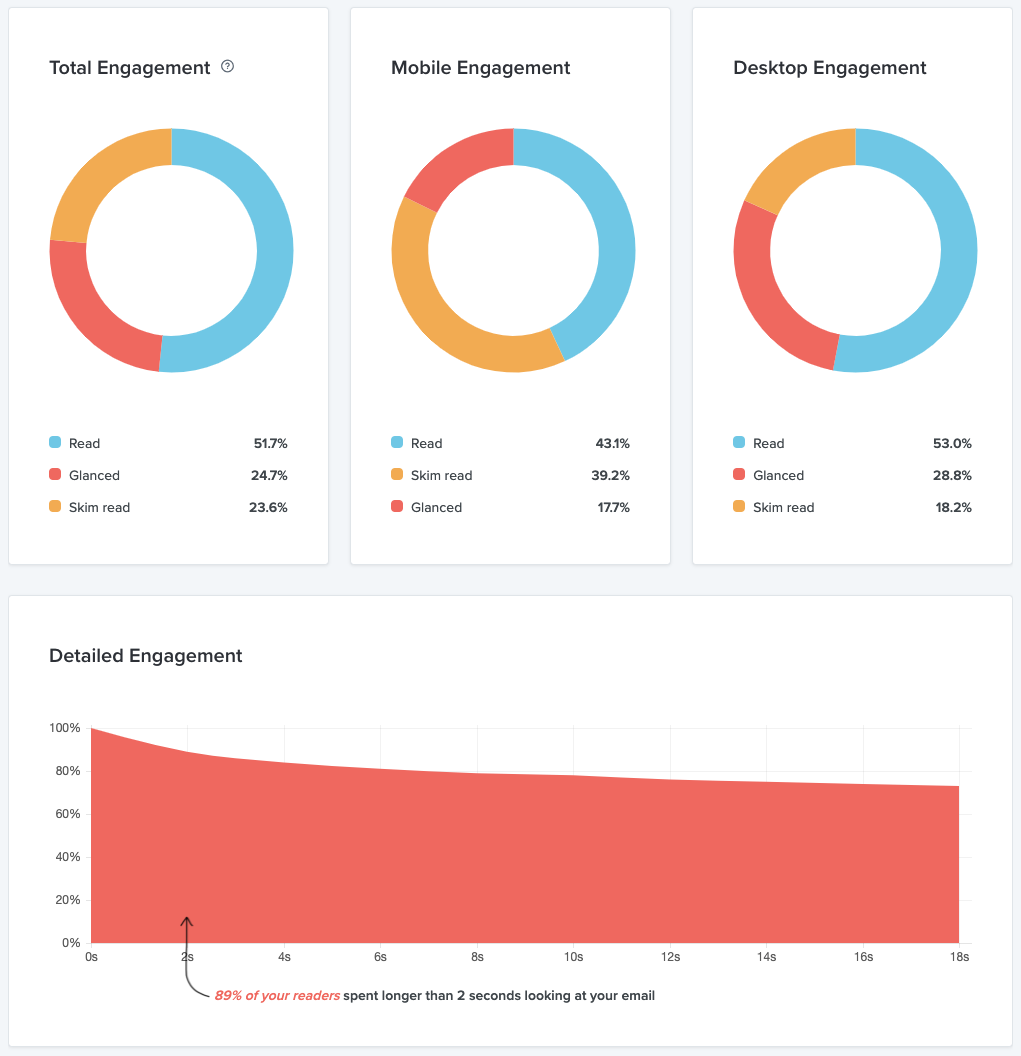
The metrics that actually tell you something:
- Open rate — subject line and deliverability signal
- CTR — content and CTA relevance signal (this matters more than open rate in 2026, given privacy-related open inflation)
- Reply rate — engagement quality, especially for check-in emails
- Unsubscribe rate — frequency and relevance signal
- Sequence-to-meeting conversion rate — the number that actually reflects pipeline impact
When you see low open rate with decent CTR: deliverability or subject line problem. High open rate with low CTR: body content or CTA problem. Good engagement across the board but no meetings: the sequence isn't creating urgency or the sales handoff isn't working.
Only 16% of B2B marketers believe their nurturing programs are excellent — which means most teams are leaving significant conversion value on the table. Consistent testing compounds quickly: improve open rate by 5% and CTR by 5% and total sequence conversion improves by more than 10%.
Review subject lines and CTAs weekly. Review sequence-level conversion monthly. Build in the habit and the results compound
Lead Nurturing Email Best Practices
📢 Personalize beyond first name. First-name tokens are table stakes. Real personalization references a prospect's company type, their role's specific challenges, or the exact content they engaged with. A case study about a company in their industry hitting a problem they've mentioned lands differently than "Hi [First Name]."
📢 Align with your sales team. Nurture sequences that marketing runs in isolation from sales create disconnects — the prospect gets an automated email offering a demo the same day a rep calls to do the same thing. Define clear handoff triggers so marketing nurturing and sales outreach are coordinated, not duplicated. A reply to a check-in email should immediately trigger a rep follow-up, not the next automated send.
📢 Time your sends. B2B email engagement peaks Tuesday through Thursday, 9 AM–12 PM in the recipient's timezone. 61% of decision-makers prefer to be contacted via email over LinkedIn (29%) or phone (10%) — which means email is already their preferred channel. Don't waste that by sending at 2 AM on a Sunday because that's when the sequence was set up.
📢 Don't stop early. Most positive responses in B2B email nurturing come from email 4–7 in the sequence — teams that stop at two or three emails are abandoning the majority of their conversion potential before it's had a chance to materialize.
📢 Match content to buying stage, not just lead source. A prospect who has visited your pricing page multiple times is showing intent signals — they should be fast-tracked to social proof and direct CTAs, not held in an educational track designed for someone at the awareness stage. Behavioral triggers are what let you make those adjustments without manually managing every contact.
How Cleverly's Cold Email Outreach Turns Cold Prospects Into Nurtured Pipeline
Most lead nurturing programs are designed for leads who have already raised their hand. But what about the prospects who fit your ICP perfectly and have never heard of you?
That's the gap our cold email outreach fills. At Cleverly, we build done-for-you cold email sequences that reach ICPs with personalized, relevant messaging — and convert them into warm leads who are already pre-qualified by the time they enter your formal nurture track. Cold email isn't the opposite of nurturing. It's where nurturing begins.
What makes the difference between cold email that gets ignored and cold email that feeds real pipeline is the infrastructure behind it. We handle ICP list building and contact enrichment, domain setup, deliverability management (SPF, DKIM, DMARC configuration and warm-up), multi-touch personalized sequences written for each ICP segment, reply handling, and meeting booking.
The leads entering your pipeline from our sequences have already been through multiple relevant touchpoints — they're not cold anymore by the time they hit your CRM.
The deliverability piece is where most in-house cold email programs fail. Without proper domain warm-up and sender reputation management, sequences land in spam.
We've built and managed the technical infrastructure at scale across thousands of campaigns, which means inbox placement stays high and engagement metrics actually reflect real prospect interest rather than deliverability gaps.
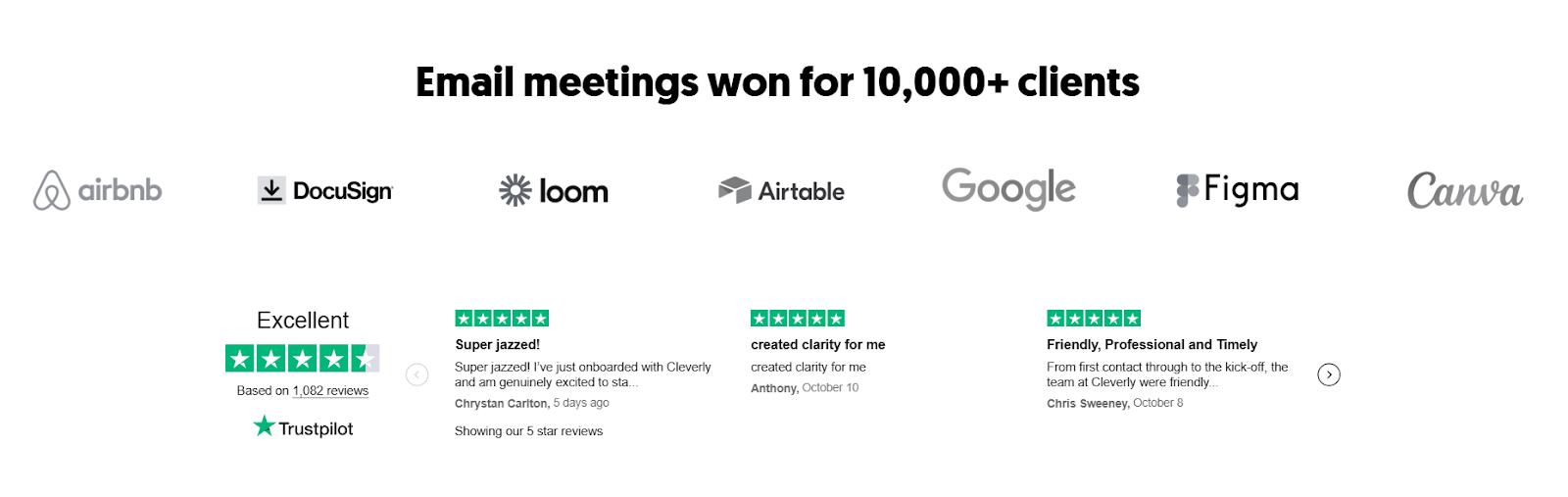
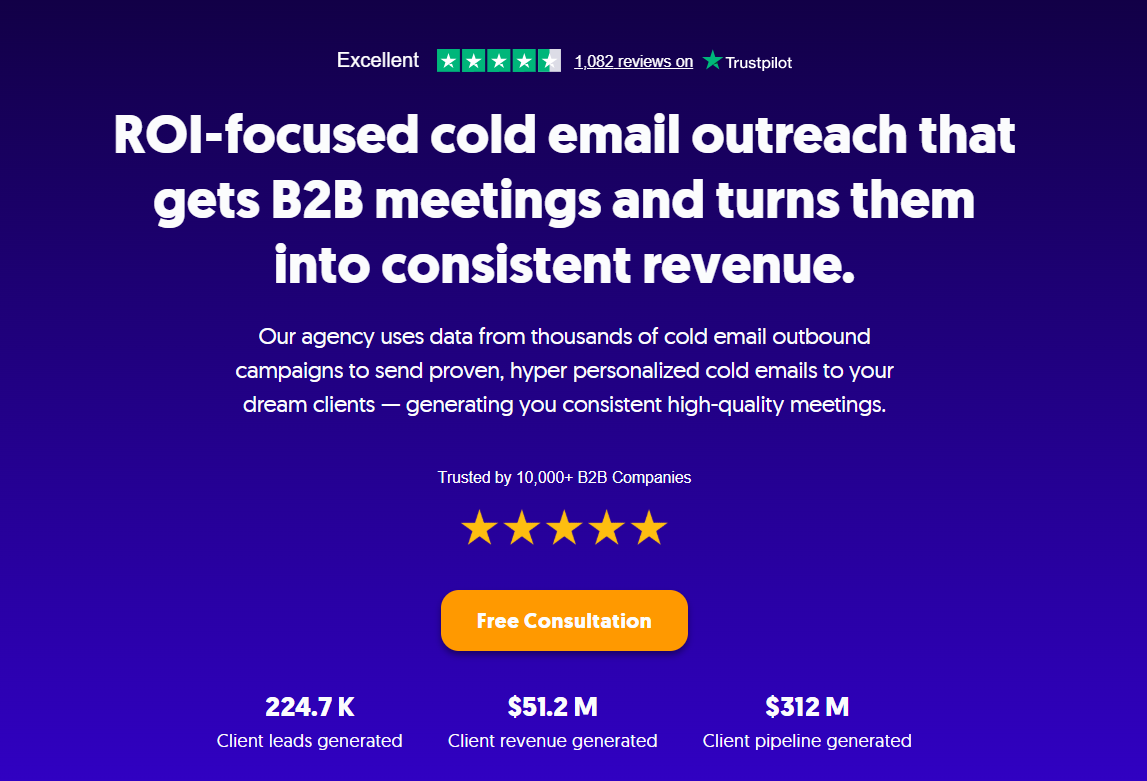
We've generated over $312M in pipeline for 10,000+ B2B clients — including eBay, Airbnb, DocuSign, Loom, and Airtable — and we're rated 4.6/5 on Trustpilot. Cold email is one part of the system. When it feeds directly into your nurture program, the whole pipeline gets sharper.
Want to fill your nurture pipeline with qualified prospects who are already warmed up? Book a strategy call with Cleverly and see exactly how our cold email outreach connects to your lead management system.
Conclusion
Lead nurturing emails don't close deals on their own. What they do is keep you relevant, credible, and present throughout the long window between a prospect's first moment of interest and the moment they're finally ready to buy. That's not a small thing — it's often the entire difference between winning and losing a deal.
The five email types in this guide — welcome, educational, social proof, soft check-in, and re-engagement — give every stage of the prospect journey a defined purpose and a clear message. Build the sequence, measure what each email produces, and optimize one variable at a time.
The compounding effect of a well-tuned nurture program shows up in your pipeline conversion rate, deal size, and CAC within the first few cycles. Start there.
Frequently Asked Questions
Free Resource
How to Scale a Profitable Cold Call System
Get the complete guide — download it instantly now.
Free Ebook
Download the Free Guide
Enter your details to get instant access.
You're all set! 🎉
Your ebook is downloading now.
Click below if the download didn't start automatically.