Table of Contents
Why Customer Churn Happens in B2B
Why LinkedIn Is a Powerful Retention Channel
How to Use LinkedIn to Reduce Churn Rate
Examples of LinkedIn Retention in Action
LinkedIn Strategies That Help Grow Existing Accounts
Mistakes Companies Make When Using LinkedIn for Retention
How Cleverly Helps Companies Strengthen Customer Relationships on LinkedIn
Conclusion
Frequently Asked Questions
Modified On :
March 20, 2026
Key Takeaways
- Customer retention drives long-term B2B growth more than acquisition alone.
- Churn rarely happens overnight — it builds from poor engagement, weak relationships, and declining perceived value.
- LinkedIn keeps you visible with existing clients without being intrusive or pushy.
- Early churn signals like job changes and reduced engagement are trackable on LinkedIn before it's too late.
- Consistent, low-effort engagement — comments, check-ins, content sharing — builds the trust that keeps accounts renewing.
- Multi-threading relationships across an account protects you when a key contact leaves.
Pouring all your energy into acquiring new customers is a waste of time when you're not actively working to reduce churn rate.
New customer acquisition barely moves the needle.
Long-term B2B growth depends on keeping the customers you already have. And one of the most underused tools for that? LinkedIn.
LinkedIn lets you stay visible with clients, build real relationships, and catch early warning signs before an account goes cold.
Let’s walk you through how to use LinkedIn to reduce churn, keep accounts engaged, and even expand them over time.
Why Customer Churn Happens in B2B
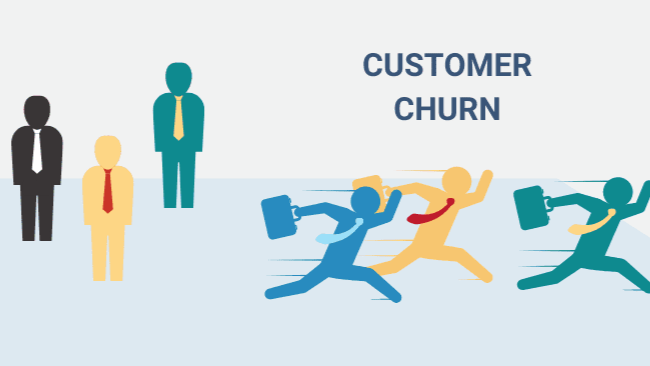
Before you can reduce customer churn rate, you need to understand what's driving it.
In B2B, churn rarely happens overnight. It builds up over time, usually because of one or more of these reasons:
- Lack of ongoing engagement after the deal is closed.
- Poor onboarding that leaves customers confused about how to get value.
- Declining perceived value when customers stop seeing ROI.
- Strong competition offering better pricing or features.
- Weak relationships with decision makers, especially after internal role changes.
The common thread? Most of these issues come down to poor communication and low visibility. That's exactly where LinkedIn comes in.
Also Check: How to Generate 30+ Leads On Linkedin Without Spamming People
🚀 Turn LinkedIn Into a Revenue Channel
Cleverly runs done-for-you LinkedIn lead generation starting at $397/month—booking meetings with decision-makers consistently.
Why LinkedIn Is a Powerful Retention Channel
LinkedIn isn't just for prospecting. It's one of the best places to maintain relationships with existing B2B customers. Why it works:
- Most B2B buyers are active on LinkedIn, which means your clients are already there.
- It enables continuous, low-pressure relationship building without spamming inboxes.
- You get real-time insights into customer activity, like job changes, promotions, and company news.
- It lets you stay proactively engaged with decision makers across accounts.
- It opens doors to account expansion by connecting with other stakeholders in the same organization.
Basically, LinkedIn keeps you on your customer's radar — even when there's no active conversation happening.
How to Use LinkedIn to Reduce Churn Rate
Here are practical strategies that actually work.
Stay Connected With Key Decision Makers
The biggest mistake companies make is connecting with a contact during the sales process and then going silent. Don't do that.
- Connect with multiple stakeholders at every account, not just your primary contact.
- Send a connection request right after onboarding, while the relationship is warm.
- Stay visible by engaging with their content consistently.
If a key decision maker leaves and you have no other relationships at that account, you're starting from scratch. Build your network wide early.
Engage With Customer Content
This one is simple but highly effective. When your customers post on LinkedIn, show up.
- Comment on their posts with something genuinely useful, not just "great post".
- Congratulate milestones like promotions, work anniversaries, and company achievements.
- Acknowledge company news like funding rounds, product launches, or expansions.
This kind of LinkedIn engagement keeps you top of mind without being pushy. It shows you're paying attention and actually care about their success.
Share Educational Content
Your LinkedIn feed is a retention tool. Use it to consistently share content that helps your customers succeed.
- Post industry insights relevant to their space
- Share product best practices and tips they may not be using
- Highlight case studies that show results similar customers are getting
When customers regularly see value from you on LinkedIn, it reinforces why they're paying for your product or service.
<iframe src="https://www.linkedin.com/embed/feed/update/urn:li:share:7437533114496839680?collapsed=1" height="263" width="504" frameborder="0" allowfullscreen="" title="Embedded post"></iframe>
Identify Early Churn Signals
LinkedIn gives you signals that your CRM won't. Pay attention to:
- Job changes: If your main contact leaves, that account is now at risk.
- Reduced engagement: If someone who used to interact with your content suddenly goes quiet, something may be off.
- New decision makers joining the account: This is both a risk and an opportunity.
These signals give you time to act before a customer decides to leave.
Start Conversations Before Problems Escalate
Don't wait for customers to reach out with a problem. By then, it's often too late.
- Send a proactive check-in message through LinkedIn to ask how things are going.
- Reference something specific — a post they shared, a company update, a milestone.
- Keep the tone conversational and relationship-driven, not transactional.
A simple "Hey, saw your team just hit X. Hope things are going well. Would love to catch up" goes a long way.
📈 From LinkedIn Messages to Sales Meetings
10,000+ companies use Cleverly’s proven LinkedIn outreach system to generate qualified conversations and real pipeline growth.
Examples of LinkedIn Retention in Action
Example 1: Account Expansion Through LinkedIn Engagement
A SaaS company noticed one of their customers was posting heavily about scaling their sales team. Instead of waiting for a renewal conversation, their account manager commented on the posts and started a conversation. That led to a discovery call that revealed the customer needed more licenses and a higher-tier plan. The result was a contract expansion — no cold outreach required.
The takeaway: Staying visible on LinkedIn turns engagement into expansion opportunities.
Example 2: Identifying Churn Risk Early
A B2B services firm tracked LinkedIn activity for their top 20 accounts. They noticed a new VP of Operations had just joined one of their key accounts. Instead of waiting to be introduced, they reached out directly via LinkedIn before the new VP had formed any vendor opinions. They got a meeting, reinforced the value they were delivering, and kept the account.
The takeaway: Monitoring LinkedIn activity lets you get ahead of decision maker changes before they become churn risks.
Example 3: Strengthening Client Relationships
A consulting firm made it a habit for their team to consistently like, comment, and share content from their top client accounts. Over 12 months, multiple clients mentioned in renewal calls that they felt genuinely supported. Retention across those accounts was significantly higher than their overall average.
The takeaway: Consistent, low-effort engagement builds the kind of trust that keeps accounts renewing year after year.
LinkedIn Strategies That Help Grow Existing Accounts
Retention and expansion go hand in hand. Here's how to use LinkedIn to do both:
- Account-based LinkedIn networking: Map out all the key stakeholders at your top accounts and connect with each of them individually.
- Multi-threaded relationships: Don't rely on a single contact. Build relationships across departments — champions, influencers, and decision makers.
- Share product updates and insights: When you release something new, your LinkedIn feed is a great place to highlight how it helps customers like them.
- Build trust through consistency: Show up regularly, not just at renewal time.
- Use LinkedIn messaging for relationship nurturing: A short, personalized message at the right moment is more effective than a formal email.
The goal is to make your customers feel like partners, not just accounts.
Read More: Linkedin Lead Generation Strategies To Consistently Generate 30+ Leads Per Month
Mistakes Companies Make When Using LinkedIn for Retention
A lot of companies are leaving retention opportunities on the table. What to avoid:
❌ Only connecting during sales conversations: If you only show up when you need something, customers notice.
❌ Ignoring existing customers on LinkedIn: Most teams focus LinkedIn efforts entirely on new prospects and forget about the people already paying them.
❌ Sending overly promotional messages: Retention outreach should be relationship-first, not pitch-first.
❌ Failing to monitor account activity: Not tracking LinkedIn signals means you miss churn risks until it's too late.
Here’s More: How to Build a LinkedIn Lead Engine (Without Paying for Ads)
How Cleverly Helps Companies Strengthen Customer Relationships on LinkedIn
At Cleverly, we work with B2B companies to build LinkedIn outreach systems that don't just generate new leads — they also strengthen relationships with existing accounts.
As a leading LinkedIn lead generation agency, here's how we help:
- Identifying decision makers within target accounts so you're always connected to the right people.
- Structured LinkedIn outreach campaigns built around relationship-driven messaging, not generic templates.
- Connecting with multiple stakeholders across your key accounts to build multi-threaded relationships.
- Maintaining consistent engagement with both prospects and customers to stay top of mind.
- Done-for-you response handling so your team never misses a warm conversation.
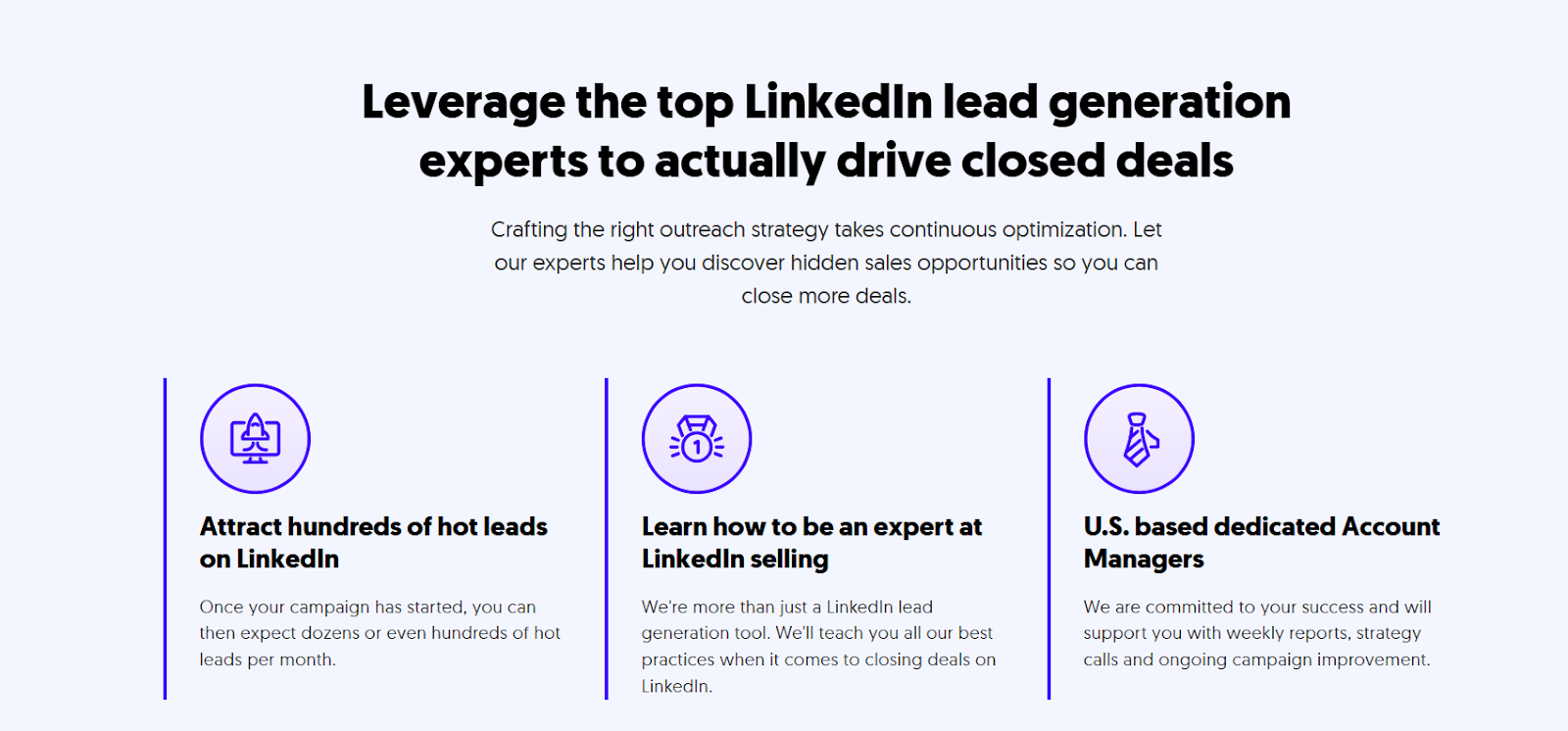
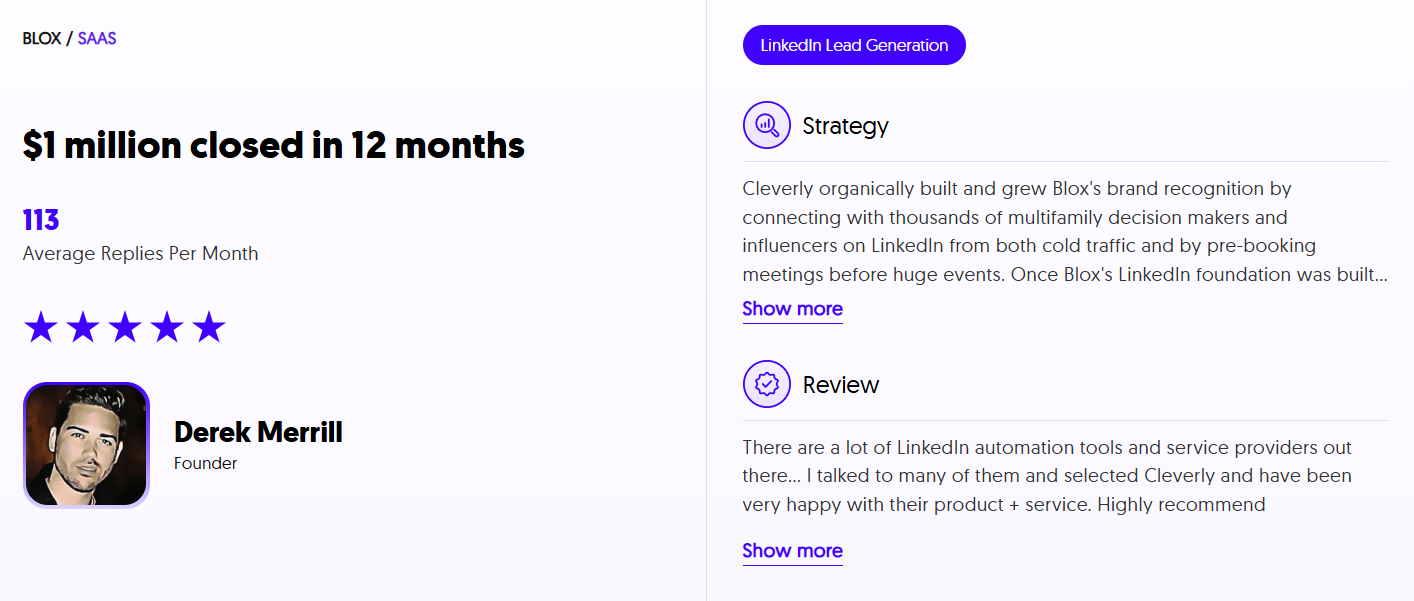
We've helped 10,000+ clients generate leads and grow accounts with companies like Amazon, Google, Uber, PayPal, Slack, and Spotify. That's resulted in $312 million in pipeline revenue and $51.2 million in closed revenue through LinkedIn outreach alone.
And our LinkedIn lead generation services start at just $397/month.
If you're serious about reducing churn and growing your existing accounts through LinkedIn, let's talk.
Conclusion
Acquiring new customers gets all the attention. But the real driver of sustainable B2B growth is keeping the ones you already have.
LinkedIn gives you a direct line to reduce churn rate by helping you stay visible, build real relationships, and catch problems before they turn into cancellations. The companies that use it well aren't just retaining customers — they're growing accounts.
Start showing up consistently for your customers on LinkedIn. The ROI is there.
Frequently Asked Questions
Free Resource
How to Scale a Profitable Cold Call System
Get the complete guide — download it instantly now.
Free Ebook
Download the Free Guide
Enter your details to get instant access.
You're all set! 🎉
Your ebook is downloading now.
Click below if the download didn't start automatically.