Table of Contents
What Is a Cold Email?
What Is a Good Subject Line for a Cold Email?
How To Keep Cold Emails Out of Spam Folders
What Makes a Subject Line Great?
How to Write a Cold Email Subject Line
Best Email Subject Line Checklist
Match the Subject Line With the Opening Sentence
40 Cold Email Subject Line Examples
Weak Cold Email Subject Lines and Better Rewrites
How to A/B Test Cold Email Subject Lines
Turn Cold Email Subject Lines Into Qualified Conversations
Conclusion
Frequently Asked Questions
Modified On :
August 19, 2026
Key Takeaways
- A strong cold email subject line is relevant, accurate, concise, and easy to understand.
- Write the email first, then choose the subject line that best introduces its real purpose.
- Use trigger events, business problems, referrals, or specific ideas instead of generic curiosity.
- Never imply a previous conversation, referral, or urgency that does not exist.
- Test subject lines using replies, qualified conversations, and meetings rather than opens alone.
Cold email subject lines have one practical job: give the right prospect an honest reason to consider the message. They cannot rescue poor targeting or a weak offer, but they can make a relevant email easier to recognize in a crowded inbox.
Cleverly’s cold email teams evaluate subject lines as part of the complete campaign, not as isolated pieces of copy. The useful question is not simply which version earned more opens, but which one produced relevant replies and qualified sales conversations without increasing complaints or opt-outs.
A strong subject line usually points to a business problem, timely trigger, credible connection, or specific idea.
This guide explains how to write one, provides 40 adaptable cold email subject-line examples, and shows how to test performance without relying on open rates alone.
What Is a Cold Email?
Just like cold calling in days past, cold emailing involves reaching out to people who haven’t asked for information about a company’s products or services. Just like cold calling runs the risk of being ignored, so does cold emailing. The sender must find a way for their subject lines to stand out from the crowd or their email campaign may be a wasted effort.
There are various ways to make a subject line enticing. If it sounds personal or sparks interest, then the chances of the receiver opening the email increases. By the same token, if it sounds insincere or makes outlandish promises, the chances of success go down significantly.
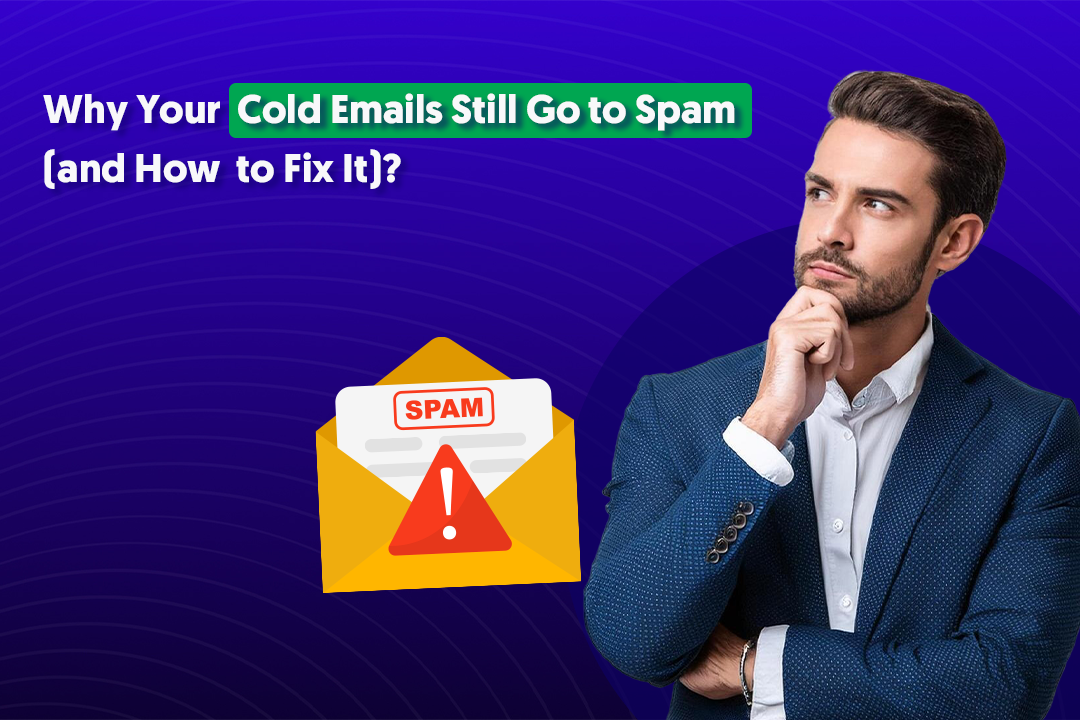
Of course, even the best cold email subject lines will do a company little good if the email ends up in the spam folder before the recipient even gets a chance to look at it.
✉️ Turn Better Subject Lines Into More Qualified Replies
Cleverly builds and tests complete cold email campaigns, from targeting and contact research to copy, follow-up, and reply handling.
What Is a Good Subject Line for a Cold Email?
A good cold email subject line is short, relevant, accurate, and easy to understand in a crowded inbox. It gives the prospect enough context to decide that the message may be worth opening without summarizing the entire pitch.
Strong subject lines usually contain one of four signals:
- A relevant business topic: “Question about your SDR hiring plan”
- A timely trigger: “Saw Acme’s Series B announcement”
- A credible connection: “Marcus Lee suggested I reach out”
- A specific idea: “Idea for reducing demo no-shows”
The subject line and email body must make the same promise. If the subject says “Question about your hiring plan,” the message should open with a real question about hiring. Do not use curiosity to disguise an unrelated sales pitch.
For most B2B cold emails, aim for a subject line that can be understood in a few seconds and displayed clearly on mobile. Character limits vary across devices and email clients, so put the most important words first instead of trying to hit one supposedly perfect length.
How To Keep Cold Emails Out of Spam Folders
If your email is sent to a prospective customer’s spam folder, your connection may never occur. Emails in spam folders are most often automatically deleted without ever being seen.
Cold emails are sent by the thousands each day, so email service providers (ESPs) try to combat them to keep their users from being overwhelmed and frustrated by their presence. Many ESPs have developed software to recognize and filter out unsolicited — or "spam" — emails using proprietary algorithms and user input.
While this may be discouraging for many trying to bring value to potential customers, there’s still hope for cold emails. You just need to convince the spam filters that the email is legitimate. Below are a few ways to do just that.
Avoid Trigger Words and Phrases
Spam filters are designed to determine whether an email is legitimate or not, so avoiding the common red flags associated with spam is important. One of those characteristics is the use of overtly "salesy" words or phrases.
Here are several examples:
- Make $; Earn $/$$$ — your best bet is to stay away from dollar signs completely
- Order; Order Now
- Cash
- Bonus
- Cheap
- Free
- Incredible Deal
- Why Pay More?
- Miracle
Another good rule of thumb is not to promise things that cannot be delivered. Also, emails will often get flagged as spam if their subject lines start with greetings like “Hello” or “Dear” followed by a name or email address.
Avoid Excessive Punctuation Marks

Even one exclamation point or question mark in the subject line may get an email flagged as spam, but several or both of them in a row most certainly will.
Avoid All Caps
A subject line in all capital letters may attract the attention of the reader, but it may also prompt them to immediately mark the email as spam. Even if the reader does not flag the email, spam filters most likely will.
Additionally, in the world of emails and texting, using all capital letters is perceived as yelling. Yelling at prospective customers is never a good thing, so this should be avoided in general.
Avoid Random Caps
This is a relatively new trigger. Since using all caps is not recommended, people began sending out emails with subject lines with a random mixture of upper- and lower-case letters. ThEy fReqUnelty LoOk sOMetHing lIKe THis and are very effective at attracting the reader's eye.
They’re also very effective at getting folks to hit the "Mark as Spam" button. It didn’t take the spam police long to see through this technique, and it should always be avoided.
Also Check: Cold Email Outreach Best Practices
Protect Your Company’s Reputation
If your company gets a reputation for sending out spam emails, there’s a greater likelihood that any future email campaigns will be immediately flagged as spam. This will lead to poor response rates on any subsequent mailings, regardless of content.
If an email campaign is sent out with solid email subject lines and the response numbers are still lagging, your IP address may have been blacklisted by the ESPs. You may not be notified of this action, but if you suspect this to be the case, there are sites that can help you confirm it. If you have been blacklisted, you may need to find another provider to keep your emails out of the spam folder.
Warm Up Their Inbox
What about those prospective customers who signed up to receive emails from you but no longer open them? Reinforcing the idea that your mail is not spam is a good first step, but you’ll likely need to do a bit more to re-engage their interest.
There are several tricks, known as “ warming the inbox,” that you can use to get those disinterested recipients back. These have shown success in boosting the open rate of email sent to “lost” customers:
- Give them something: Offer a reward or bonus for returning to the fold.
- Offer them a choice: Send out an informative email related to a subject the customer previously showed an interest in. In the body of the email, give the recipient a series of options about what they would like to learn more about in a future email. Now they know what to expect from the next email and will be more inclined to open it.
- Segment your contact list: By dividing your list into segments based on demographics you can send emails catered directly to each segment's interests.
- Do A/B testing: This will be discussed in greater detail below.
Create Informative, Relevant Content
While all the tactics above are a good way to avoid being recognized as spam, it’s always best to simply create an email that people want to receive. The email should be informative, relevant, and provide insight into why the goods or services being offered are an asset to the receiver.
📈 Build a Cold Email System That Creates Pipeline
Get a managed outreach campaign built around your market, offer, and sales goals, with qualified conversations delivered to your team.
What Makes a Subject Line Great?
The easy answer to this question: anything that gets the reader to open the email. Of course, we all know that the internet is not a one-size-fits-all kind of place. A subject line that makes one person giggle may seem ridiculous to another.
Here are a few ways to create a great prospecting email subject line that can appeal to a large audience:
- Make it short: Be direct. The fewer words in an email subject line, the more likely the email gets read.
- Use name recognition: Using your brand’s name or, better yet, an individual’s name followed by the brand name, e.g. "Maddie Whitestone from Brand X," makes the reader feel like they already know who the sender is.
- Use the reader’s name: This is, of course, not always possible when sending mass emails, but when it’s doable, it increases the odds of the email being opened.
- Don’t sound too good to be true: Very few people believe their life will change for the better in an instant. Don't promise your reader that opening an email will do that for them.
- Be humorous: Puns and other wordplay will amuse and raise interest.
- Tell them what’s inside: Let the reader know that there’s valuable information to be had by opening the email.
- Add a bit of mystery: Pique the reader's interest but leave enough mystery to make them want to learn more.
- Ask a question: Be specific. Avoid general questions like, “Do you want to have a better life?” Instead, try to appeal to your audience by targeting their pain points.
- Make it relevant: Get to know the type of people you’re emailing. Learn the social trends they follow and write subject lines that mean something to them.
- Drop names: If you have a mutual contact with the recipient, include that name in the subject line to help break the ice.
How to Write a Cold Email Subject Line
Use the following process instead of starting with a clever phrase.
1. Write the Email Before the Subject Line
The subject line should describe the reason for the message. Write the body first so you know the problem, observation, trigger, or request the subject line needs to introduce.
If the message does not contain a clear reason to contact the prospect, rewriting the subject line will not solve the underlying problem.
2. Identify the Most Relevant Detail
Choose one detail that matters to the recipient:
- A company initiative
- A hiring pattern
- A recent funding announcement
- A product launch
- A role-specific problem
- A mutual connection
- A relevant event or piece of content
- A credible result from a similar company
Do not force personalization using facts that have no connection to the offer. Mentioning someone’s university or hometown is not useful if the message immediately pivots to unrelated software.
3. Match the Prospect’s Language
Use terms the recipient would recognize from their role and company. A sales leader may respond to “pipeline coverage,” while a RevOps leader may care more about “routing” or “CRM accuracy.”
Internal jargon from your own company usually creates friction. The subject line should sound familiar to the buyer, not impressive to the sender.
4. Remove Unnecessary Words
Delete phrases that do not change the meaning:
- I wanted to ask about
- Reaching out regarding
- Opportunity to discuss
- I would love to connect
- Important business proposal
“Reaching out regarding your sales process” can usually become “Question about your sales process.”
5. Check the Promise Against the Email
Before sending, ask:
- Does the first paragraph immediately support the subject line?
- Is the subject line accurate?
- Would the recipient feel misled after opening?
- Is the personalization correct?
- Does the wording imply a relationship that does not exist?
- Can the important phrase be understood if the end is truncated?
If any answer creates doubt, rewrite the subject line before testing it.
Best Email Subject Line Checklist
Since your goal is to get people to open and read your emails, it’s helpful to have a checklist of best practices to create an effective subject line for cold emails. Here’s one to get you started:
- Is the reader going to be curious about what’s in the email?
- Is it clear what the email has to offer?
- Is the message geared towards the right demographic? (Example: Don’t try to sell hair styling products to bald men.)
- Is the message trendy and up-to-date?
- Is the message concise and easy to understand?
- Is there a sense of urgency or importance?
- Is the message personalized?
- Is the message believable?
- Have you avoided words that will trigger spam filters?
- Does the message have a positive vibe?
Match the Subject Line With the Opening Sentence
The opening sentence should continue the same thought as the subject line. When the two feel disconnected, the prospect may assume the subject line was written only to attract an open.
Subject: Saw Acme is hiring 12 SDRs
Opening: I noticed the new SDR roles across Austin and Denver and wondered how your team is handling list building during the expansion.
Subject: Question about demo no-shows
Opening: We often see no-show rates rise when qualification and calendar confirmation are owned by different teams. Is that something you are reviewing?
Subject: Marcus Lee suggested I reach out
Opening: Marcus mentioned that you are rebuilding the partner program and thought our work with B2B referral channels might be relevant.
The subject line creates the expectation. The opening sentence proves that the sender has a legitimate reason for creating it.
Preview Text Is Vital Too
Creating an effective subject line for an email campaign is important to its success but it’s not the only tool for improving open rates. Subject lines can only be so long, and it’s likely that more information might be needed to get a prospective customer to take the next step of reading the entire email.
This is where catchy and informative preview text is important. Preview text is the sentence that appears next to the subject line when an email is displayed. This little blurb gives the reader a chance to see more information about an email and hopefully piques their interest.
Preview text should be used to support and enhance the information in the subject line. It can be used to highlight details of the offer, create a sense of urgency, increase intrigue, or bring a smile to the reader's face. Basically, anything that will boost the chances that they will click on the email to find out more.
40 Cold Email Subject Line Examples
The best subject line depends on why you are contacting the prospect. Use these examples as patterns, not universal scripts. Replace every placeholder and make sure the email delivers the context promised in the subject line.
B2B Sales Prospecting Subject Lines
Use these when the email introduces a business problem, operational idea, or relevant offer:
- Question about [Company]’s [process]
- Idea for [Company]’s outbound team
- [Goal] at [Company]
- A thought on your [initiative]
- Reducing [specific problem]
- [Company]’s plan for [priority]
- Quick question about [business area]
- Improving [metric] without [common tradeoff]
- Is [problem] affecting your team?
- One idea for [specific objective]
The strongest option names a topic the recipient already recognizes. “Idea for Acme’s outbound team” is more credible than “An exciting opportunity for you.”
Trigger-Based Subject Lines
Use these only when the trigger is current and genuinely connected to the message:
- Saw the [product] launch
- Congrats on the Series B
- New [role] at [Company]
- Noticed you’re hiring [team]
- Saw [Company] expanded into [market]
- Question about the [announcement]
- After your [event or podcast] discussion
- Your post about [topic]
- Following the [company change]
- [Company]’s next phase
The body should explain why the trigger matters. A funding announcement is not a reason to send the same sales pitch to every company that raised money.
Referral and Mutual-Connection Subject Lines
Use a person’s name only when they actually suggested or approved the introduction:
- [Mutual connection] suggested I reach out
- Introduction from [Name]
- [Name] thought we should connect
- Following up on [Name]’s introduction
- Referred by [Name]
- [Name] mentioned your work on [topic]
Never imply a referral because the prospect and your contact happen to be connected on LinkedIn. Confirm the relationship before borrowing someone else’s credibility.
Problem-Led Subject Lines
Use these when the email contains a credible observation about a specific challenge:
- Demo no-shows at [Company]
- A question about lead routing
- Reducing manual prospect research
- When inbound pipeline slows
- Improving reply quality
- SDR capacity this quarter
- Your team’s [specific workflow]
- Fewer meetings than expected?
- [Problem] across the [team]
- A faster way to handle [task]
Avoid pretending you know the prospect has a problem when you only know it is common in the industry. Phrase uncertain assumptions as questions or observations.
Networking and Research Subject Lines
Use these for professional networking, interviews, partnerships, or advice requests:
- Your perspective on [topic]
- Question about your work at [Company]
- Enjoyed your talk on [subject]
- Advice on moving into [field]
- Potential partnership around [topic]
- Comparing notes on [shared challenge]
- Fellow [community or alumni group] member
- Your article on [topic]
- Quick question from a [shared role]
- Introduction and possible collaboration
These messages should ask for a realistic amount of time. A broad request to “pick your brain” places all the work on the recipient.
Follow-Up and Re-Engagement Subject Lines
Use these when a previous message, conversation, or relationship actually exists:
- Another thought on [topic]
- Update on [prior discussion]
- Revisiting [specific priority]
- Since we last spoke
- New context for [problem]
- Is [initiative] still a priority?
- Following up on [specific request]
- [Trigger event], worth revisiting?
- Closing the loop on [topic]
“Following up” alone gives the prospect no reason to reopen the conversation. Add the topic, new context, or decision involved.
Weak Cold Email Subject Lines and Better Rewrites
Weak: “I’d love to connect”
Better: “Question about Acme’s partner program”
The original focuses on what the sender wants. The rewrite gives the recipient a business topic they can evaluate.
Weak: “Quick question”
Better: “Quick question about demo no-shows”
“Quick question” is easy to write but provides no context. Naming the subject makes the message easier to prioritize.
Weak: “Checking in”
Better: “Is the SDR hiring plan still active?”
The rewrite refers to the actual decision instead of announcing that the sender is following up.
Weak: “Exciting opportunity”
Better: “Partnership idea for the fintech market”
“Exciting” is an unsupported judgment. The rewrite explains what kind of opportunity the email contains.
Weak: “FREE DEMO, LIMITED TIME!!!”
Better: “Worth testing with your sales team?”
The rewrite removes pressure and gives the prospect room to decide whether the offer is relevant.
Weak: “Re: Our conversation”
Better: “Question about your outbound plan”
If no prior conversation occurred, “Re:” is misleading. The rewrite introduces the actual topic honestly.
Weak: “[Name], can I help you?”
Better: “Reducing manual account research”
The original assumes the prospect needs the sender’s help. The rewrite identifies the business issue without forcing familiarity.
Weak: “You missed it”
Better: “Recording from the RevOps session”
The original withholds context to force an open. The rewrite tells the recipient what is available.
How to A/B Test Cold Email Subject Lines
A useful subject-line test changes one variable and keeps the audience, offer, email body, sending conditions, and timing as consistent as possible.
Step 1: Choose One Question
Do not test two completely different campaign concepts at once. Decide what you want to learn:
- Does a trigger-based subject outperform a problem-based subject?
- Does including the company name improve positive replies?
- Does a question outperform a statement?
- Does a shorter version improve response quality?
- Does a referral-led subject work better than a topic-led subject?
Step 2: Split a Comparable Audience
Divide prospects from the same segment into randomized groups. Do not send one version to enterprise executives and the other to small-business managers.
Each group should have comparable:
- Job roles
- Company sizes
- Industries
- Regions
- List sources
- Sending days
- Sending inbox quality
Step 3: Keep the Email Body the Same
Change only the subject line. If the email body, offer, CTA, or personalization also changes, you will not know which variable affected the result.
Step 4: Measure Replies, Not Opens Alone
Open tracking has become less reliable. Apple’s Mail Privacy Protection can prevent senders from determining whether a recipient opened a message.
Use open data as directional information where available, but judge cold email subject lines primarily by:
- Total reply rate
- Positive reply rate
- Qualified conversation rate
- Meetings booked
- Unsubscribe or opt-out rate
- Spam complaints
- Downstream opportunity creation
A subject line that generates more opens but fewer qualified replies is not the winner.
Step 5: Record the Context
Document the audience, sample size, sending dates, subject lines, email body, and outcome definition. A winning subject line in one campaign does not become a permanent rule for every market.
Rerun important tests across several campaigns before changing the entire outreach program.
Turn Cold Email Subject Lines Into Qualified Conversations
A subject line cannot compensate for weak targeting, stale contact data, or an offer that gives the prospect no reason to reply. Effective cold email connects the subject line, opening sentence, business problem, and CTA into one coherent message.
Cleverly’s cold email outreach service covers the full campaign process, including audience research, contact sourcing, message development, subject-line testing, reply handling, and meeting booking.
We test messaging against the outcomes that matter after the open: positive replies, qualified conversations, meetings, and pipeline. That prevents a curiosity-driven subject line from being declared a winner simply because it produced more opens.
If you want to improve an existing campaign or build a new outbound system, book a free consultation to review your audience, offer, messaging, and current performance.
Conclusion
A cold email subject line does not need to be clever. It needs to make the message relevant, understandable, and trustworthy.
Start with the prospect and the actual reason for contacting them. Write the email before the subject line, remove unnecessary language, and confirm that the opening sentence delivers what the subject promised.
Then test the result using replies, qualified conversations, meetings, and opt-outs. The winning subject line is not the one that tricks the most people into opening. It is the one that helps the right prospects begin a useful conversation.
Frequently Asked Questions
Free Resource
How to Scale a Profitable Cold Call System
Get the complete guide — download it instantly now.
Free Ebook
Download the Free Guide
Enter your details to get instant access.
You're all set! 🎉
Your ebook is downloading now.
Click below if the download didn't start automatically.